GEO Tools
GEO Tools
GEO Audit Checklist: How to Optimize Your Website for AI Search
GEO Audit Checklist: How to Optimize Your Website for AI Search
Use this practical GEO audit checklist to evaluate your website’s readiness for AI search. Discover how to implement GEO strategies to improve citations and visibility across AI platforms.

Ashish Kamathi, SEO Expert
A GEO audit is a structured review of your website's ability to appear in AI-generated responses from tools like ChatGPT, Perplexity, Google AI Overviews, and Gemini. This checklist covers the seven categories every D2C growth team must address: crawlability, content structure, entity authority, prompt coverage, citation signals, technical schema, and AI visibility measurement. Work through each section in order to establish a baseline, fix critical gaps, and track improvement over time.
Why D2C Brands Need a GEO Audit Now
Search behaviour changed in 2024, and the numbers make the scale of that shift hard to ignore.
If you are new to this discipline, start with what generative engine optimisation actually means before working through this checklist.
Ahrefs' February 2026 analysis found that AI Overviews now reduce clicks to the top-ranking page by 58%. At the same time, Semrush research from June 2025 found that visitors arriving via AI search tools convert at 4.4 times the rate of visitors arriving through traditional organic search. Fewer clicks, but dramatically higher conversion rates on every click that lands.
For D2C brands, this creates a specific problem. Your discovery funnels were built around Google. But when a shopper asks ChatGPT, "best sustainable activewear brands under 3,000 rupees" or " Perplexity top D2C skincare brands for oily skin in India," the results page no longer exists. What exists is a paragraph of curated recommendations. Your brand is either in it or it isn't.
A GEO audit tells you where you stand and what to fix.
Section 1: AI Crawlability
Diagnostic question: Can AI bots read your site?
Before any LLM can cite your brand, its crawler must access your content. Many D2C sites block AI crawlers unintentionally through blanket robots.txt rules, JavaScript-heavy rendering, or bot management settings that catch AI agents alongside bad actors.
What to audit:
robots.txt: Check for rules disallowing GPTBot (OpenAI), PerplexityBot, Google-Extended, ClaudeBot, and Applebot-Extended. Blocking these prevents your pages from being crawled by those platforms' crawl pipelines. Allow them unless you have a specific legal reason not to.
JavaScript rendering: If your product or category pages are rendered client-side, key content may be invisible to AI crawlers. Run a Google Search Console URL inspection and compare the rendered HTML to your source. If they differ significantly, implement server-side rendering on critical pages.
Core Web Vitals: Page speed affects how deeply AI bots crawl your site. Prioritise Largest Contentful Paint under 2.5 seconds on your highest-value pages.
Crawl budget: Large D2C catalogues with thin or near-duplicate pages burn crawl budget on low-value URLs. Use canonical tags, noindex filtered URLs, and consolidate near-duplicate collection pages.
Section 2: Content Structure for AI Citation
Diagnostic question: Does your content answer questions the way AI engines expect?
AI search tools do not rank pages. They read pages, extract the most useful fragment for a given query, and synthesise a response. Your content must contain clear, self-contained answers, not just keyword-matched paragraphs.
Ahrefs' August 2025 citation analysis found that 80% of URLs cited by LLMs do not rank in Google's top 100 for the original query. AI citation and Google ranking are not the same game. You can win one without winning the other.
What to audit:
Opening paragraph: Every article and product landing page should open with a 40–80-word direct answer to its primary question. AI engines disproportionately cite introductions.
Headings: Rewrite H2 and H3 headings to mirror real user queries. "Product Benefits" is not a query. "What makes X different from competing brands?" is.
Answer-first structure: Under every heading, the first sentence must be the answer. Context and elaboration come after. AI engines extract forward.
Tables and numbered lists: Structured formats are significantly more citable than prose. Convert comparison sections and feature lists into tables or numbered steps wherever possible.
Section 3: Entity Authority
Diagnostic question: Do AI engines know who your brand is?
LLMs do not just read pages. They build a model of the world from billions of signals. Brands that appear consistently across multiple authoritative sources get cited more often than those that appear only on their own website.
What to audit:
Consistent NAP signals: Ensure your brand name, handle, and website URL are identical across Google Business Profile, Trustpilot, social profiles, and directory listings. Inconsistency fragments entity recognition.
Third-party editorial coverage: Identify publications and comparison sites that mention or should mention your brand. Coverage on domains that AI tools already cite, Forbes, YourStory, and Business Standard for India-based brands, signals authority directly.
Reddit and forum presence: Reddit is among the top three domains cited by ChatGPT. Identify relevant subreddits for your product category and engage authentically. Seeded answers in r/IndianSkincareAddicts or r/FitnessIndia reach AI engines faster than most brand-published content.
Branded search volume: AI Overviews prefer websites with strong branded search signals. A rising branded search trend in Google Search Console is one of the strongest indirect GEO signals you can build.
Section 4: Prompt Coverage Mapping
Diagnostic question: Do you know which prompts your brand should appear in, and does it appear in those prompts?
In traditional SEO, you target keywords. In GEO, you target prompts, the full-sentence questions users type into ChatGPT, Perplexity, or Google's AI Mode.
Build your prompt list across three intent levels:
Discovery prompts: "What are the best D2C skincare brands in India for oily skin?" Broad awareness queries where your category is named, but your brand is not.
Comparison prompts: "How does Brand X compare to Brand Y for daily use?" Mid-funnel queries where the buyer is evaluating options.
Validation prompts: "Is [Your Brand] worth it?" Bottom-funnel queries where buyers check sentiment before purchasing.
What to audit:
Build a prompt list of at least 50 queries across the three intent levels above.
Test each prompt manually in ChatGPT, Perplexity, and Google AI Overviews. Record whether your brand appears, what it says if it does, and which competitors appear when yours does not.
Map content gaps: Where competitors appear, and you don't, you have a GEO gap. The content that those competitors have that you lack is your content priority list.
Refresh monthly: Prompt citation patterns change. A brand appearing consistently in November may drop in February. Treat prompt testing as a recurring audit, not a one-off exercise.
Tracking 50+ prompts manually across three platforms every month is not sustainable. Vryse's AI-visibility dashboard tracks up to 200 prompts simultaneously across ChatGPT, Perplexity, Google AI Overviews, and Gemini, showing exactly where you rank, where competitors are winning, and which prompts represent the highest-value gaps, updated in real time.
Section 5: Citation Signal Optimisation
Diagnostic question: Are your pages structured to be cited, not just found?
Being crawlable and having good content is necessary but not sufficient. AI engines also look for structural trust signals.
What to audit:
Author attribution: Pages with named authors and visible credentials are cited more frequently than anonymous brand content. Add author bios to blog posts and link to credentials. For health, fitness, or nutrition claims, add a credentialed expert reviewer.
Outbound citations: AI tools prefer content that cites credible sources. If you publish on skincare ingredients, link to PubMed studies or dermatologist sources. Citing primary sources signals that your content is reliable enough to build on.
E-E-A-T signals: Include specific experience indicators on key pages, such as how long you have been in operation, customer count, certifications held, or details on supply chain transparency.
Content freshness: Add a visible last-updated date to all educational and comparison content. A post updated in Q1 2026 is higher-priority to AI engines than the same post last touched in 2022.
Section 6: Technical Schema Markup
Diagnostic question: Are you giving AI engines the structured data they need?
Schema markup is machine-readable metadata that tells AI tools exactly what your content is about. For D2C brands, three types are the highest priority.
Product schema: Includes name, description, price, availability, review aggregation, and brand. This is the baseline for any brand with an online catalogue. Without it, AI tools must infer product data from unstructured HTML.
FAQ schema: Maps directly to the question-answer format that AI engines extract for informational queries. Every category page and blog post with a FAQ section should carry this markup.
HowTo and Article schema: Signals content type and structure to AI crawlers. The HowTo schema is particularly effective for instructional content, such as usage guides and ingredient education.
Use Google's Rich Results Test and the free Vryse Schema Checker Chrome extension to audit your current schema. Use JSON-LD for all implementations; it is easier to maintain and is the format Google explicitly recommends.
Section 7: AI Visibility Measurement
Diagnostic question: Can you see where you stand and prove it is improving?
Visibility that cannot be tracked cannot be managed.
Standard analytics tools do not accurately capture AI referral traffic. Semrush's 2025 AI referral study found that significant AI-driven traffic is systematically misattributed to direct or unknown channels in Google Analytics 4.
To understand which platforms support prompt tracking, citation monitoring, and AI referral attribution in practice, see Vryse's breakdown of the top GEO tools available in 2026.
What to audit:
Set up an AI channel group in GA4: Create a custom channel group using regex to capture traffic from chatgpt.com, perplexity.ai, claude.ai, gemini.google.com, and copilot.microsoft.com. This makes AI referral traffic visible as its own acquisition channel.
Track prompt-level citation: Know which prompts your brand appears in, across which AI tools, and how that changes month over month.
Monitor competitor citation share: Know not just whether you appear in a prompt, but who else does. Citation share is the GEO equivalent of keyword share of voice.
This is where most GEO programmes stall. Teams run a one-time audit, fix technical issues, and then have no reliable way to tell whether those fixes translated into greater AI visibility. Vryse's AI-visibility dashboard closes that loop, tracking brand citations at the prompt level across all major platforms, surfacing competitive citation share, content gap analysis, and optimisation recommendations in a single interface. It is the infrastructure that makes this checklist executable, not just theoretical.
The GEO Visibility Gap: Why Most D2C Brands Are Invisible by Accident
Most D2C brands are not invisible to AI search because their products are bad or their websites are broken. They are invisible because the audit has never been run.
Traditional SEO has a clear alert mechanism: a keyword ranking drops, traffic falls, someone investigates. GEO has no equivalent. If your brand is not being cited when someone asks ChatGPT about your category, your analytics will not tell you. The traffic simply does not arrive. The absence is invisible.
This is the GEO Visibility Gap: the gap between the traffic you are not getting from AI search and the traffic your category already delivers to competitors who ran the audit you have not.
Run sections one through three first. They address the most common blocking issues and deliver the fastest measurable change in AI citation frequency. Sections four through seven are the ongoing operating rhythm of a mature GEO programme.
Stop auditing manually. Start tracking automatically.
Vryse's AI-visibility dashboard tracks up to 200 prompts across ChatGPT, Perplexity, Google AI Overviews, and Gemini, surfacing your citation share, your competitors' gaps, and your highest-priority content fixes in one place, updated in real time.
A GEO audit is a structured review of your website's ability to appear in AI-generated responses from tools like ChatGPT, Perplexity, Google AI Overviews, and Gemini. This checklist covers the seven categories every D2C growth team must address: crawlability, content structure, entity authority, prompt coverage, citation signals, technical schema, and AI visibility measurement. Work through each section in order to establish a baseline, fix critical gaps, and track improvement over time.
Why D2C Brands Need a GEO Audit Now
Search behaviour changed in 2024, and the numbers make the scale of that shift hard to ignore.
If you are new to this discipline, start with what generative engine optimisation actually means before working through this checklist.
Ahrefs' February 2026 analysis found that AI Overviews now reduce clicks to the top-ranking page by 58%. At the same time, Semrush research from June 2025 found that visitors arriving via AI search tools convert at 4.4 times the rate of visitors arriving through traditional organic search. Fewer clicks, but dramatically higher conversion rates on every click that lands.
For D2C brands, this creates a specific problem. Your discovery funnels were built around Google. But when a shopper asks ChatGPT, "best sustainable activewear brands under 3,000 rupees" or " Perplexity top D2C skincare brands for oily skin in India," the results page no longer exists. What exists is a paragraph of curated recommendations. Your brand is either in it or it isn't.
A GEO audit tells you where you stand and what to fix.
Section 1: AI Crawlability
Diagnostic question: Can AI bots read your site?
Before any LLM can cite your brand, its crawler must access your content. Many D2C sites block AI crawlers unintentionally through blanket robots.txt rules, JavaScript-heavy rendering, or bot management settings that catch AI agents alongside bad actors.
What to audit:
robots.txt: Check for rules disallowing GPTBot (OpenAI), PerplexityBot, Google-Extended, ClaudeBot, and Applebot-Extended. Blocking these prevents your pages from being crawled by those platforms' crawl pipelines. Allow them unless you have a specific legal reason not to.
JavaScript rendering: If your product or category pages are rendered client-side, key content may be invisible to AI crawlers. Run a Google Search Console URL inspection and compare the rendered HTML to your source. If they differ significantly, implement server-side rendering on critical pages.
Core Web Vitals: Page speed affects how deeply AI bots crawl your site. Prioritise Largest Contentful Paint under 2.5 seconds on your highest-value pages.
Crawl budget: Large D2C catalogues with thin or near-duplicate pages burn crawl budget on low-value URLs. Use canonical tags, noindex filtered URLs, and consolidate near-duplicate collection pages.
Section 2: Content Structure for AI Citation
Diagnostic question: Does your content answer questions the way AI engines expect?
AI search tools do not rank pages. They read pages, extract the most useful fragment for a given query, and synthesise a response. Your content must contain clear, self-contained answers, not just keyword-matched paragraphs.
Ahrefs' August 2025 citation analysis found that 80% of URLs cited by LLMs do not rank in Google's top 100 for the original query. AI citation and Google ranking are not the same game. You can win one without winning the other.
What to audit:
Opening paragraph: Every article and product landing page should open with a 40–80-word direct answer to its primary question. AI engines disproportionately cite introductions.
Headings: Rewrite H2 and H3 headings to mirror real user queries. "Product Benefits" is not a query. "What makes X different from competing brands?" is.
Answer-first structure: Under every heading, the first sentence must be the answer. Context and elaboration come after. AI engines extract forward.
Tables and numbered lists: Structured formats are significantly more citable than prose. Convert comparison sections and feature lists into tables or numbered steps wherever possible.
Section 3: Entity Authority
Diagnostic question: Do AI engines know who your brand is?
LLMs do not just read pages. They build a model of the world from billions of signals. Brands that appear consistently across multiple authoritative sources get cited more often than those that appear only on their own website.
What to audit:
Consistent NAP signals: Ensure your brand name, handle, and website URL are identical across Google Business Profile, Trustpilot, social profiles, and directory listings. Inconsistency fragments entity recognition.
Third-party editorial coverage: Identify publications and comparison sites that mention or should mention your brand. Coverage on domains that AI tools already cite, Forbes, YourStory, and Business Standard for India-based brands, signals authority directly.
Reddit and forum presence: Reddit is among the top three domains cited by ChatGPT. Identify relevant subreddits for your product category and engage authentically. Seeded answers in r/IndianSkincareAddicts or r/FitnessIndia reach AI engines faster than most brand-published content.
Branded search volume: AI Overviews prefer websites with strong branded search signals. A rising branded search trend in Google Search Console is one of the strongest indirect GEO signals you can build.
Section 4: Prompt Coverage Mapping
Diagnostic question: Do you know which prompts your brand should appear in, and does it appear in those prompts?
In traditional SEO, you target keywords. In GEO, you target prompts, the full-sentence questions users type into ChatGPT, Perplexity, or Google's AI Mode.
Build your prompt list across three intent levels:
Discovery prompts: "What are the best D2C skincare brands in India for oily skin?" Broad awareness queries where your category is named, but your brand is not.
Comparison prompts: "How does Brand X compare to Brand Y for daily use?" Mid-funnel queries where the buyer is evaluating options.
Validation prompts: "Is [Your Brand] worth it?" Bottom-funnel queries where buyers check sentiment before purchasing.
What to audit:
Build a prompt list of at least 50 queries across the three intent levels above.
Test each prompt manually in ChatGPT, Perplexity, and Google AI Overviews. Record whether your brand appears, what it says if it does, and which competitors appear when yours does not.
Map content gaps: Where competitors appear, and you don't, you have a GEO gap. The content that those competitors have that you lack is your content priority list.
Refresh monthly: Prompt citation patterns change. A brand appearing consistently in November may drop in February. Treat prompt testing as a recurring audit, not a one-off exercise.
Tracking 50+ prompts manually across three platforms every month is not sustainable. Vryse's AI-visibility dashboard tracks up to 200 prompts simultaneously across ChatGPT, Perplexity, Google AI Overviews, and Gemini, showing exactly where you rank, where competitors are winning, and which prompts represent the highest-value gaps, updated in real time.
Section 5: Citation Signal Optimisation
Diagnostic question: Are your pages structured to be cited, not just found?
Being crawlable and having good content is necessary but not sufficient. AI engines also look for structural trust signals.
What to audit:
Author attribution: Pages with named authors and visible credentials are cited more frequently than anonymous brand content. Add author bios to blog posts and link to credentials. For health, fitness, or nutrition claims, add a credentialed expert reviewer.
Outbound citations: AI tools prefer content that cites credible sources. If you publish on skincare ingredients, link to PubMed studies or dermatologist sources. Citing primary sources signals that your content is reliable enough to build on.
E-E-A-T signals: Include specific experience indicators on key pages, such as how long you have been in operation, customer count, certifications held, or details on supply chain transparency.
Content freshness: Add a visible last-updated date to all educational and comparison content. A post updated in Q1 2026 is higher-priority to AI engines than the same post last touched in 2022.
Section 6: Technical Schema Markup
Diagnostic question: Are you giving AI engines the structured data they need?
Schema markup is machine-readable metadata that tells AI tools exactly what your content is about. For D2C brands, three types are the highest priority.
Product schema: Includes name, description, price, availability, review aggregation, and brand. This is the baseline for any brand with an online catalogue. Without it, AI tools must infer product data from unstructured HTML.
FAQ schema: Maps directly to the question-answer format that AI engines extract for informational queries. Every category page and blog post with a FAQ section should carry this markup.
HowTo and Article schema: Signals content type and structure to AI crawlers. The HowTo schema is particularly effective for instructional content, such as usage guides and ingredient education.
Use Google's Rich Results Test and the free Vryse Schema Checker Chrome extension to audit your current schema. Use JSON-LD for all implementations; it is easier to maintain and is the format Google explicitly recommends.
Section 7: AI Visibility Measurement
Diagnostic question: Can you see where you stand and prove it is improving?
Visibility that cannot be tracked cannot be managed.
Standard analytics tools do not accurately capture AI referral traffic. Semrush's 2025 AI referral study found that significant AI-driven traffic is systematically misattributed to direct or unknown channels in Google Analytics 4.
To understand which platforms support prompt tracking, citation monitoring, and AI referral attribution in practice, see Vryse's breakdown of the top GEO tools available in 2026.
What to audit:
Set up an AI channel group in GA4: Create a custom channel group using regex to capture traffic from chatgpt.com, perplexity.ai, claude.ai, gemini.google.com, and copilot.microsoft.com. This makes AI referral traffic visible as its own acquisition channel.
Track prompt-level citation: Know which prompts your brand appears in, across which AI tools, and how that changes month over month.
Monitor competitor citation share: Know not just whether you appear in a prompt, but who else does. Citation share is the GEO equivalent of keyword share of voice.
This is where most GEO programmes stall. Teams run a one-time audit, fix technical issues, and then have no reliable way to tell whether those fixes translated into greater AI visibility. Vryse's AI-visibility dashboard closes that loop, tracking brand citations at the prompt level across all major platforms, surfacing competitive citation share, content gap analysis, and optimisation recommendations in a single interface. It is the infrastructure that makes this checklist executable, not just theoretical.
The GEO Visibility Gap: Why Most D2C Brands Are Invisible by Accident
Most D2C brands are not invisible to AI search because their products are bad or their websites are broken. They are invisible because the audit has never been run.
Traditional SEO has a clear alert mechanism: a keyword ranking drops, traffic falls, someone investigates. GEO has no equivalent. If your brand is not being cited when someone asks ChatGPT about your category, your analytics will not tell you. The traffic simply does not arrive. The absence is invisible.
This is the GEO Visibility Gap: the gap between the traffic you are not getting from AI search and the traffic your category already delivers to competitors who ran the audit you have not.
Run sections one through three first. They address the most common blocking issues and deliver the fastest measurable change in AI citation frequency. Sections four through seven are the ongoing operating rhythm of a mature GEO programme.
Stop auditing manually. Start tracking automatically.
Vryse's AI-visibility dashboard tracks up to 200 prompts across ChatGPT, Perplexity, Google AI Overviews, and Gemini, surfacing your citation share, your competitors' gaps, and your highest-priority content fixes in one place, updated in real time.
Frequently Asked Questions
Frequently Asked Questions
How is a GEO checklist different from an SEO checklist?
An SEO checklist optimises for Google's ranking algorithm. A GEO checklist optimises for how AI language models extract, interpret, and cite content. The two overlap significantly; crawlability, page speed, and content quality matter for both, but GEO adds prompt coverage mapping, entity authority building, and AI-specific citation signal optimisation that traditional SEO audits do not include.
How long does a GEO audit take?
A thorough initial GEO audit across all seven sections typically takes two to four weeks for a D2C brand with a moderately sized catalogue (100–500 pages). The crawlability and schema sections can often be completed in a few days. Prompt coverage mapping and entity authority building are ongoing programmes rather than one-time tasks.
How often should I run a GEO audit?
Run a full seven-section audit annually. Run prompt coverage and citation share checks monthly. Run schema and crawlability spot-checks quarterly. AI platform algorithms change frequently. Ahrefs' data shows citation overlap between platforms is below 15%, meaning what works on one tool does not automatically transfer to another, and each platform's citation behaviour evolves independently.
Related Articles
Related Articles
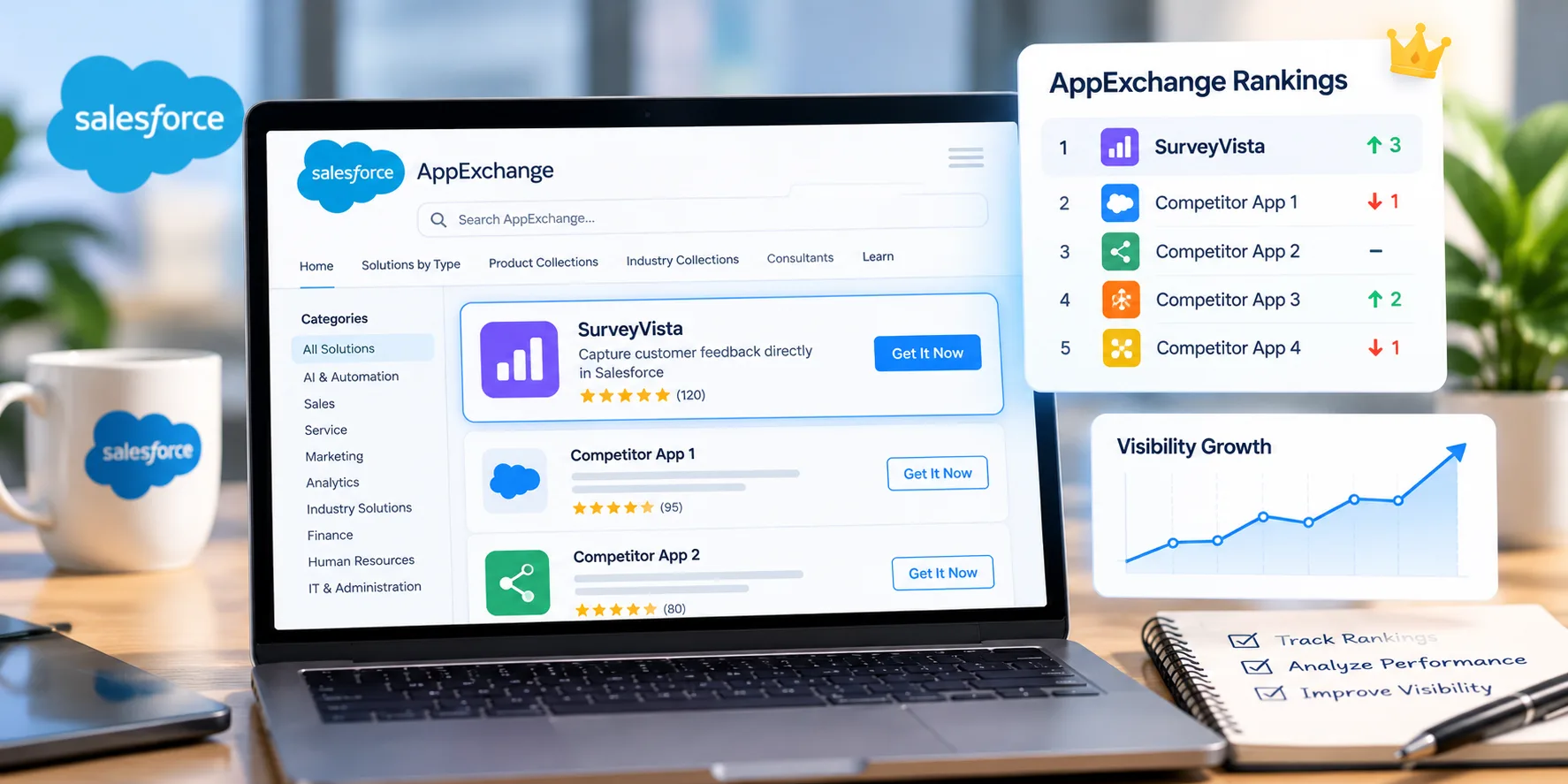
How to Track Salesforce AppExchange Rankings and Improve Your App’s Visibility
Track your AppExchange rankings, identify keyword opportunities, and optimize your Salesforce listing to improve marketplace visibility, attract qualified buyers, and drive more installs.
Ashish Kamathi, SEO Expert
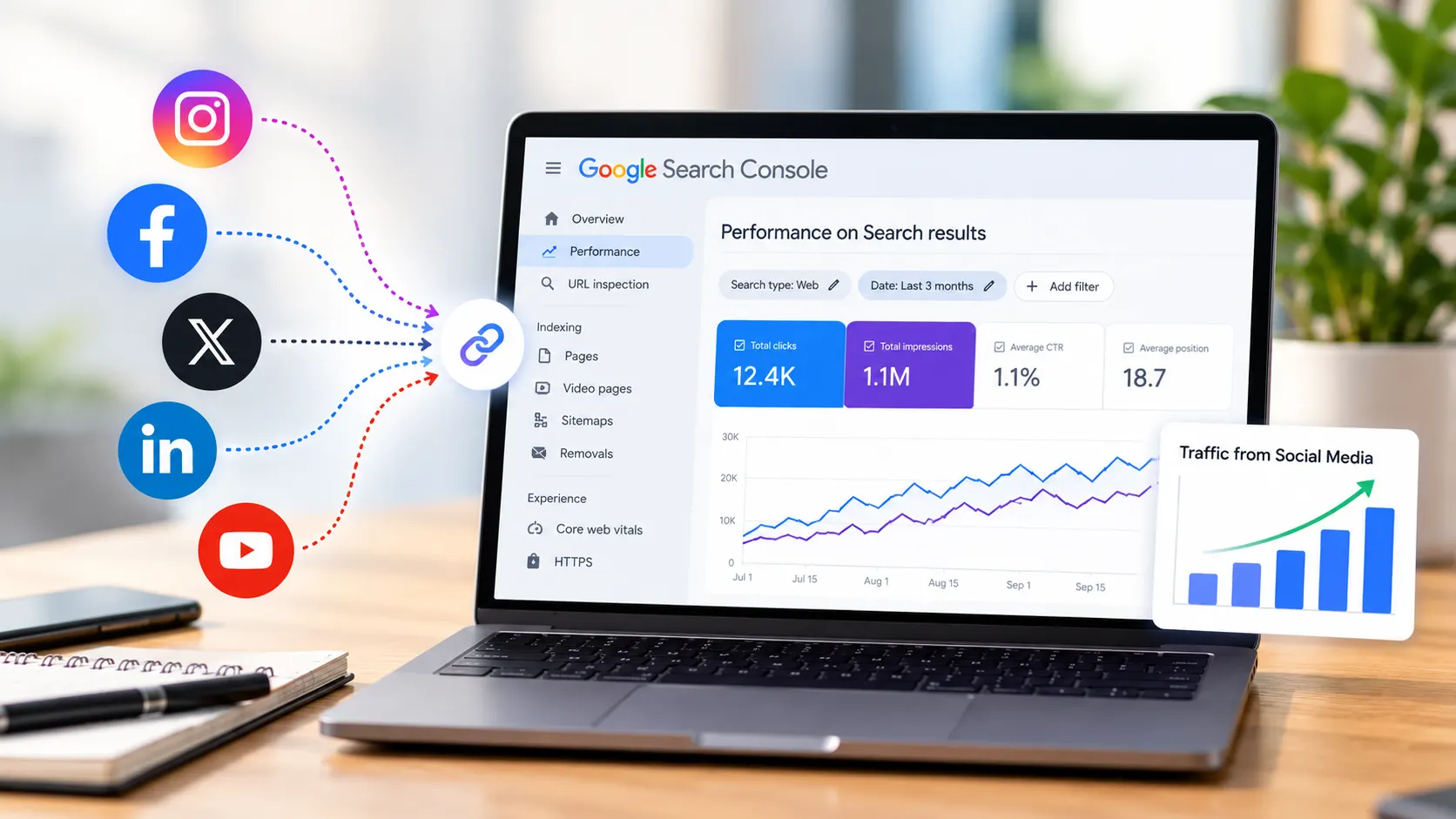
How to Add Social Media to Google Search Console and Track Their Performance
Learn how Google Search Console handles social media, what platform properties can track, and how to measure social performance alongside your website's organic search data.

Shraddha Thuwal
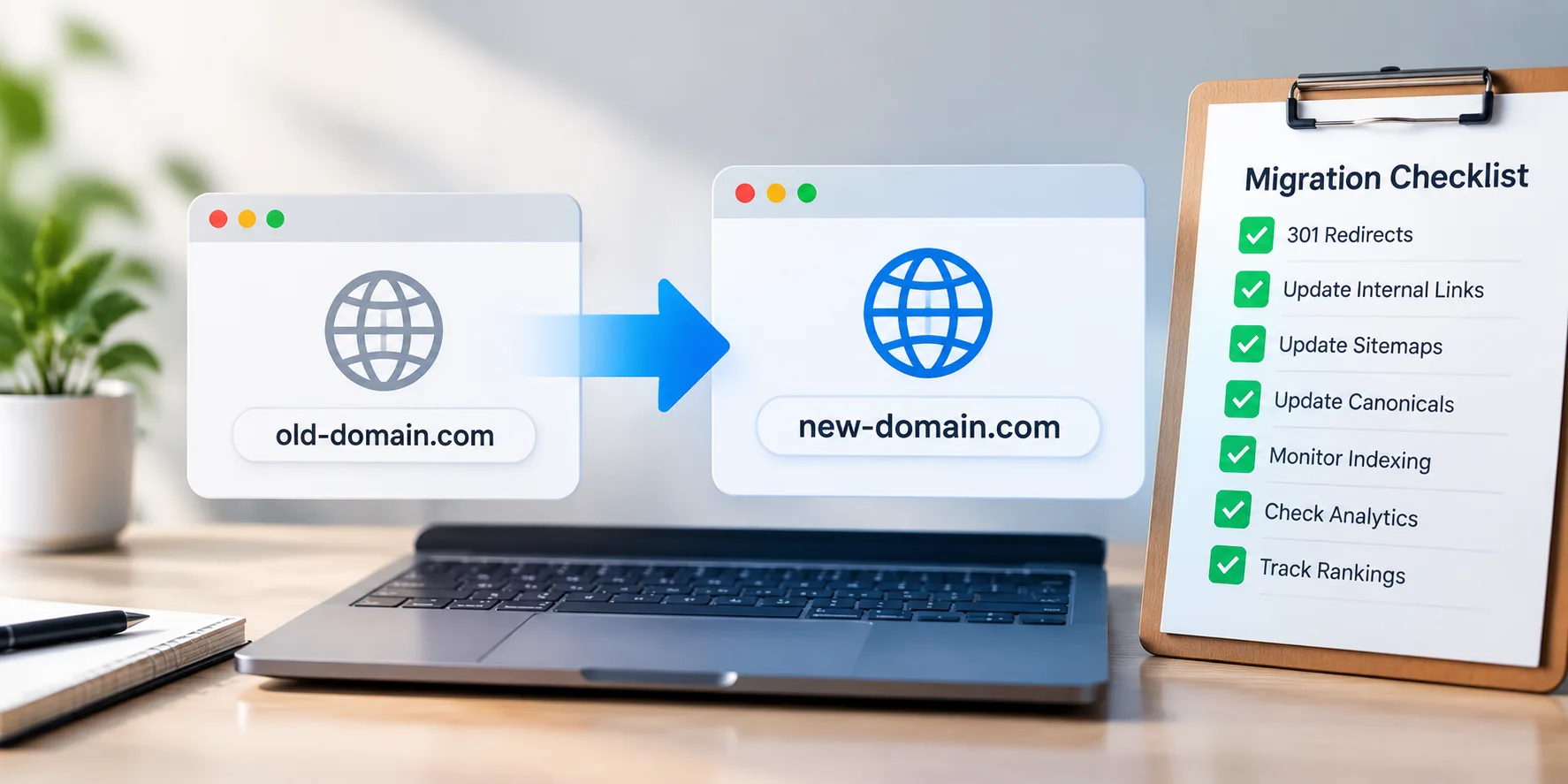
Domain Migration Checklist: A Step-by-Step Guide to Protect Rankings and Traffic
A successful domain migration requires careful SEO planning. Follow this checklist to manage redirects, preserve rankings, protect traffic, and avoid common migration issues.
Shraddha Thuwal
How to Track Salesforce AppExchange Rankings and Improve Your App’s Visibility
Track your AppExchange rankings, identify keyword opportunities, and optimize your Salesforce listing to improve marketplace visibility, attract qualified buyers, and drive more installs.
Ashish Kamathi, SEO Expert
How to Add Social Media to Google Search Console and Track Their Performance
Learn how Google Search Console handles social media, what platform properties can track, and how to measure social performance alongside your website's organic search data.
Shraddha Thuwal
Get Visibility, Everywhere



























Just drop us your email and we’ll reach out
Get Visibility, Everywhere
Just drop us your email and we’ll reach out
Get Visibility, Everywhere
Just drop us your email and we’ll reach out
Our weekly newsletter contains insights from strategies we use for our clients. We don’t spam.
Copyright © 2026 Vryse
Our weekly newsletter contains insights from strategies we use for our clients. We don’t spam.
Copyright © 2026 Vryse