GEO Tools
GEO Tools
10 GEO Tools to Use in 2026: Top Picks
10 GEO Tools to Use in 2026: Top Picks
Discover the leading GEO tools transforming AI-driven search in 2026. Learn how generative engine optimisation platforms track visibility and help businesses adapt to evolving AI discovery.

Shraddha Thuwal

Generative engine optimization has shifted from an experimental corner of search strategy into a measurable, revenue-shaping discipline. If you’ve spent the last decade refining SEO frameworks, GEO feels both familiar and strangely new.
You’re still improving visibility— but now you’re doing it across ChatGPT, Gemini, Perplexity, Claude, and emerging AI engines that surface brand answers before traditional rankings even load.
Which GEO search tool belongs in your stack? And which ones deliver real clarity rather than a tangle of dashboards? As 2026 unfolds, your competitive edge comes from seeing how AI systems interpret your brand, cite your sources, and assign authority.
Below, you’ll find ten GEO platforms shaping strategy for teams dealing with AI-driven discovery. You'll spot tools that audit content depth, platforms that track citations across LLMs, and systems analysing sentiment behind AI-generated brand summaries.
Top 10 GEO Tools in 2026
S.NO. | GEO Tool | Pricing | Best For |
1. | Vryse | From ₹20,000/month | Growth-stage and enterprise teams scaling AI-driven organic visibility |
2. | Peec AI | From €89/month | Small teams needing GEO basics |
3. | Profound AI | From $499/month | Enterprise GEO programmes |
4. | Semrush AI Toolkit | $99/domain/month | SEO teams wanting familiar workflows |
5. | Writesonic GEO | From $39/month | Agencies + growth teams |
6. | AthenaHQ | From $295/month | Content-heavy brands |
7. | Bluefish AI | Enquire for pricing | Teams chasing continuous adaptation |
8. | Ahrefs Brand Radar | From $129/month | Ahrefs-centric SEO teams |
9. | Serplock | From $75/month | SEO + PR + brand teams |
10. | Surfer | Standard Surfer pricing | High-volume content teams |
1. Vryse
VRYSE is one of the best GEO tools, because it goes beyond being a GEO search tool. It operates as a full AI-visibility growth engine. Where most platforms focus on monitoring or diagnostics, VRYSE blends visibility tracking, competitive intelligence, optimisation, and execution into a single dashboard. It is designed for brands that care about outcomes, not just reports.
You see how your brand appears across Google Search and leading LLMs in real time, understand why competitors are winning specific AI answers, and receive AI-powered recommendations you can act on immediately.
Instead of exporting insights into other tools, VRYSE closes the loop by helping teams fix content gaps, improve authority signals, and scale content that AI engines actually surface.
Pros
Measures brand visibility across search engines and LLMs in one unified view.
Tracks competitors and highlights why they’re winning AI-driven discovery.
AI-powered opportunity mapping with clear, actionable recommendations.
One-click optimisation for content gaps and visibility improvements.
Proven results for 50+ B2B and D2C brands, with strong MoM organic growth (300%) from AI and search.
Expert-led strategy layered on top of the platform for teams that want execution, not just software.
Cons
More strategic and growth-focused than DIY tools.
Maybe more than needed for teams only experimenting with GEO tracking.
2. Peec AI
Peec brings GEO visibility into a clean, fast interface that feels instantly approachable. You see which AI engines surface your brand, which sources get cited when your content appears, and where competitors gain ground.
Pros
Straightforward for non-technical users.
Accessible enough for SMB budgets.
Focused insights without dashboards that sprawl endlessly.
Cons
Limited analytics depth.
No in-platform content creation.
Light integration options
Peec suits you if GEO is a new territory and you want a GEO search tool that demystifies visibility before your team scales into complex pipelines.
3. Profound AI
Profound lands at the other end of the spectrum. It connects AI mentions to real business impact through integrations across Google Analytics, attribution tools, and your existing stack. You see how a citation in ChatGPT shapes traffic, conversions, and revenue pathways.
Pros
Enterprise-level analytics with granular detail.
Integrations across major data systems.
Multilingual monitoring for global brands.
Cons
High pricing and enterprise-only focus.
No broad SEO toolkit.
Requires internal champions to justify ROI in early GEO environments.
Profound stands out when you’re responsible for explaining GEO ROI to leadership.
4. Semrush AI Toolkit
Semrush uses its massive SEO dataset to power GEO features that fit naturally into existing workflows. You’ll see which pages surface inside Google’s AI results, which queries trigger AI answers, and how your content performs under hybrid search conditions.
Pros
Strong blend of SEO + GEO insights.
Huge dataset producing reliable AI visibility signals.
Continuous updates tracking Google’s evolving AI layers.
Cons
Heavy focus on Google, less coverage of other LLMs.
Some AI visibility metrics extrapolated from SEO signals.
Works best for brands already using enterprise-grade accounts.
If you’re already deep in Semrush, the Toolkit becomes a natural way to introduce GEO without rebuilding processes.
5. Writesonic GEO
Writesonic moves past monitoring into actionable GEO optimisation. It tracks how your brand appears across ChatGPT, Gemini, Perplexity, Claude, and Google AI Overviews, then turns that data into specific fixes you can deploy directly inside the platform.
Think of it as a workspace merging GEO diagnostics, content improvement, and technical clean-ups.
Pros
Unified GEO + SEO system.
Cross-platform tracking across leading AI engines.
Guided optimisation workflows.
Agency-friendly dashboards and reporting.
Cons
The advanced feature set may feel heavy for small teams.
Initial integration requires time.
Some advanced capabilities live behind higher-tier plans.
Works well for teams wanting a GEO search tool that moves from insight to execution without bouncing
between platforms.
6. AthenaHQ
Athena digs into semantic depth. It examines how thoroughly your content covers a topic, identifies missing entities, and recommends structural improvements, e.g., in FAQ sections, schema, subtopic alignment, and more. Think of it as content intelligence aligned with GEO expectations.
Pros
Strong scoring systems for topical depth.
Clear workflow from analysis to implementation.
A hybrid approach bridging SEO logic with GEO needs.
Cons
Limited personalisation for niche industries.
Not a full monitoring suite.
Steep for teams focused only on auditing.
When your content library spans hundreds of pages, Athena helps you understand where depth gaps quietly suppress AI visibility.
7. Bluefish AI
Bluefish leans into real-time optimisation. You’ll see content recommendations shift as AI engines update ranking logic, giving your team quicker adaptation cycles.
Pros
Promising adaptive optimisation framework.
Automated analysis that reduces manual monitoring.
Designed for small teams that need agility.
Cons
Still early in the GEO market.
Limited feature set compared to larger players.
Less visibility into the underlying scoring logic.
If your strategy prioritises agility during rapid algorithm swings, Bluefish becomes relevant.
8. Ahrefs Brand Radar
Ahrefs pulled its backlink and authority pedigree straight into GEO. Brand Radar tracks where your brand appears in AI answers across major engines while connecting those appearances back to off-site authority and backlinks that still matter for how AI models infer trust.
Pros
Strong ecosystem connection to classic SEO.
Backlink authority insights feeding into AI trust signals.
Familiar Ahrefs interface.
Cons
Basic GEO coverage compared to specialised tools.
Limited AI-specific metrics.
Some early accuracy inconsistencies.
Brand Radar suits SEO teams already deep in Ahrefs who want GEO visibility without adopting an entirely new platform.
9. Serplock
Serplock examines something GEO professionals increasingly obsess over: How do AI engines describe your brand? It generates Wikipedia-style brand summaries, analyses sentiment, identifies missing authority signals, and highlights competitive narrative gaps.
You’re not just gauging appearances. You are studying reputation, tone, and trust.
Pros
Strong sentiment and perception analysis.
Authority signal tracking.
Competitive narrative mapping.
Strategic guidance for brand trust in AI search.
Cons
Less focused on traditional SEO signals.
Requires cross-team collaboration (SEO + PR + brand).
Depends heavily on AI-generated interpretation accuracy.
10. Surfer
Surfer continues offering content scoring shaped by ranking factors, yet its relevance extends into GEO by strengthening the signals AI engines reference indirectly—clarity, depth, structure, and accessibility.
Pros
Strong guidance for refining content.
Supports scalable content operations.
Produces consistent improvement to content structure.
Cons
Built around ranking metrics rather than generative logic.
No GEO diagnostic features.
Limited visibility into model behaviour.
Surfer remains valuable when you need high-volume teams aligned around quality signals AI engines recognise during training or retrieval.
How to Choose the Right Tool
Before finalising your mix, ask yourself the following questions.
Do you need visibility tracking, brand perception insights, or true optimisation?
How mature is your GEO programme?
Are you evaluating sources shaping AI answers, or just counting citations?
Does your team need content depth analysis or attribution?
Which platforms matter most for your audience: ChatGPT, Gemini, Claude, Perplexity?
If you’re refining your toolset for GEO tools that match 2026’s AI search environment, aim for a blend of,
Monitoring
Analytics + attribution
Content optimisation
Semantic strengthening
Brand reputation intelligence
Closure
Every brand’s GEO strategy unfolds differently, yet one trend stays constant: AI engines reward clarity, authority, and trustworthy signals derived from the sources they ingest. Selecting the best generative engine optimisation tools shapes your entire visibility footprint.
If you’re future-proofing your search strategy, tuning your stack around the right GEO tools for AI search becomes indispensable.
Generative engine optimization has shifted from an experimental corner of search strategy into a measurable, revenue-shaping discipline. If you’ve spent the last decade refining SEO frameworks, GEO feels both familiar and strangely new.
You’re still improving visibility— but now you’re doing it across ChatGPT, Gemini, Perplexity, Claude, and emerging AI engines that surface brand answers before traditional rankings even load.
Which GEO search tool belongs in your stack? And which ones deliver real clarity rather than a tangle of dashboards? As 2026 unfolds, your competitive edge comes from seeing how AI systems interpret your brand, cite your sources, and assign authority.
Below, you’ll find ten GEO platforms shaping strategy for teams dealing with AI-driven discovery. You'll spot tools that audit content depth, platforms that track citations across LLMs, and systems analysing sentiment behind AI-generated brand summaries.
Top 10 GEO Tools in 2026
S.NO. | GEO Tool | Pricing | Best For |
1. | Vryse | From ₹20,000/month | Growth-stage and enterprise teams scaling AI-driven organic visibility |
2. | Peec AI | From €89/month | Small teams needing GEO basics |
3. | Profound AI | From $499/month | Enterprise GEO programmes |
4. | Semrush AI Toolkit | $99/domain/month | SEO teams wanting familiar workflows |
5. | Writesonic GEO | From $39/month | Agencies + growth teams |
6. | AthenaHQ | From $295/month | Content-heavy brands |
7. | Bluefish AI | Enquire for pricing | Teams chasing continuous adaptation |
8. | Ahrefs Brand Radar | From $129/month | Ahrefs-centric SEO teams |
9. | Serplock | From $75/month | SEO + PR + brand teams |
10. | Surfer | Standard Surfer pricing | High-volume content teams |
1. Vryse
VRYSE is one of the best GEO tools, because it goes beyond being a GEO search tool. It operates as a full AI-visibility growth engine. Where most platforms focus on monitoring or diagnostics, VRYSE blends visibility tracking, competitive intelligence, optimisation, and execution into a single dashboard. It is designed for brands that care about outcomes, not just reports.
You see how your brand appears across Google Search and leading LLMs in real time, understand why competitors are winning specific AI answers, and receive AI-powered recommendations you can act on immediately.
Instead of exporting insights into other tools, VRYSE closes the loop by helping teams fix content gaps, improve authority signals, and scale content that AI engines actually surface.
Pros
Measures brand visibility across search engines and LLMs in one unified view.
Tracks competitors and highlights why they’re winning AI-driven discovery.
AI-powered opportunity mapping with clear, actionable recommendations.
One-click optimisation for content gaps and visibility improvements.
Proven results for 50+ B2B and D2C brands, with strong MoM organic growth (300%) from AI and search.
Expert-led strategy layered on top of the platform for teams that want execution, not just software.
Cons
More strategic and growth-focused than DIY tools.
Maybe more than needed for teams only experimenting with GEO tracking.
2. Peec AI
Peec brings GEO visibility into a clean, fast interface that feels instantly approachable. You see which AI engines surface your brand, which sources get cited when your content appears, and where competitors gain ground.
Pros
Straightforward for non-technical users.
Accessible enough for SMB budgets.
Focused insights without dashboards that sprawl endlessly.
Cons
Limited analytics depth.
No in-platform content creation.
Light integration options
Peec suits you if GEO is a new territory and you want a GEO search tool that demystifies visibility before your team scales into complex pipelines.
3. Profound AI
Profound lands at the other end of the spectrum. It connects AI mentions to real business impact through integrations across Google Analytics, attribution tools, and your existing stack. You see how a citation in ChatGPT shapes traffic, conversions, and revenue pathways.
Pros
Enterprise-level analytics with granular detail.
Integrations across major data systems.
Multilingual monitoring for global brands.
Cons
High pricing and enterprise-only focus.
No broad SEO toolkit.
Requires internal champions to justify ROI in early GEO environments.
Profound stands out when you’re responsible for explaining GEO ROI to leadership.
4. Semrush AI Toolkit
Semrush uses its massive SEO dataset to power GEO features that fit naturally into existing workflows. You’ll see which pages surface inside Google’s AI results, which queries trigger AI answers, and how your content performs under hybrid search conditions.
Pros
Strong blend of SEO + GEO insights.
Huge dataset producing reliable AI visibility signals.
Continuous updates tracking Google’s evolving AI layers.
Cons
Heavy focus on Google, less coverage of other LLMs.
Some AI visibility metrics extrapolated from SEO signals.
Works best for brands already using enterprise-grade accounts.
If you’re already deep in Semrush, the Toolkit becomes a natural way to introduce GEO without rebuilding processes.
5. Writesonic GEO
Writesonic moves past monitoring into actionable GEO optimisation. It tracks how your brand appears across ChatGPT, Gemini, Perplexity, Claude, and Google AI Overviews, then turns that data into specific fixes you can deploy directly inside the platform.
Think of it as a workspace merging GEO diagnostics, content improvement, and technical clean-ups.
Pros
Unified GEO + SEO system.
Cross-platform tracking across leading AI engines.
Guided optimisation workflows.
Agency-friendly dashboards and reporting.
Cons
The advanced feature set may feel heavy for small teams.
Initial integration requires time.
Some advanced capabilities live behind higher-tier plans.
Works well for teams wanting a GEO search tool that moves from insight to execution without bouncing
between platforms.
6. AthenaHQ
Athena digs into semantic depth. It examines how thoroughly your content covers a topic, identifies missing entities, and recommends structural improvements, e.g., in FAQ sections, schema, subtopic alignment, and more. Think of it as content intelligence aligned with GEO expectations.
Pros
Strong scoring systems for topical depth.
Clear workflow from analysis to implementation.
A hybrid approach bridging SEO logic with GEO needs.
Cons
Limited personalisation for niche industries.
Not a full monitoring suite.
Steep for teams focused only on auditing.
When your content library spans hundreds of pages, Athena helps you understand where depth gaps quietly suppress AI visibility.
7. Bluefish AI
Bluefish leans into real-time optimisation. You’ll see content recommendations shift as AI engines update ranking logic, giving your team quicker adaptation cycles.
Pros
Promising adaptive optimisation framework.
Automated analysis that reduces manual monitoring.
Designed for small teams that need agility.
Cons
Still early in the GEO market.
Limited feature set compared to larger players.
Less visibility into the underlying scoring logic.
If your strategy prioritises agility during rapid algorithm swings, Bluefish becomes relevant.
8. Ahrefs Brand Radar
Ahrefs pulled its backlink and authority pedigree straight into GEO. Brand Radar tracks where your brand appears in AI answers across major engines while connecting those appearances back to off-site authority and backlinks that still matter for how AI models infer trust.
Pros
Strong ecosystem connection to classic SEO.
Backlink authority insights feeding into AI trust signals.
Familiar Ahrefs interface.
Cons
Basic GEO coverage compared to specialised tools.
Limited AI-specific metrics.
Some early accuracy inconsistencies.
Brand Radar suits SEO teams already deep in Ahrefs who want GEO visibility without adopting an entirely new platform.
9. Serplock
Serplock examines something GEO professionals increasingly obsess over: How do AI engines describe your brand? It generates Wikipedia-style brand summaries, analyses sentiment, identifies missing authority signals, and highlights competitive narrative gaps.
You’re not just gauging appearances. You are studying reputation, tone, and trust.
Pros
Strong sentiment and perception analysis.
Authority signal tracking.
Competitive narrative mapping.
Strategic guidance for brand trust in AI search.
Cons
Less focused on traditional SEO signals.
Requires cross-team collaboration (SEO + PR + brand).
Depends heavily on AI-generated interpretation accuracy.
10. Surfer
Surfer continues offering content scoring shaped by ranking factors, yet its relevance extends into GEO by strengthening the signals AI engines reference indirectly—clarity, depth, structure, and accessibility.
Pros
Strong guidance for refining content.
Supports scalable content operations.
Produces consistent improvement to content structure.
Cons
Built around ranking metrics rather than generative logic.
No GEO diagnostic features.
Limited visibility into model behaviour.
Surfer remains valuable when you need high-volume teams aligned around quality signals AI engines recognise during training or retrieval.
How to Choose the Right Tool
Before finalising your mix, ask yourself the following questions.
Do you need visibility tracking, brand perception insights, or true optimisation?
How mature is your GEO programme?
Are you evaluating sources shaping AI answers, or just counting citations?
Does your team need content depth analysis or attribution?
Which platforms matter most for your audience: ChatGPT, Gemini, Claude, Perplexity?
If you’re refining your toolset for GEO tools that match 2026’s AI search environment, aim for a blend of,
Monitoring
Analytics + attribution
Content optimisation
Semantic strengthening
Brand reputation intelligence
Closure
Every brand’s GEO strategy unfolds differently, yet one trend stays constant: AI engines reward clarity, authority, and trustworthy signals derived from the sources they ingest. Selecting the best generative engine optimisation tools shapes your entire visibility footprint.
If you’re future-proofing your search strategy, tuning your stack around the right GEO tools for AI search becomes indispensable.
Frequently Asked Questions
Frequently Asked Questions
How do GEO tools track AI citations?
To track AI citations, most GEO platforms collect AI-generated answers from engines like ChatGPT, Gemini, and Perplexity. Then they parse citations, source patterns, and brand mentions to reveal how algorithms interpret authority and decide what to surface.
Do GEO tools influence traditional SEO rankings?
Yes, indirectly. Stronger authority signals, improved content depth, and consistent brand narratives can reinforce ranking factors still used by search engines.
How is Vryse different from other GEO tools?
Vryse goes beyond tracking AI visibility by combining monitoring, competitor intelligence, and instant optimisation in one dashboard. It focuses on driving measurable growth across both traditional search and LLMs, in leads, traffic, and authority as well.
Can GEO tools improve AI brand trust?
Yes. Tools analysing sentiment, authority gaps, and narrative framing reveal missing trust signals, enabling teams to strengthen source credibility, improve clarity, and align brand identity with what AI engines prioritise.
Related Articles
Related Articles
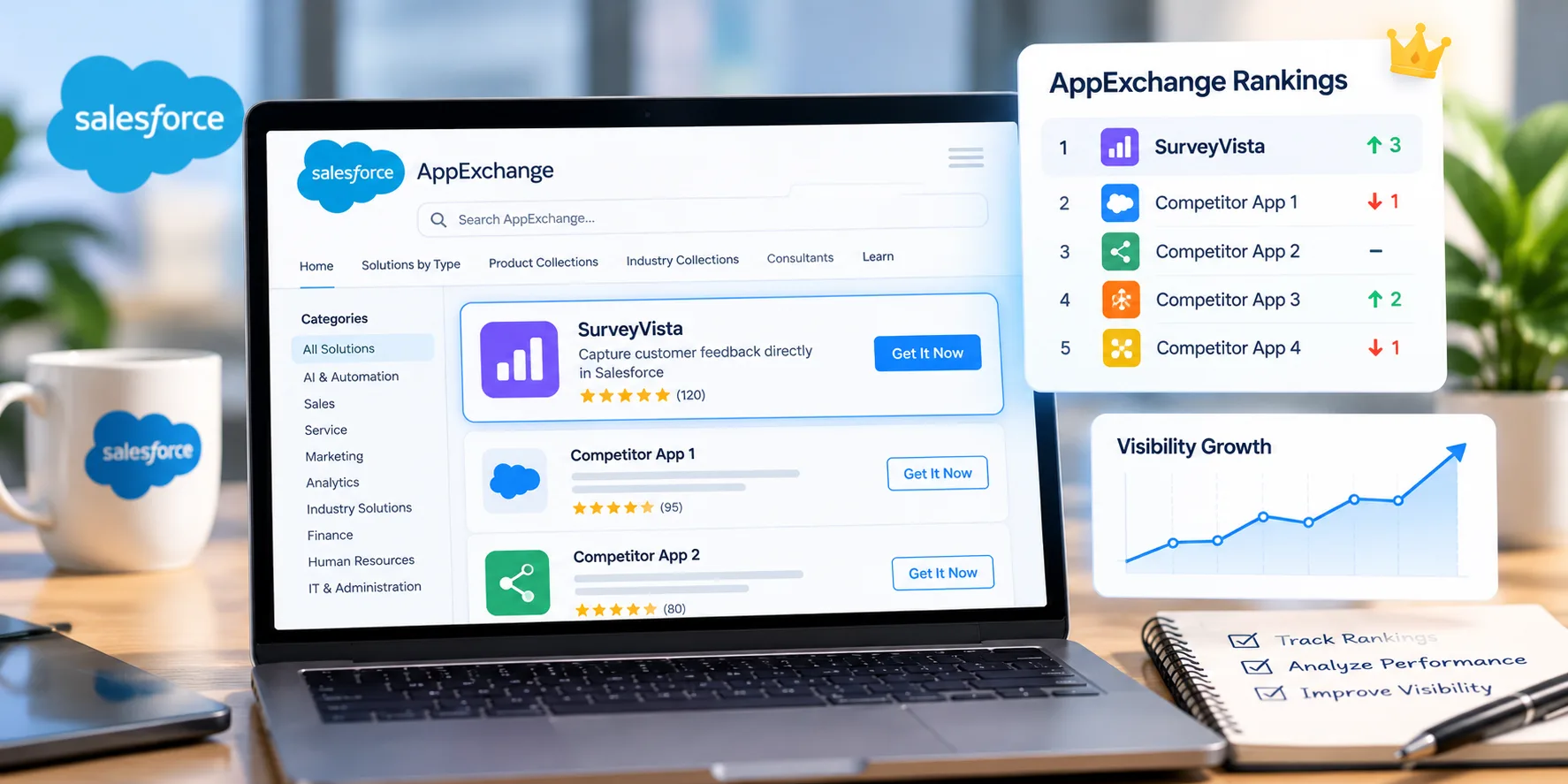
How to Track Salesforce AppExchange Rankings and Improve Your App’s Visibility
Track your AppExchange rankings, identify keyword opportunities, and optimize your Salesforce listing to improve marketplace visibility, attract qualified buyers, and drive more installs.

Ashish Kamathi, SEO Expert
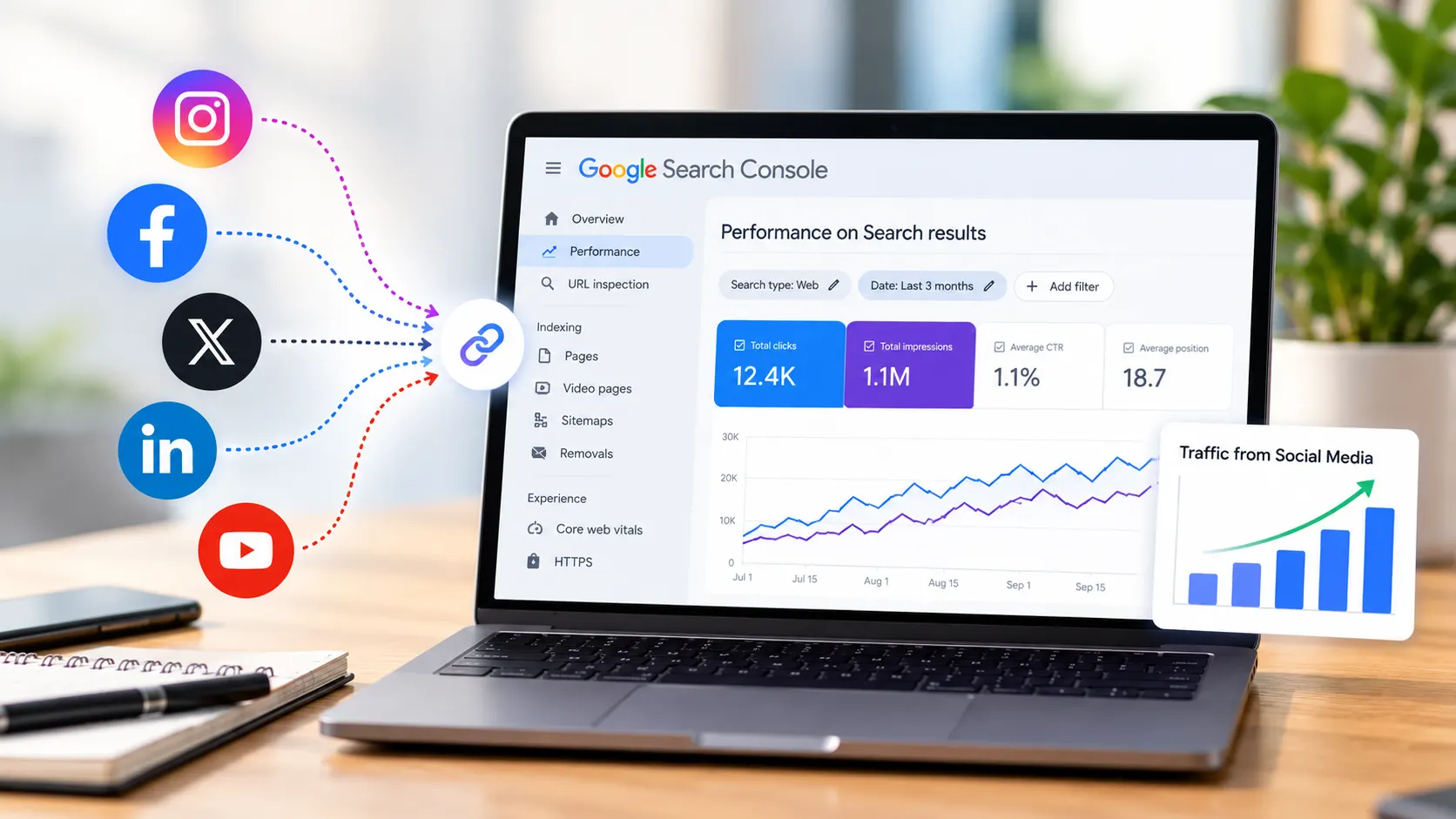
How to Add Social Media to Google Search Console and Track Their Performance
Learn how Google Search Console handles social media, what platform properties can track, and how to measure social performance alongside your website's organic search data.

Shraddha Thuwal
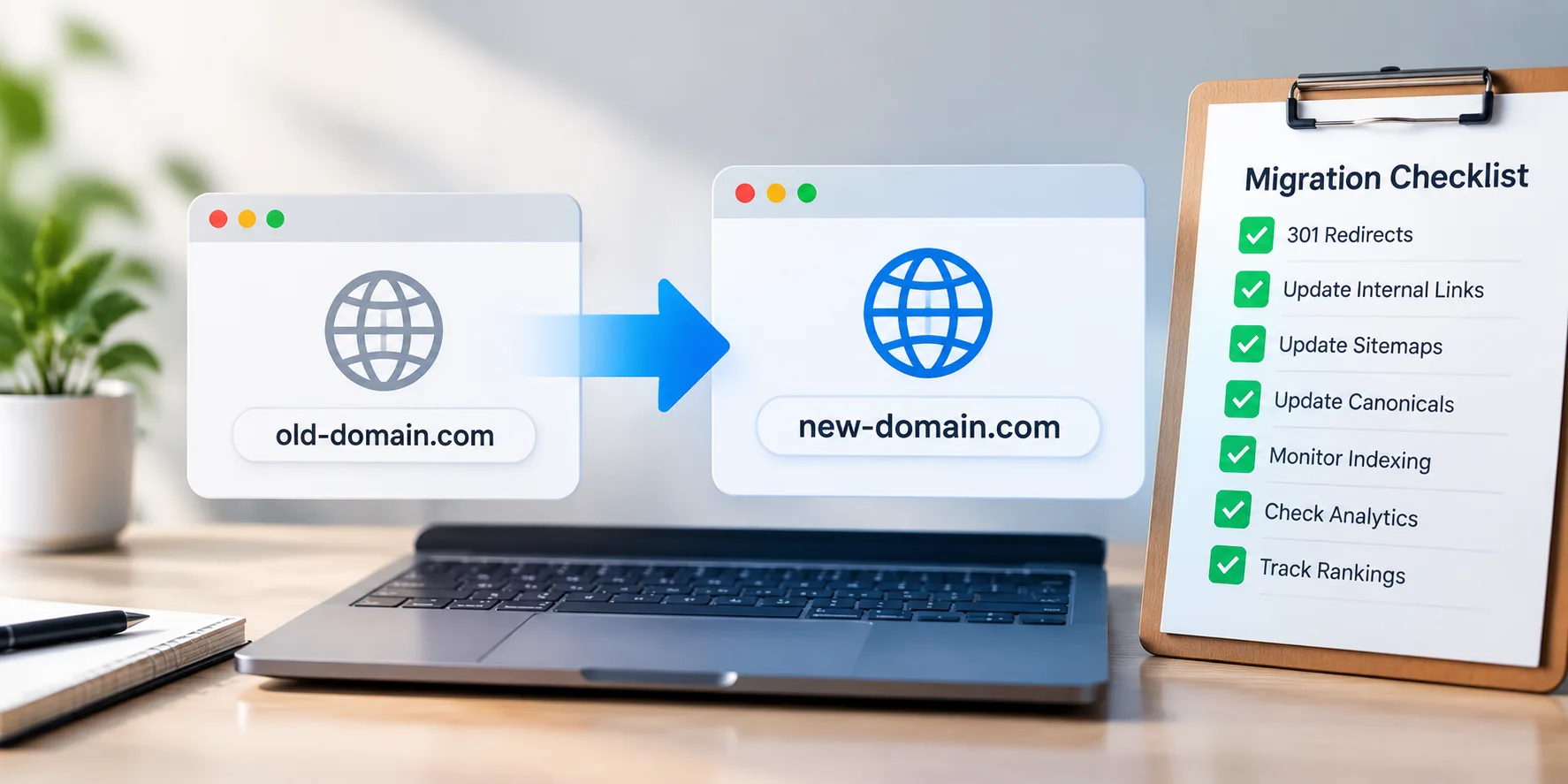
Domain Migration Checklist: A Step-by-Step Guide to Protect Rankings and Traffic
A successful domain migration requires careful SEO planning. Follow this checklist to manage redirects, preserve rankings, protect traffic, and avoid common migration issues.
Shraddha Thuwal
How to Track Salesforce AppExchange Rankings and Improve Your App’s Visibility
Track your AppExchange rankings, identify keyword opportunities, and optimize your Salesforce listing to improve marketplace visibility, attract qualified buyers, and drive more installs.
Ashish Kamathi, SEO Expert
How to Add Social Media to Google Search Console and Track Their Performance
Learn how Google Search Console handles social media, what platform properties can track, and how to measure social performance alongside your website's organic search data.
Shraddha Thuwal
Get Visibility, Everywhere



























Just drop us your email and we’ll reach out
Get Visibility, Everywhere
Just drop us your email and we’ll reach out
Get Visibility, Everywhere
Just drop us your email and we’ll reach out
Our weekly newsletter contains insights from strategies we use for our clients. We don’t spam.
Copyright © 2026 Vryse
Our weekly newsletter contains insights from strategies we use for our clients. We don’t spam.
Copyright © 2026 Vryse