Informational
Informational
SEO vs PPC for SaaS: Which Channel Builds a Stronger Pipeline in 2026?
SEO vs PPC for SaaS: Which Channel Builds a Stronger Pipeline in 2026?
SEO and PPC both help SaaS companies attract buyers, but they work differently. Compare their costs, timelines, and impact to build a strategy that drives visibility, leads, and long-term growth.

Ashish Kamathi, SEO Expert
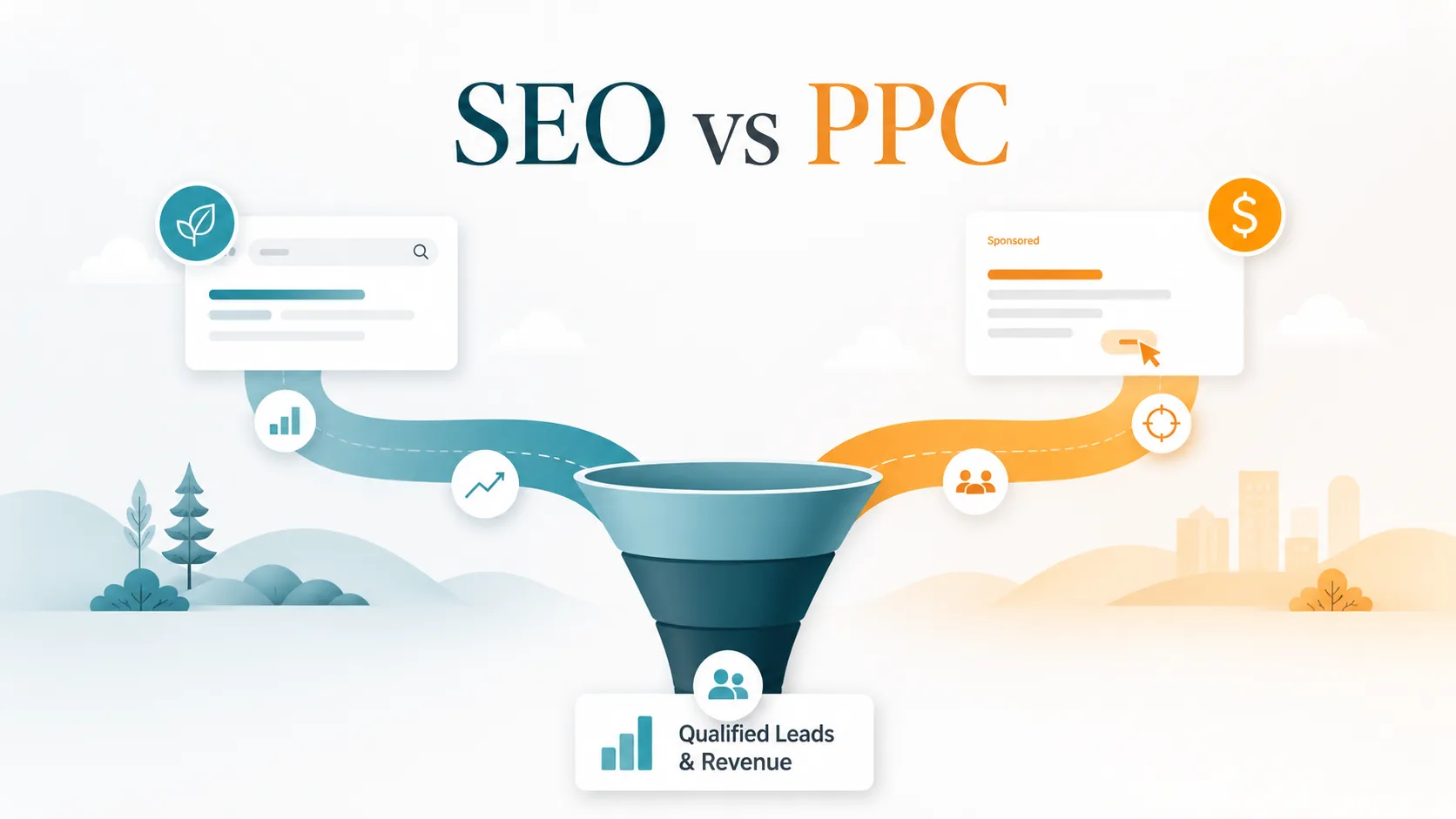
SaaS companies have debated SEO vs PPC for years, but the decision is changing in 2026. Buyers are now using AI assistants such as ChatGPT, Perplexity, and Google AI features alongside traditional search engines.
This changes how each channel contributes to the SaaS marketing funnel. SEO can build long-term organic visibility, while PPC can generate immediate traffic and test demand quickly.
The right choice depends on your growth stage, sales cycle, budget, and how your buyers search for solutions.
How SaaS Buyers Research Before Talking to Sales
SaaS purchases usually involve research, comparisons, and multiple decision-makers. Buyers often explore their options before contacting sales.
Their searches typically become more specific as they move through the funnel:
Buyer Stage | Typical Search | Best Channel Opportunity |
Problem awareness | “Why is our trial-to-paid conversion low?” | SEO |
Solution research | “Best onboarding software” | SEO |
Vendor comparison | “[Competitor] alternative” | SEO + PPC |
Purchase intent | “[Category] pricing” | SEO + PPC |
Brand search | “[Brand] pricing” | PPC + SEO |
The key point is that SEO and PPC can target the same buyer at different stages. SEO is particularly useful for building awareness and trust, while PPC can capture high-intent demand quickly.
What Does SEO Deliver for SaaS?
SaaS SEO is not simply about publishing more blog posts. A strong SEO strategy builds topical authority around the problems, questions, and solutions that matter to your target buyers.
SEO can help SaaS companies:
Capture problem-based searches early in the funnel
Build organic visibility around commercial keywords
Rank for comparison and alternative searches
Generate recurring organic traffic without paying for every click
Build long-term brand authority
Support lower customer acquisition costs over time
The main limitation is time. SEO often takes 3 to 6 months to gain meaningful traction on an established domain and can take longer for a new website.
What Does PPC Deliver for SaaS?
PPC gives SaaS companies something SEO cannot provide immediately: speed.
Paid search can place your brand in front of high-intent users as soon as campaigns are launched. It also provides quick feedback on messaging, keywords, offers, and landing pages.
PPC works particularly well for:
Branded searches
Competitor searches
Product-specific searches
Pricing-related searches
High-intent commercial keywords
New product or offer testing
The downside is cost. SaaS PPC clicks can range from $5 to $50, with competitive categories such as fintech and HR software often exceeding $100 per click.
Unlike SEO, PPC also stops generating traffic when the advertising budget stops.
SEO vs PPC for SaaS: Cost, Timing, and Performance
Factor | SEO | PPC |
Time to results | Usually 3 to 6 months | Immediate |
Cost model | Upfront investment | Pay per click |
ROI | Compounds over time | Closely tied to ongoing spend |
Traffic | Full funnel | Strongest for high-intent searches |
Trust | Earned visibility | Paid visibility |
Typical cost | $3,000 to $15,000 per month for serious programs | $5 to $50+ per click |
Best for | Long-term organic growth | Fast demand capture |
Main challenge | Takes time to build | Can become expensive without optimisation |
Industry benchmarks also suggest that organic traffic can convert better than paid search for B2B SaaS. One benchmark places organic conversion at around 2.1%, compared with approximately 1.0% for paid search.
These figures are directional, not universal. Conversion rates vary significantly by industry, offer, traffic source, and funnel.
For many SaaS companies, the cost advantage of SEO becomes more visible after several months. Some SaaS specific analyses place the SEO and PPC cost crossover between month 3 and month 12, depending on competition, domain strength, and execution.
How AI Search Is Changing SEO and PPC for SaaS
The traditional SEO vs PPC debate assumes buyers mainly use Google. That is changing.
More SaaS buyers are now using ChatGPT, Perplexity, Google AI Overviews, and AI Mode during the research stage.
This creates a new consideration for both channels:
Channel | Impact of AI Search |
SEO | Rankings alone may not generate a click if AI answers the query directly. Content needs to be structured, useful, and easy for AI systems to cite. |
PPC | Broad informational searches may become less valuable when AI answers the question before the user reaches the ads. High-intent searches remain important. |
AI visibility | Brands need to understand where they are mentioned and cited across AI platforms, not just where they rank on Google. |
This means SaaS companies should not optimise only for traditional rankings. They should also consider how their content appears in AI-generated answers.
For a deeper look at this shift, see our guide on how to optimise for AI search.
SEO vs PPC: Which Is Better for Your SaaS Company?
There is no single answer. The right channel mix depends on your growth stage and business model.
SaaS Stage | Suggested Mix | Primary Goal |
Pre-product-market fit | 70% to 80% PPC, 20% to 30% SEO | Test messaging and demand quickly |
Post product-market fit | 50% to 60% PPC, 40% to 50% SEO | Scale while building organic authority |
Mature brand | Around 50/50 | Capture both organic and paid demand |
Enterprise | Integrated strategy | Coordinate SEO, PPC, content, and brand visibility |
When SEO Should Be a Priority
SEO becomes particularly valuable when:
Your buyers spend significant time researching before purchasing.
You want to reduce reliance on paid acquisition.
Your sales cycle is long.
Your average contract value is high.
You have the resources to invest in content and technical SEO.
You want traffic that continues generating value after the initial investment.
When PPC Should Be a Priority
PPC is usually more useful when:
You need leads quickly.
You are testing product messaging.
You are entering a competitive market.
You have strong high-intent keywords available.
You need immediate visibility for a new product or offer.
You have conversion-focused landing pages.
Why SEO and PPC Work Better Together
SEO and PPC should not always be treated as competing channels. They can support each other throughout the SaaS funnel.
PPC can help SEO by:
Showing which keywords generate conversions.
Testing headlines and value propositions quickly.
Identifying high-performing landing page messaging.
Providing early demand data while SEO builds.
SEO can help PPC by:
Identifying topics that attract qualified buyers.
Providing content ideas for paid campaigns.
Building brand familiarity before a user clicks an ad.
Capturing organic demand without paying for every visit.
Running both channels also gives a SaaS brand more opportunities to appear for important commercial searches.
The biggest mistake is relying entirely on one channel. PPC alone can become expensive, while SEO alone may take too long to generate pipeline.
How to Measure SEO and PPC Performance
Looking only at traffic is not enough. SaaS companies should measure how each channel contributes to pipeline and revenue.
SEO Metrics
Organic traffic
Keyword rankings
Organic conversions
Qualified leads
Cost per organic lead
Organic assisted conversions
Revenue from organic traffic
PPC Metrics
Click-through rate
Cost per click
Conversion rate
Cost per lead
Qualified leads
Customer acquisition cost
Revenue and ROAS
Track AI Visibility With Vryse
Traditional SEO tools no longer show the complete picture. If buyers are using AI assistants during their research, SaaS brands also need to understand how often they appear in AI-generated answers.
Vryse can track AI visibility across relevant search and AI platforms and show how your brand compares with competitors.
For a SaaS SEO strategy, this can help you monitor:
How often your brand appears in AI answers
Which prompts and topics trigger brand mentions
Which competitors are mentioned instead
Which sources are being cited
How AI visibility changes over time
Where new content and visibility opportunities exist
This gives SEO teams another layer of data alongside traditional rankings, traffic, and conversions.
Final Thoughts
The SEO vs PPC debate is no longer about choosing one channel over the other. For most SaaS companies, the stronger strategy is to use both based on their strengths.
Use PPC for speed, testing, and high-intent demand. Use SEO for authority, organic visibility, and long-term growth. As AI search continues to influence SaaS buyer research, add AI visibility tracking to understand whether your brand is actually being discovered and cited beyond traditional search.
The most effective SaaS marketing strategy isn't simply about getting more traffic. It is about building visibility across search, paid results, and AI answer engines and turning that visibility into qualified pipeline.
For a deeper look at building authority across search and AI platforms, see our guide on topical authority.
SaaS companies have debated SEO vs PPC for years, but the decision is changing in 2026. Buyers are now using AI assistants such as ChatGPT, Perplexity, and Google AI features alongside traditional search engines.
This changes how each channel contributes to the SaaS marketing funnel. SEO can build long-term organic visibility, while PPC can generate immediate traffic and test demand quickly.
The right choice depends on your growth stage, sales cycle, budget, and how your buyers search for solutions.
How SaaS Buyers Research Before Talking to Sales
SaaS purchases usually involve research, comparisons, and multiple decision-makers. Buyers often explore their options before contacting sales.
Their searches typically become more specific as they move through the funnel:
Buyer Stage | Typical Search | Best Channel Opportunity |
Problem awareness | “Why is our trial-to-paid conversion low?” | SEO |
Solution research | “Best onboarding software” | SEO |
Vendor comparison | “[Competitor] alternative” | SEO + PPC |
Purchase intent | “[Category] pricing” | SEO + PPC |
Brand search | “[Brand] pricing” | PPC + SEO |
The key point is that SEO and PPC can target the same buyer at different stages. SEO is particularly useful for building awareness and trust, while PPC can capture high-intent demand quickly.
What Does SEO Deliver for SaaS?
SaaS SEO is not simply about publishing more blog posts. A strong SEO strategy builds topical authority around the problems, questions, and solutions that matter to your target buyers.
SEO can help SaaS companies:
Capture problem-based searches early in the funnel
Build organic visibility around commercial keywords
Rank for comparison and alternative searches
Generate recurring organic traffic without paying for every click
Build long-term brand authority
Support lower customer acquisition costs over time
The main limitation is time. SEO often takes 3 to 6 months to gain meaningful traction on an established domain and can take longer for a new website.
What Does PPC Deliver for SaaS?
PPC gives SaaS companies something SEO cannot provide immediately: speed.
Paid search can place your brand in front of high-intent users as soon as campaigns are launched. It also provides quick feedback on messaging, keywords, offers, and landing pages.
PPC works particularly well for:
Branded searches
Competitor searches
Product-specific searches
Pricing-related searches
High-intent commercial keywords
New product or offer testing
The downside is cost. SaaS PPC clicks can range from $5 to $50, with competitive categories such as fintech and HR software often exceeding $100 per click.
Unlike SEO, PPC also stops generating traffic when the advertising budget stops.
SEO vs PPC for SaaS: Cost, Timing, and Performance
Factor | SEO | PPC |
Time to results | Usually 3 to 6 months | Immediate |
Cost model | Upfront investment | Pay per click |
ROI | Compounds over time | Closely tied to ongoing spend |
Traffic | Full funnel | Strongest for high-intent searches |
Trust | Earned visibility | Paid visibility |
Typical cost | $3,000 to $15,000 per month for serious programs | $5 to $50+ per click |
Best for | Long-term organic growth | Fast demand capture |
Main challenge | Takes time to build | Can become expensive without optimisation |
Industry benchmarks also suggest that organic traffic can convert better than paid search for B2B SaaS. One benchmark places organic conversion at around 2.1%, compared with approximately 1.0% for paid search.
These figures are directional, not universal. Conversion rates vary significantly by industry, offer, traffic source, and funnel.
For many SaaS companies, the cost advantage of SEO becomes more visible after several months. Some SaaS specific analyses place the SEO and PPC cost crossover between month 3 and month 12, depending on competition, domain strength, and execution.
How AI Search Is Changing SEO and PPC for SaaS
The traditional SEO vs PPC debate assumes buyers mainly use Google. That is changing.
More SaaS buyers are now using ChatGPT, Perplexity, Google AI Overviews, and AI Mode during the research stage.
This creates a new consideration for both channels:
Channel | Impact of AI Search |
SEO | Rankings alone may not generate a click if AI answers the query directly. Content needs to be structured, useful, and easy for AI systems to cite. |
PPC | Broad informational searches may become less valuable when AI answers the question before the user reaches the ads. High-intent searches remain important. |
AI visibility | Brands need to understand where they are mentioned and cited across AI platforms, not just where they rank on Google. |
This means SaaS companies should not optimise only for traditional rankings. They should also consider how their content appears in AI-generated answers.
For a deeper look at this shift, see our guide on how to optimise for AI search.
SEO vs PPC: Which Is Better for Your SaaS Company?
There is no single answer. The right channel mix depends on your growth stage and business model.
SaaS Stage | Suggested Mix | Primary Goal |
Pre-product-market fit | 70% to 80% PPC, 20% to 30% SEO | Test messaging and demand quickly |
Post product-market fit | 50% to 60% PPC, 40% to 50% SEO | Scale while building organic authority |
Mature brand | Around 50/50 | Capture both organic and paid demand |
Enterprise | Integrated strategy | Coordinate SEO, PPC, content, and brand visibility |
When SEO Should Be a Priority
SEO becomes particularly valuable when:
Your buyers spend significant time researching before purchasing.
You want to reduce reliance on paid acquisition.
Your sales cycle is long.
Your average contract value is high.
You have the resources to invest in content and technical SEO.
You want traffic that continues generating value after the initial investment.
When PPC Should Be a Priority
PPC is usually more useful when:
You need leads quickly.
You are testing product messaging.
You are entering a competitive market.
You have strong high-intent keywords available.
You need immediate visibility for a new product or offer.
You have conversion-focused landing pages.
Why SEO and PPC Work Better Together
SEO and PPC should not always be treated as competing channels. They can support each other throughout the SaaS funnel.
PPC can help SEO by:
Showing which keywords generate conversions.
Testing headlines and value propositions quickly.
Identifying high-performing landing page messaging.
Providing early demand data while SEO builds.
SEO can help PPC by:
Identifying topics that attract qualified buyers.
Providing content ideas for paid campaigns.
Building brand familiarity before a user clicks an ad.
Capturing organic demand without paying for every visit.
Running both channels also gives a SaaS brand more opportunities to appear for important commercial searches.
The biggest mistake is relying entirely on one channel. PPC alone can become expensive, while SEO alone may take too long to generate pipeline.
How to Measure SEO and PPC Performance
Looking only at traffic is not enough. SaaS companies should measure how each channel contributes to pipeline and revenue.
SEO Metrics
Organic traffic
Keyword rankings
Organic conversions
Qualified leads
Cost per organic lead
Organic assisted conversions
Revenue from organic traffic
PPC Metrics
Click-through rate
Cost per click
Conversion rate
Cost per lead
Qualified leads
Customer acquisition cost
Revenue and ROAS
Track AI Visibility With Vryse
Traditional SEO tools no longer show the complete picture. If buyers are using AI assistants during their research, SaaS brands also need to understand how often they appear in AI-generated answers.
Vryse can track AI visibility across relevant search and AI platforms and show how your brand compares with competitors.
For a SaaS SEO strategy, this can help you monitor:
How often your brand appears in AI answers
Which prompts and topics trigger brand mentions
Which competitors are mentioned instead
Which sources are being cited
How AI visibility changes over time
Where new content and visibility opportunities exist
This gives SEO teams another layer of data alongside traditional rankings, traffic, and conversions.
Final Thoughts
The SEO vs PPC debate is no longer about choosing one channel over the other. For most SaaS companies, the stronger strategy is to use both based on their strengths.
Use PPC for speed, testing, and high-intent demand. Use SEO for authority, organic visibility, and long-term growth. As AI search continues to influence SaaS buyer research, add AI visibility tracking to understand whether your brand is actually being discovered and cited beyond traditional search.
The most effective SaaS marketing strategy isn't simply about getting more traffic. It is about building visibility across search, paid results, and AI answer engines and turning that visibility into qualified pipeline.
For a deeper look at building authority across search and AI platforms, see our guide on topical authority.
Frequently Asked Questions
Frequently Asked Questions
Is SEO or PPC better for SaaS lead generation?
Neither is universally better. PPC provides faster results, while SEO builds long term organic visibility. Most SaaS companies benefit from using both, with the balance changing as the business grows.
What is a realistic PPC budget for SaaS?
This depends on the industry and keyword competition. A testing budget of around $3,000 to $5,000 per month can provide enough data to evaluate messaging and demand before increasing spend.
How long does SaaS SEO take to work?
SEO commonly takes 3 to 6 months to gain meaningful traction on an established website. New or highly competitive websites may take longer.
When does SEO become cheaper than PPC?
There is no fixed point. SaaS specific analyses commonly place the crossover between 3 and 12 months, depending on competition, domain authority, content quality, and execution.
Related Articles
Related Articles
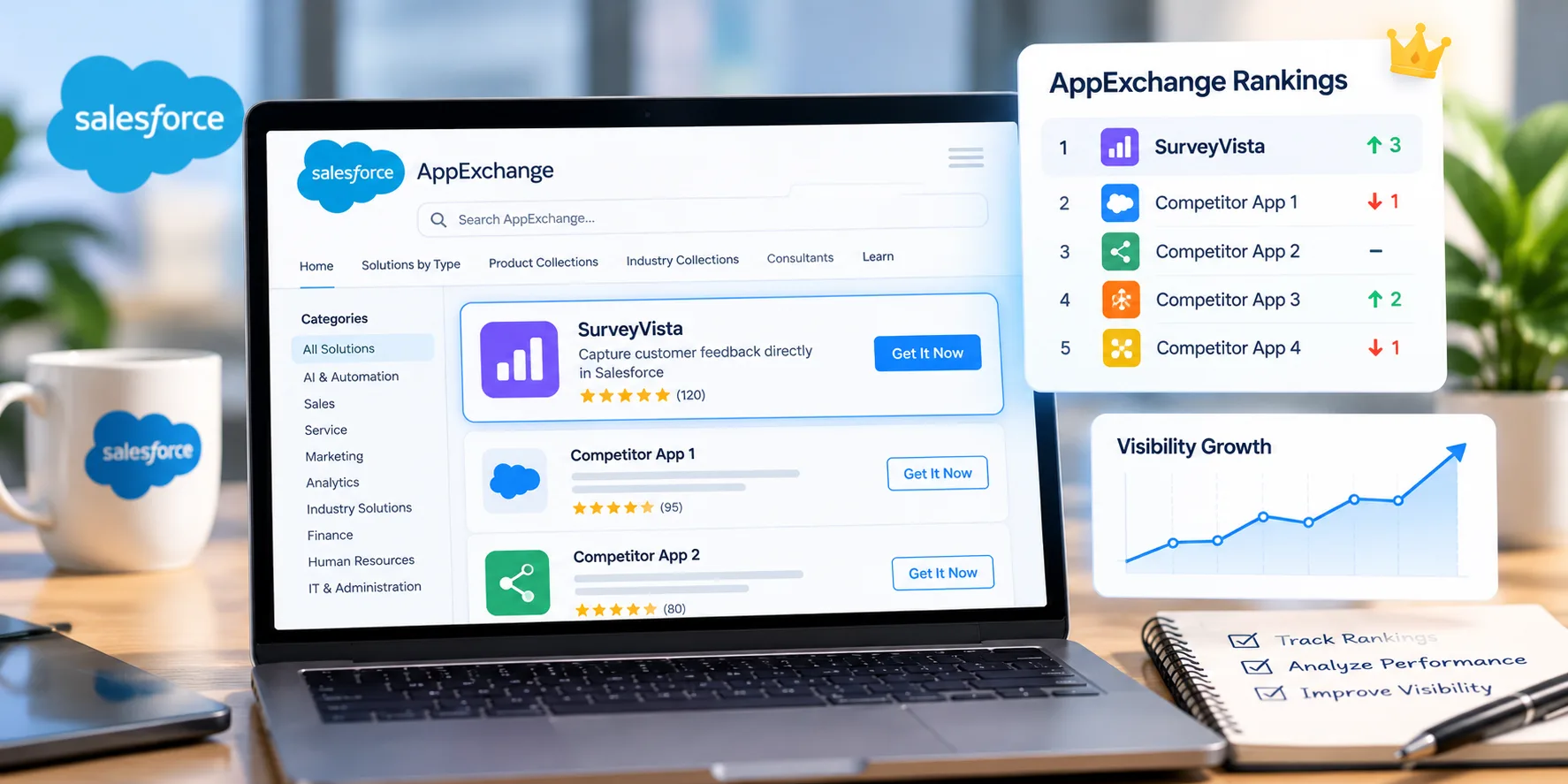
How to Track Salesforce AppExchange Rankings and Improve Your App’s Visibility
Track your AppExchange rankings, identify keyword opportunities, and optimize your Salesforce listing to improve marketplace visibility, attract qualified buyers, and drive more installs.
Ashish Kamathi, SEO Expert
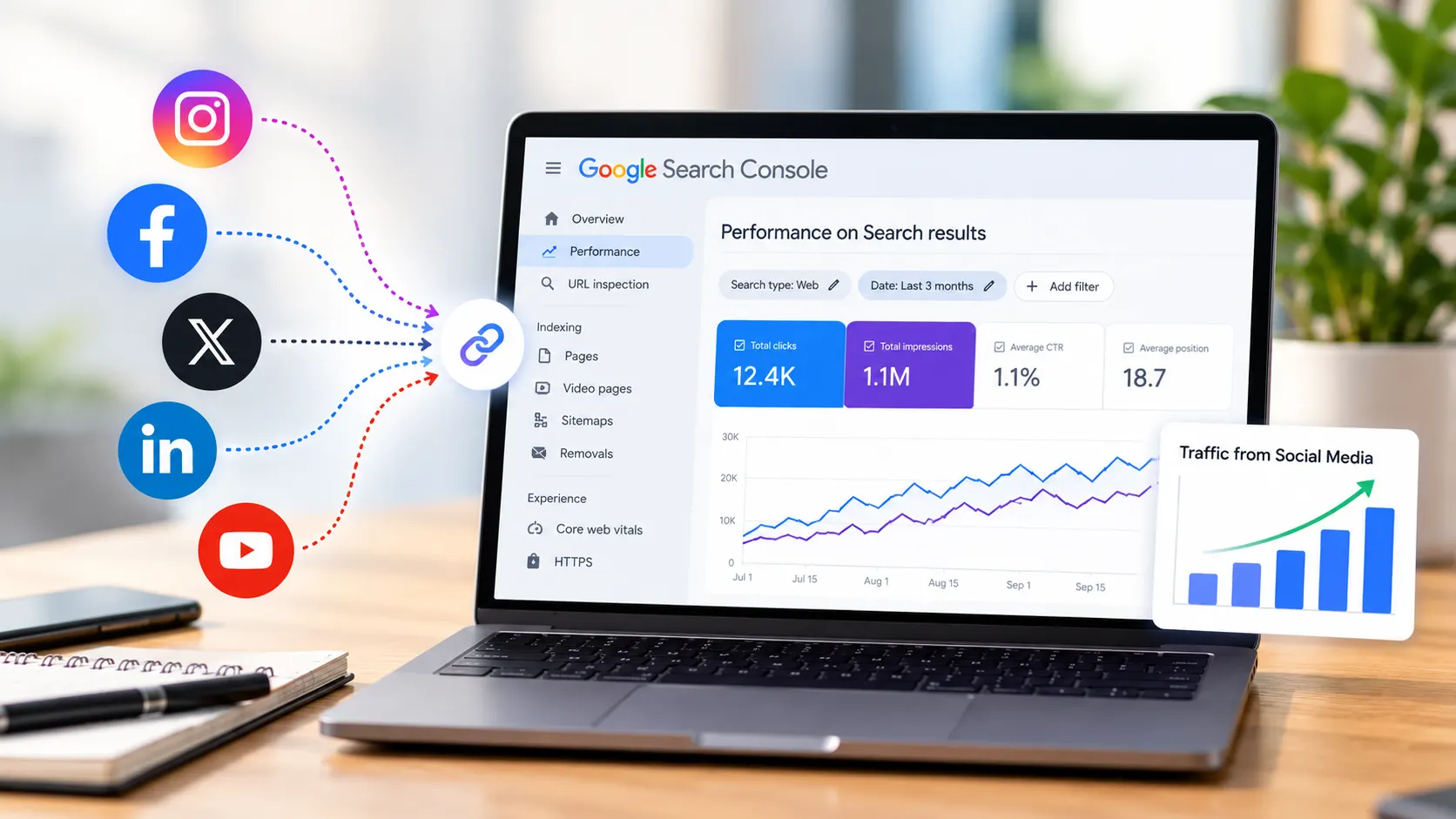
How to Add Social Media to Google Search Console and Track Their Performance
Learn how Google Search Console handles social media, what platform properties can track, and how to measure social performance alongside your website's organic search data.

Shraddha Thuwal
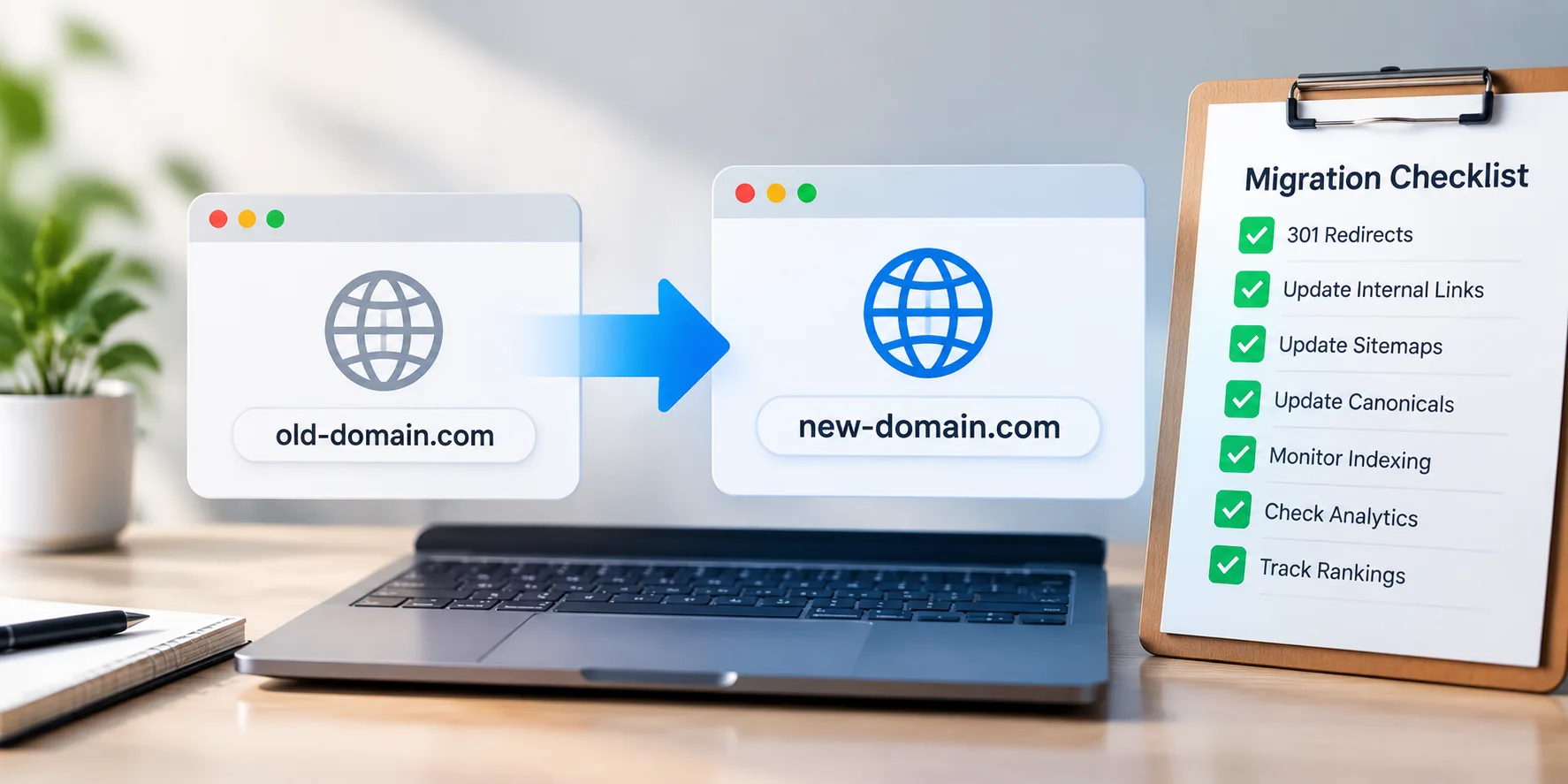
Domain Migration Checklist: A Step-by-Step Guide to Protect Rankings and Traffic
A successful domain migration requires careful SEO planning. Follow this checklist to manage redirects, preserve rankings, protect traffic, and avoid common migration issues.
Shraddha Thuwal
How to Track Salesforce AppExchange Rankings and Improve Your App’s Visibility
Track your AppExchange rankings, identify keyword opportunities, and optimize your Salesforce listing to improve marketplace visibility, attract qualified buyers, and drive more installs.
Ashish Kamathi, SEO Expert
How to Add Social Media to Google Search Console and Track Their Performance
Learn how Google Search Console handles social media, what platform properties can track, and how to measure social performance alongside your website's organic search data.
Shraddha Thuwal
Get Visibility, Everywhere



























Just drop us your email and we’ll reach out
Get Visibility, Everywhere
Just drop us your email and we’ll reach out
Get Visibility, Everywhere
Just drop us your email and we’ll reach out
Our weekly newsletter contains insights from strategies we use for our clients. We don’t spam.
Copyright © 2026 Vryse
Our weekly newsletter contains insights from strategies we use for our clients. We don’t spam.
Copyright © 2026 Vryse