General SEO
General SEO
Brand Mentions vs Backlinks: What Matters More for AI Search?
Brand Mentions vs Backlinks: What Matters More for AI Search?
Brand mentions and backlinks influence search visibility differently. Learn how they impact SEO and AI search, and why combining both signals helps brands improve online discoverability.

Shraddha Thuwal
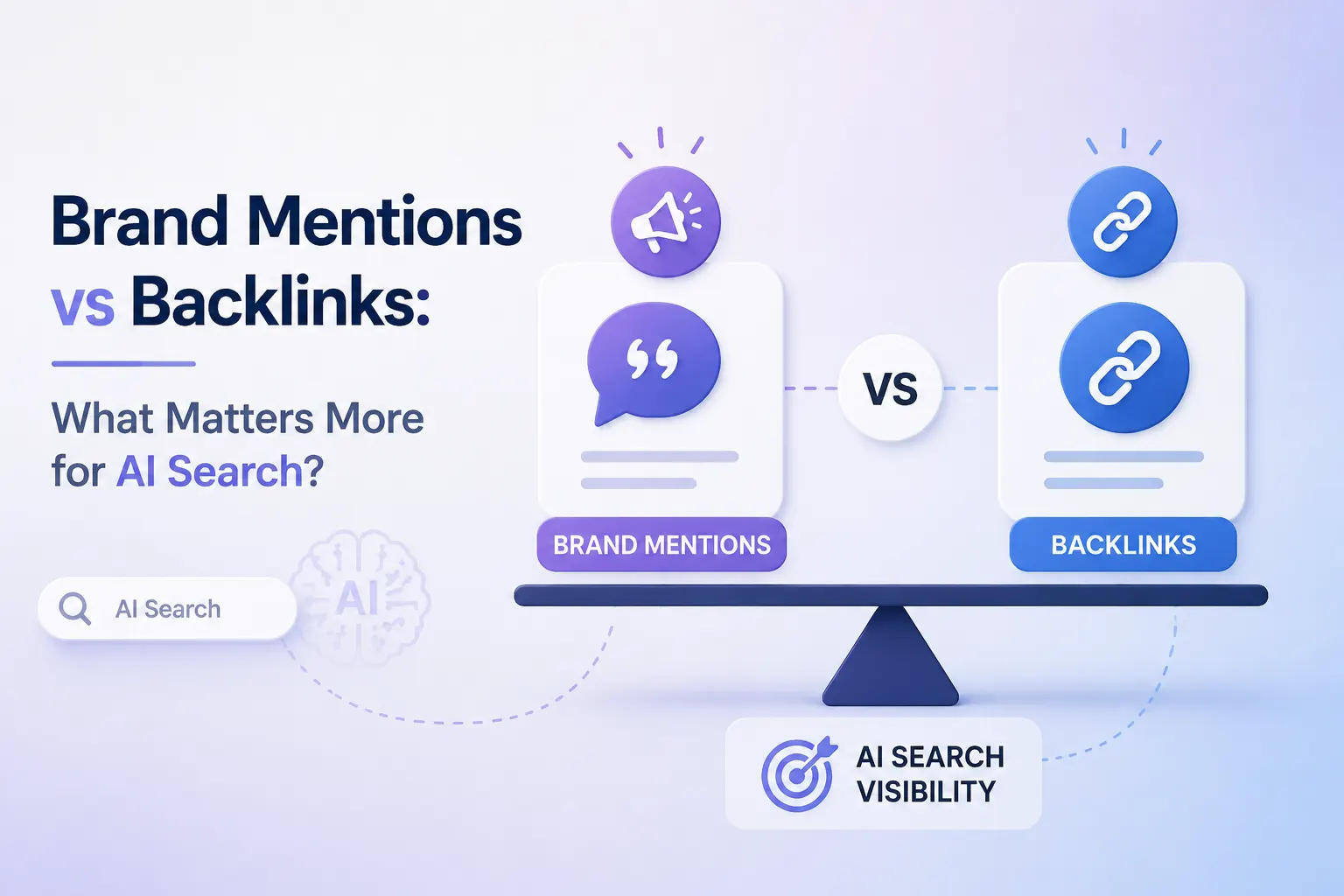
Brand mentions vs backlinks is no longer a one-or-the-other debate. For traditional Google rankings, backlinks still carry more direct weight. For AI search visibility across ChatGPT, Gemini, and Perplexity, brand mentions matter more. The strongest strategy in 2026 runs both together, not as competing tactics.
Key Takeaways
Backlinks transfer ranking authority through hyperlinks. Brand mentions build entity recognition through context, even without a link.
Ahrefs' 75,000-brand study found branded web mentions correlated roughly three times more strongly with AI visibility than backlinks.
Backlinks for AI SEO still matter because AI retrieval systems pull from high-ranking pages, which backlinks help create.
Brand mentions for AI search work because LLMs read prose, not link graphs. The sentence that names you is the vote.
Vryse builds both signals into a single GEO and SEO engagement, tracked through a real-time AI visibility dashboard.
How Brand Mentions vs Backlinks Actually Work
Brand mentions vs backlinks comes down to how search systems read the web.
Backlinks are hyperlinks from one website to another. Google uses them as votes of confidence. A page with 50 editorial backlinks from relevant sites ranks higher than a page with none. Backlinks pass PageRank, drive referral traffic, and remain one of Google's strongest ranking signals. That has not changed.
Brand mentions are any reference to your company, product, or founder, whether the mention includes a hyperlink or not. These show up in news articles, Reddit threads, YouTube transcripts, podcast descriptions, review platforms, and listicles. Google treats unlinked mentions as implied links. LLMs treat them as entity signals that shape which brands get surfaced in AI answers.
The split matters because traditional search and AI search evaluate authority differently. Google follows link graphs. ChatGPT follows language patterns. A brand mentioned in 30 credible industry roundups without a single hyperlink still registers in an LLM's training data. A brand with 200 backlinks but zero contextual discussion outside its own site does not.
Do Brand Mentions Help SEO
Yes, but not as a replacement for backlinks as it depends on which surface you are optimising for. For traditional Google rankings, backlinks remain the stronger direct signal. For AI search visibility, brand mentions carry more predictive weight.
Ahrefs studied 75,000 brands and found branded web mentions had a correlation of 0.664 with AI Overview visibility. Backlinks had a correlation of 0.218. YouTube mentions beat every other signal, partly because video transcripts feed AI training data directly.
Muck Rack analysed over 25 million links cited by ChatGPT, Claude, and Gemini. Earned media accounted for 84% of AI citations. Paid and advertorial content accounted for 0.3%.
That second number matters. You cannot buy your way into an AI answer. The press coverage and expert commentary your brand earns, even without a hyperlink, feeds AI systems more than any sponsored placement.
Backlinks vs Brand Mentions for Traditional SEO
Backlinks vs brand mentions for traditional rankings is not a close contest. Backlinks still win for Google.
Authority transfer: A relevant editorial backlink from a publication like Semrush, Ahrefs, or a vertical industry site passes link equity that directly moves keyword rankings.
Crawl and index signals: Search engine crawlers follow backlinks to discover and index new pages. A page with no inbound links is functionally invisible to Google.
Referral traffic: A backlink from a high-traffic page puts your brand in front of an audience that has never searched for you. That exposure generates branded searches, which in turn strengthen your entity signal.
Backlinks for AI SEO still play a role because AI retrieval systems frequently pull from pages that already rank well in traditional search. Strong backlink profiles create the ranking foundation that AI models reference during retrieval.
Brand Mentions for AI Search: Why LLMs Care
Brand mentions for AI search matter because LLMs do not check a link graph before deciding who belongs in an answer. They read text. They identify patterns. They learn which brands get talked about, in what context, and alongside which topics.
A consultancy named in five industry roundups earns the association with its category, even if all five writers forgot the link. This is entity recognition. The more credible sources mention your brand in the right context, the more likely an AI system is to surface your name when a user asks a question in your category.
Here is what builds brand mentions for AI search:
Original research and data: Studies with specific numbers get cited long after publication. LLMs pull from these repeatedly.
Expert commentary in earned media: Journalists quote sources. Those quotes end up in training data.
YouTube and podcast appearances: Transcripts are indexed. Ahrefs found YouTube mentions had the highest correlation with AI visibility of any signal measured.
Review platforms and community forums: Reddit, G2, and Quora discussions put your brand in the exact context where your category gets discussed.
Consistent brand naming: If your legal name, trading name, and product name all differ, AI systems meet three weak brands instead of one strong one. Pick one name. Spell it one way everywhere.
Vryse's guide to conversational search optimisation covers how to structure content so it gets retrieved by AI systems across all major platforms.
How To Build Both Signals Together
Step 1: Build the content foundation
Publish content that answers specific questions with concrete data. Structure it for AI retrieval with clear headings, direct answers in the first 40 to 60 words under each heading, and schema markup. Use Vryse's Fast Schema Markup Checker to validate structured data before publishing.
Step 2: Earn mentions through earned media and digital PR
Pitch original data to industry publications. Contribute expert commentary. Appear on podcasts. Every placement that names your brand, whether it links or not, strengthens your entity footprint.
Step 3: Convert unlinked mentions to backlinks
Monitor where your brand gets mentioned without a hyperlink. Send a single polite email asking for the link. Some convert. The ones that do not still count as entity signals.
Step 4: Track both signals in one place
Prompt tracking across ChatGPT, Gemini, and Perplexity shows where your brand appears in AI answers. Backlink monitoring shows where your domain authority is growing. Vryse's AI visibility dashboard tracks both from a single view, so you can see which actions drive which surface.
How To Evaluate What Your SEO Agency Covers
Most agencies still run link building as a standalone deliverable and ignore brand mentions entirely. Before signing, ask these questions:
Does the agency track unlinked brand mentions, or only backlinks? If they only track links, they are missing the stronger AI visibility signal.
Does the agency do prompt tracking across AI platforms? If not, they cannot measure whether their work produces AI visibility at all.
Is GEO built into the SEO engagement, or sold as a separate add-on? Vryse prices GEO and SEO together across every tier, because splitting them produces disconnected results.
Browse the Vryse case studies to see how a combined SEO and GEO approach produces results across B2B SaaS, healthtech, ecommerce, and hospitality.
Brand mentions vs backlinks is no longer a one-or-the-other debate. For traditional Google rankings, backlinks still carry more direct weight. For AI search visibility across ChatGPT, Gemini, and Perplexity, brand mentions matter more. The strongest strategy in 2026 runs both together, not as competing tactics.
Key Takeaways
Backlinks transfer ranking authority through hyperlinks. Brand mentions build entity recognition through context, even without a link.
Ahrefs' 75,000-brand study found branded web mentions correlated roughly three times more strongly with AI visibility than backlinks.
Backlinks for AI SEO still matter because AI retrieval systems pull from high-ranking pages, which backlinks help create.
Brand mentions for AI search work because LLMs read prose, not link graphs. The sentence that names you is the vote.
Vryse builds both signals into a single GEO and SEO engagement, tracked through a real-time AI visibility dashboard.
How Brand Mentions vs Backlinks Actually Work
Brand mentions vs backlinks comes down to how search systems read the web.
Backlinks are hyperlinks from one website to another. Google uses them as votes of confidence. A page with 50 editorial backlinks from relevant sites ranks higher than a page with none. Backlinks pass PageRank, drive referral traffic, and remain one of Google's strongest ranking signals. That has not changed.
Brand mentions are any reference to your company, product, or founder, whether the mention includes a hyperlink or not. These show up in news articles, Reddit threads, YouTube transcripts, podcast descriptions, review platforms, and listicles. Google treats unlinked mentions as implied links. LLMs treat them as entity signals that shape which brands get surfaced in AI answers.
The split matters because traditional search and AI search evaluate authority differently. Google follows link graphs. ChatGPT follows language patterns. A brand mentioned in 30 credible industry roundups without a single hyperlink still registers in an LLM's training data. A brand with 200 backlinks but zero contextual discussion outside its own site does not.
Do Brand Mentions Help SEO
Yes, but not as a replacement for backlinks as it depends on which surface you are optimising for. For traditional Google rankings, backlinks remain the stronger direct signal. For AI search visibility, brand mentions carry more predictive weight.
Ahrefs studied 75,000 brands and found branded web mentions had a correlation of 0.664 with AI Overview visibility. Backlinks had a correlation of 0.218. YouTube mentions beat every other signal, partly because video transcripts feed AI training data directly.
Muck Rack analysed over 25 million links cited by ChatGPT, Claude, and Gemini. Earned media accounted for 84% of AI citations. Paid and advertorial content accounted for 0.3%.
That second number matters. You cannot buy your way into an AI answer. The press coverage and expert commentary your brand earns, even without a hyperlink, feeds AI systems more than any sponsored placement.
Backlinks vs Brand Mentions for Traditional SEO
Backlinks vs brand mentions for traditional rankings is not a close contest. Backlinks still win for Google.
Authority transfer: A relevant editorial backlink from a publication like Semrush, Ahrefs, or a vertical industry site passes link equity that directly moves keyword rankings.
Crawl and index signals: Search engine crawlers follow backlinks to discover and index new pages. A page with no inbound links is functionally invisible to Google.
Referral traffic: A backlink from a high-traffic page puts your brand in front of an audience that has never searched for you. That exposure generates branded searches, which in turn strengthen your entity signal.
Backlinks for AI SEO still play a role because AI retrieval systems frequently pull from pages that already rank well in traditional search. Strong backlink profiles create the ranking foundation that AI models reference during retrieval.
Brand Mentions for AI Search: Why LLMs Care
Brand mentions for AI search matter because LLMs do not check a link graph before deciding who belongs in an answer. They read text. They identify patterns. They learn which brands get talked about, in what context, and alongside which topics.
A consultancy named in five industry roundups earns the association with its category, even if all five writers forgot the link. This is entity recognition. The more credible sources mention your brand in the right context, the more likely an AI system is to surface your name when a user asks a question in your category.
Here is what builds brand mentions for AI search:
Original research and data: Studies with specific numbers get cited long after publication. LLMs pull from these repeatedly.
Expert commentary in earned media: Journalists quote sources. Those quotes end up in training data.
YouTube and podcast appearances: Transcripts are indexed. Ahrefs found YouTube mentions had the highest correlation with AI visibility of any signal measured.
Review platforms and community forums: Reddit, G2, and Quora discussions put your brand in the exact context where your category gets discussed.
Consistent brand naming: If your legal name, trading name, and product name all differ, AI systems meet three weak brands instead of one strong one. Pick one name. Spell it one way everywhere.
Vryse's guide to conversational search optimisation covers how to structure content so it gets retrieved by AI systems across all major platforms.
How To Build Both Signals Together
Step 1: Build the content foundation
Publish content that answers specific questions with concrete data. Structure it for AI retrieval with clear headings, direct answers in the first 40 to 60 words under each heading, and schema markup. Use Vryse's Fast Schema Markup Checker to validate structured data before publishing.
Step 2: Earn mentions through earned media and digital PR
Pitch original data to industry publications. Contribute expert commentary. Appear on podcasts. Every placement that names your brand, whether it links or not, strengthens your entity footprint.
Step 3: Convert unlinked mentions to backlinks
Monitor where your brand gets mentioned without a hyperlink. Send a single polite email asking for the link. Some convert. The ones that do not still count as entity signals.
Step 4: Track both signals in one place
Prompt tracking across ChatGPT, Gemini, and Perplexity shows where your brand appears in AI answers. Backlink monitoring shows where your domain authority is growing. Vryse's AI visibility dashboard tracks both from a single view, so you can see which actions drive which surface.
How To Evaluate What Your SEO Agency Covers
Most agencies still run link building as a standalone deliverable and ignore brand mentions entirely. Before signing, ask these questions:
Does the agency track unlinked brand mentions, or only backlinks? If they only track links, they are missing the stronger AI visibility signal.
Does the agency do prompt tracking across AI platforms? If not, they cannot measure whether their work produces AI visibility at all.
Is GEO built into the SEO engagement, or sold as a separate add-on? Vryse prices GEO and SEO together across every tier, because splitting them produces disconnected results.
Browse the Vryse case studies to see how a combined SEO and GEO approach produces results across B2B SaaS, healthtech, ecommerce, and hospitality.
Frequently Asked Questions
Frequently Asked Questions
Do brand mentions help SEO more than backlinks in 2026?
For AI search surfaces like ChatGPT, Gemini, and Perplexity, brand mentions carry more predictive weight. For traditional Google rankings, backlinks remain the stronger direct signal. The best results come from running both together.
Can unlinked brand mentions improve Google rankings?
Not as directly as backlinks. Google treats unlinked mentions as implied links and entity signals, which contribute to overall authority. They do not pass PageRank the way a hyperlink does.
What is the fastest way to earn brand mentions for AI search?
Publish original research with specific numbers. Pitch it to industry publications and podcast hosts. Appear in roundups and listicles in your category. These placements generate the contextual references that AI systems use to decide who belongs in an answer.
How does Vryse track brand mentions and backlinks together?
Vryse tracks prompt visibility across major AI platforms and monitors Google rankings through a single real-time dashboard. Clients can see where they appear in both traditional search and AI answers without waiting for a monthly report. Plans start at ₹20,000 per month. Ready to build a strategy that covers both Google and AI search? Book a consult with Vryse and get a combined SEO and GEO scope built around your actual competitive landscape.
Related Articles
Related Articles
How to Track Salesforce AppExchange Rankings and Improve Your App’s Visibility
Track your AppExchange rankings, identify keyword opportunities, and optimize your Salesforce listing to improve marketplace visibility, attract qualified buyers, and drive more installs.

Ashish Kamathi, SEO Expert
How to Add Social Media to Google Search Console and Track Their Performance
Learn how Google Search Console handles social media, what platform properties can track, and how to measure social performance alongside your website's organic search data.
Shraddha Thuwal
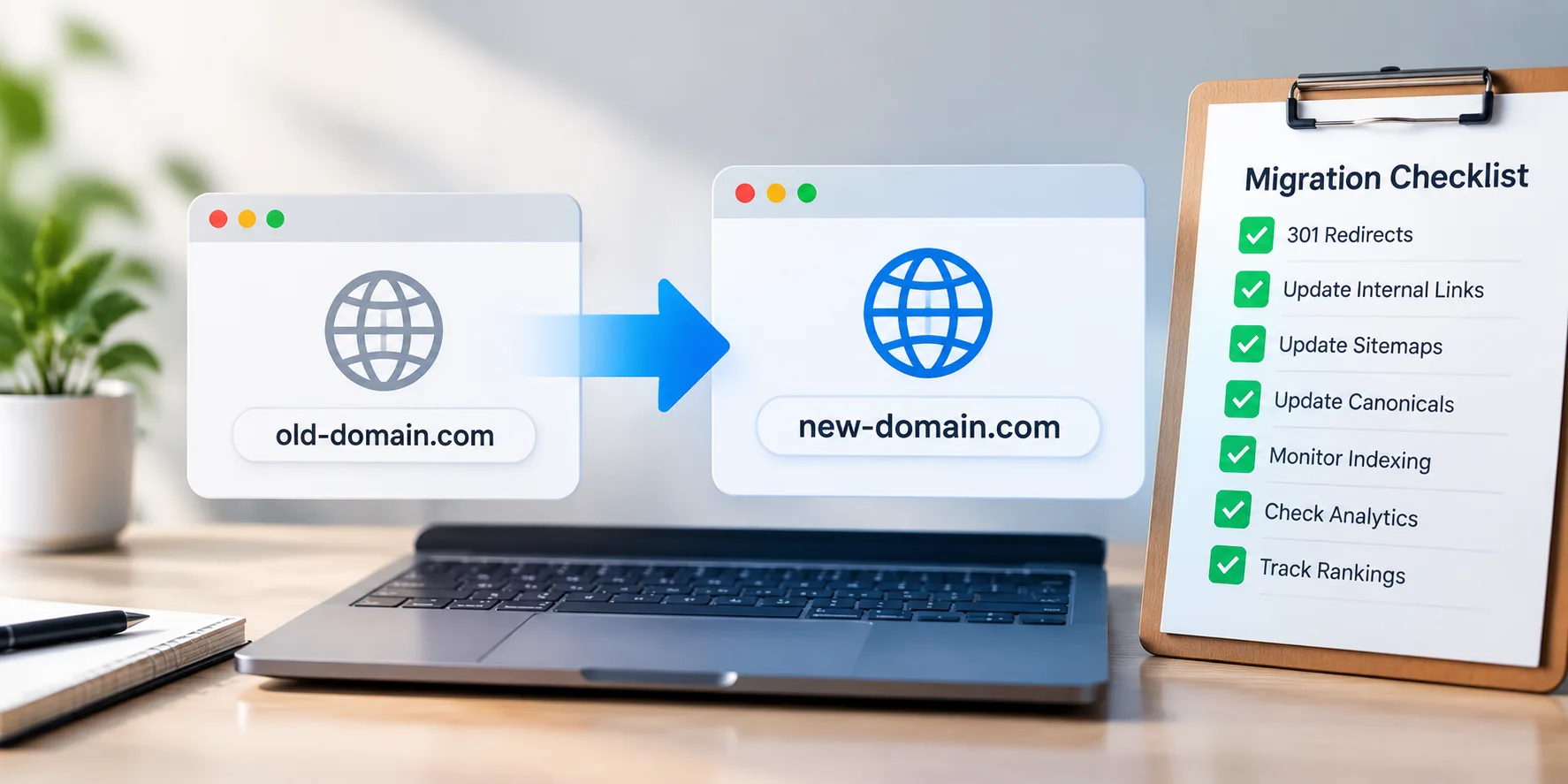
Domain Migration Checklist: A Step-by-Step Guide to Protect Rankings and Traffic
A successful domain migration requires careful SEO planning. Follow this checklist to manage redirects, preserve rankings, protect traffic, and avoid common migration issues.
Shraddha Thuwal
How to Track Salesforce AppExchange Rankings and Improve Your App’s Visibility
Track your AppExchange rankings, identify keyword opportunities, and optimize your Salesforce listing to improve marketplace visibility, attract qualified buyers, and drive more installs.
Ashish Kamathi, SEO Expert
How to Add Social Media to Google Search Console and Track Their Performance
Learn how Google Search Console handles social media, what platform properties can track, and how to measure social performance alongside your website's organic search data.
Shraddha Thuwal
Get Visibility, Everywhere



























Just drop us your email and we’ll reach out
Get Visibility, Everywhere
Just drop us your email and we’ll reach out
Get Visibility, Everywhere
Just drop us your email and we’ll reach out
Our weekly newsletter contains insights from strategies we use for our clients. We don’t spam.
Copyright © 2026 Vryse
Our weekly newsletter contains insights from strategies we use for our clients. We don’t spam.
Copyright © 2026 Vryse