Content Strategy
Content Strategy
Topical Authority: What It Is & How to Build It
Topical Authority: What It Is & How to Build It
Discover how topical authority helps brands earn trust, rankings, and AI citations. Learn practical steps to build topic expertise and outperform competitors in search.

Shraddha Thuwal

Topical authority SEO is the practice of building deep, interconnected expertise on a subject so that Google and AI search engines recognise your site as a trusted source on that topic. You build it by creating comprehensive content clusters around a core subject, linking them together, and covering every related question your audience asks, not just the high volume keywords.
Key Takeaways
Topical authority is distinct from domain authority: it is subject specific, not site wide. A newer site can outrank an older one by building denser topical coverage in a niche.
A Graphite study across 12 websites found that pages with high topical authority reached 7,500 impressions significantly faster than pages with low topical authority, with the gap widening at every milestone.
Google's 2013 Hummingbird update shifted ranking signals from individual keywords to topic understanding. Topical authority has been a core ranking factor ever since.
The fastest way to build topical authority is the pillar cluster model: one comprehensive pillar page supported by multiple cluster articles that each tackle a specific angle.
Entity based topical authority goes further. It requires Google to associate your brand name with the topic itself, not just rank your pages for related queries.
In AI search, topical authority directly determines whether your brand gets cited. LLMs pull from sources they perceive as authoritative on a subject.
What is Topical Authority SEO, Exactly?
Topical authority is how much Google and AI search engines trust your site as a source of knowledge on a specific subject. It is not about your site as a whole, that is domain authority. It is about how thoroughly and consistently you have covered a topic compared to every other site on the internet.
Think of it this way: a regional law firm with 50 detailed articles on employment law will outrank a general news site with one article on the same subject, even if the news site has far more backlinks. Google has enough context to know who the expert is.
According to Semrush's guide on topical authority, sites with strong topical authority in a niche tend to earn natural backlinks over time, compounding the ranking advantage. Google confirmed topical authority as a ranking factor in 2023 via its Search Central Blog, and the signal has only grown stronger since.
How is Topical Authority Different From Domain Authority?
Domain authority measures your site's overall strength, typically calculated from the quantity and quality of backlinks pointing to it. Topical authority measures subject specific credibility.
The practical difference matters enormously. A new SaaS company with low domain authority can rank on page one within months if it builds tight topical coverage on a specific problem its buyers care about. A high authority generalist site covering the same topic superficially will often lose that race.
Building a strong content silo structure in SEO is one of the most direct ways to separate your topical authority score from your overall domain authority. You are telling Google exactly which subjects you own.
Why Does Topical Authority Matter More now Than it did Before?
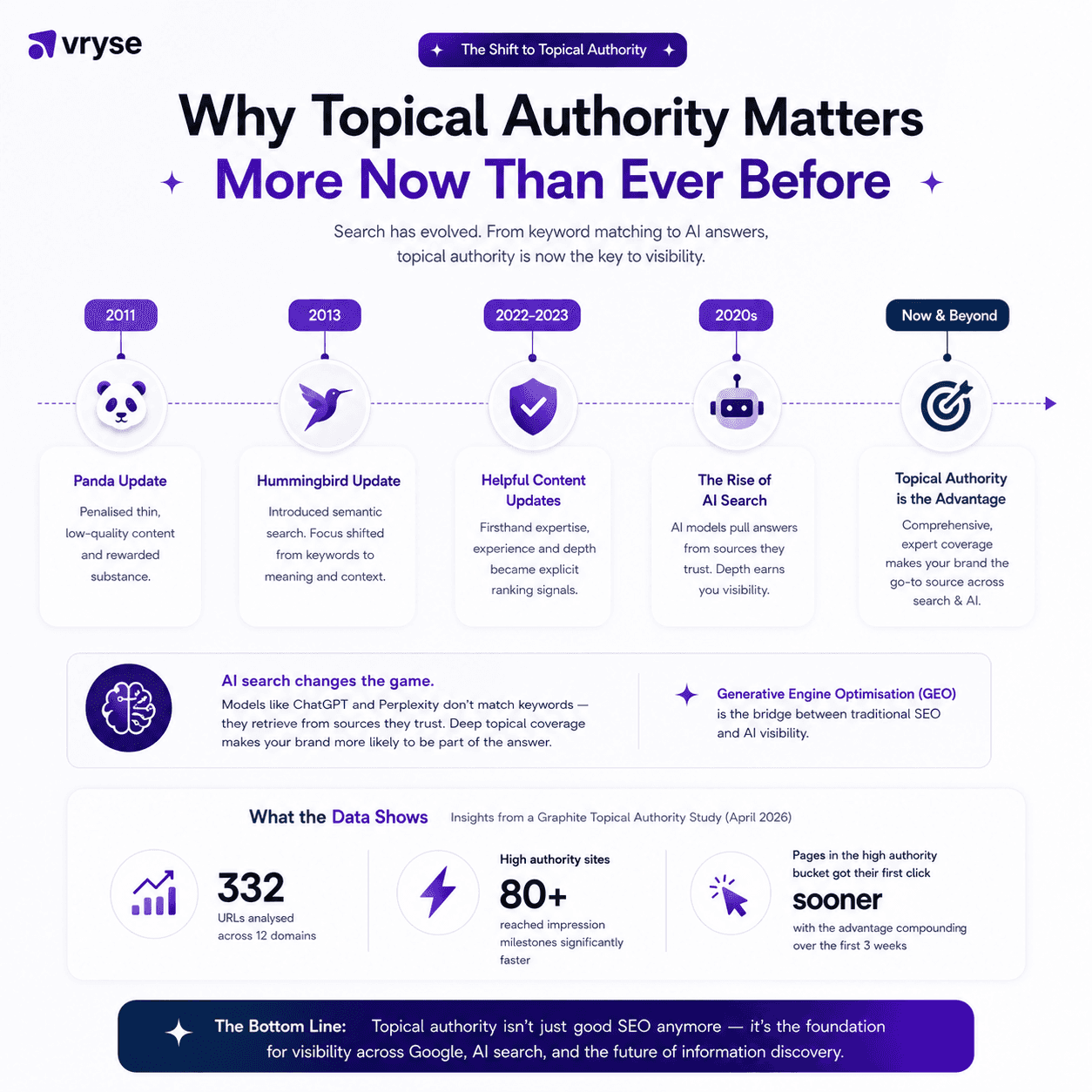
Google has been moving in this direction for over a decade. The 2011 Panda update penalised thin content. The 2013 Hummingbird update introduced semantic search. The 2022 and 2023 Helpful Content updates then made firsthand expertise an explicit ranking signal. Semrush's timeline of Google algorithm updates maps exactly how each update pushed topical signals further to the front.
The bigger shift is what is happening in AI search. When someone asks ChatGPT or Perplexity a question, the model does not run a keyword match. It retrieves from sources it has been trained to consider authoritative. If your brand has deep topical coverage on a subject, you are far more likely to appear in those answers. Understanding what generative engine optimisation actually means helps make clear why topical authority is now the bridge between traditional SEO and AI visibility.
According to a Graphite topical authority study published in April 2026, sites with high topical authority scores above 80 reached impression milestones significantly faster than sites scoring below 68, across 332 URLs and 12 domains. Pages in the high authority bucket also received their first click sooner, with the advantage compounding over the first three weeks after publishing.
How do you Build Topical Authority? A Step by Step Breakdown
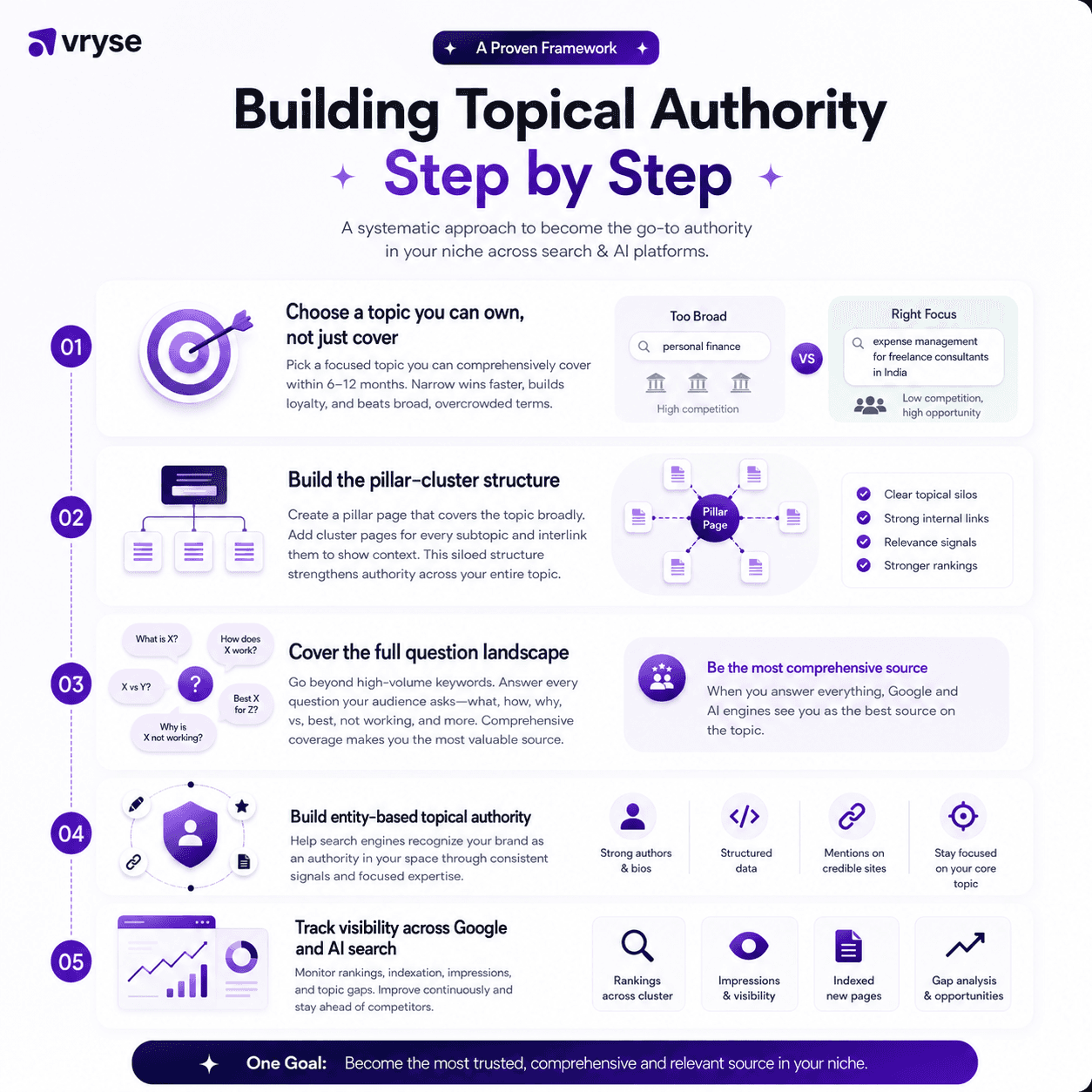
Step 1: Choose a topic you can own, not just cover
The mistake most brands make is trying to compete on broad, competitive topics from day one. A fintech startup writing about "personal finance" competes with Investopedia, NerdWallet, and every major bank. A fintech startup writing about "expense management for freelance consultants in India" competes with almost no one, and builds a loyal, rankable audience fast.
Pick a subject narrow enough that comprehensive coverage is achievable within 6 to 12 months.
Step 2: Build the pillar cluster structure
The pillar cluster model is the most proven structure for topical authority SEO. A pillar page covers the broad topic comprehensively. Cluster pages go deep on every subtopic the pillar introduces. Internal links connect them all, telling Google the relationship between each piece.
If your pillar is "B2B SaaS content marketing," your clusters might cover content distribution channels, SEO for SaaS, case study formats, product led content, and content analytics. Each cluster page strengthens the authority of the pillar page, and each internal link passes relevance signals across the whole structure.
This is inseparable from how silo architecture works in SEO: group your content into clear topical silos, interlink within each silo, and avoid mixing unrelated topics in the same cluster.
Step 3: Cover the full question landscape, not just head terms
High volume keywords are not the starting point for topical authority. The starting point is the complete set of questions your audience asks on a subject. "What is X," "how does X work," "X vs Y," "best X for Z," "why is X not working", every angle covered by a dedicated, thorough piece of content deepens your authority.
This approach aligns directly with AI content optimisation best practices, where the goal is to become the most comprehensive, structured source on a subject so that generative engines have no reason to look elsewhere.
Step 4: Build entity based topical authority
Entity based topical authority means Google does not just rank your pages for related queries, it associates your brand name as a recognised entity within a topic. This is the difference between a site that ranks for "SEO tips" and a brand that Google understands as an SEO company.
You build this through consistent authorship signals, author bios that demonstrate expertise, structured data markup, mentions across credible third party sources, and a coherent content strategy that never drifts outside your core topic area. Understanding the difference between AEO and SEO helps clarify why entity recognition matters beyond just page rankings.
Step 5: Track visibility across Google and AI search
Topical authority is not static. It needs to be measured and maintained. Track your ranking positions across the full cluster of topics you are targeting, monitor whether new pages are getting indexed and receiving impressions, and watch for gaps where competitors are outranking you on subtopics you have not covered yet.
In 2026, measurement also means tracking how often your brand appears in AI generated answers. Why brands must track AI visibility explains how LLM citation rates are becoming as important as Google rankings for discovery, and why the two are increasingly linked.
What Does This Look Like in Practice?
A B2B health SaaS platform came to Vryse with zero non brand SEO rankings and a complete dependence on paid ads for lead generation. The company specialised in laboratory report management software and had no organic presence outside its own brand name.
Vryse built a content strategy around the specific questions and pain points of the company's buyers. That meant targeted landing pages for individual software features, industry relevant blog content covering what lab managers actually search for, and a domain migration from a country specific address to a global one to open up international search visibility.
The results: 20x growth in organic traffic, 500+ non brand queries ranking in the top 5 on Google, and over 900 inbound leads per month, without paid acquisition. The full details are in Vryse's B2B SaaS SEO case study.
The reason it worked is the same reason topical authority works at any scale. When a site consistently answers every question a specific buyer has about a specific problem, Google begins to treat it as the go to source on that subject. Rankings follow coverage. Leads follow rankings.
Topical authority SEO is the practice of building deep, interconnected expertise on a subject so that Google and AI search engines recognise your site as a trusted source on that topic. You build it by creating comprehensive content clusters around a core subject, linking them together, and covering every related question your audience asks, not just the high volume keywords.
Key Takeaways
Topical authority is distinct from domain authority: it is subject specific, not site wide. A newer site can outrank an older one by building denser topical coverage in a niche.
A Graphite study across 12 websites found that pages with high topical authority reached 7,500 impressions significantly faster than pages with low topical authority, with the gap widening at every milestone.
Google's 2013 Hummingbird update shifted ranking signals from individual keywords to topic understanding. Topical authority has been a core ranking factor ever since.
The fastest way to build topical authority is the pillar cluster model: one comprehensive pillar page supported by multiple cluster articles that each tackle a specific angle.
Entity based topical authority goes further. It requires Google to associate your brand name with the topic itself, not just rank your pages for related queries.
In AI search, topical authority directly determines whether your brand gets cited. LLMs pull from sources they perceive as authoritative on a subject.
What is Topical Authority SEO, Exactly?
Topical authority is how much Google and AI search engines trust your site as a source of knowledge on a specific subject. It is not about your site as a whole, that is domain authority. It is about how thoroughly and consistently you have covered a topic compared to every other site on the internet.
Think of it this way: a regional law firm with 50 detailed articles on employment law will outrank a general news site with one article on the same subject, even if the news site has far more backlinks. Google has enough context to know who the expert is.
According to Semrush's guide on topical authority, sites with strong topical authority in a niche tend to earn natural backlinks over time, compounding the ranking advantage. Google confirmed topical authority as a ranking factor in 2023 via its Search Central Blog, and the signal has only grown stronger since.
How is Topical Authority Different From Domain Authority?
Domain authority measures your site's overall strength, typically calculated from the quantity and quality of backlinks pointing to it. Topical authority measures subject specific credibility.
The practical difference matters enormously. A new SaaS company with low domain authority can rank on page one within months if it builds tight topical coverage on a specific problem its buyers care about. A high authority generalist site covering the same topic superficially will often lose that race.
Building a strong content silo structure in SEO is one of the most direct ways to separate your topical authority score from your overall domain authority. You are telling Google exactly which subjects you own.
Why Does Topical Authority Matter More now Than it did Before?
Google has been moving in this direction for over a decade. The 2011 Panda update penalised thin content. The 2013 Hummingbird update introduced semantic search. The 2022 and 2023 Helpful Content updates then made firsthand expertise an explicit ranking signal. Semrush's timeline of Google algorithm updates maps exactly how each update pushed topical signals further to the front.
The bigger shift is what is happening in AI search. When someone asks ChatGPT or Perplexity a question, the model does not run a keyword match. It retrieves from sources it has been trained to consider authoritative. If your brand has deep topical coverage on a subject, you are far more likely to appear in those answers. Understanding what generative engine optimisation actually means helps make clear why topical authority is now the bridge between traditional SEO and AI visibility.
According to a Graphite topical authority study published in April 2026, sites with high topical authority scores above 80 reached impression milestones significantly faster than sites scoring below 68, across 332 URLs and 12 domains. Pages in the high authority bucket also received their first click sooner, with the advantage compounding over the first three weeks after publishing.
How do you Build Topical Authority? A Step by Step Breakdown
Step 1: Choose a topic you can own, not just cover
The mistake most brands make is trying to compete on broad, competitive topics from day one. A fintech startup writing about "personal finance" competes with Investopedia, NerdWallet, and every major bank. A fintech startup writing about "expense management for freelance consultants in India" competes with almost no one, and builds a loyal, rankable audience fast.
Pick a subject narrow enough that comprehensive coverage is achievable within 6 to 12 months.
Step 2: Build the pillar cluster structure
The pillar cluster model is the most proven structure for topical authority SEO. A pillar page covers the broad topic comprehensively. Cluster pages go deep on every subtopic the pillar introduces. Internal links connect them all, telling Google the relationship between each piece.
If your pillar is "B2B SaaS content marketing," your clusters might cover content distribution channels, SEO for SaaS, case study formats, product led content, and content analytics. Each cluster page strengthens the authority of the pillar page, and each internal link passes relevance signals across the whole structure.
This is inseparable from how silo architecture works in SEO: group your content into clear topical silos, interlink within each silo, and avoid mixing unrelated topics in the same cluster.
Step 3: Cover the full question landscape, not just head terms
High volume keywords are not the starting point for topical authority. The starting point is the complete set of questions your audience asks on a subject. "What is X," "how does X work," "X vs Y," "best X for Z," "why is X not working", every angle covered by a dedicated, thorough piece of content deepens your authority.
This approach aligns directly with AI content optimisation best practices, where the goal is to become the most comprehensive, structured source on a subject so that generative engines have no reason to look elsewhere.
Step 4: Build entity based topical authority
Entity based topical authority means Google does not just rank your pages for related queries, it associates your brand name as a recognised entity within a topic. This is the difference between a site that ranks for "SEO tips" and a brand that Google understands as an SEO company.
You build this through consistent authorship signals, author bios that demonstrate expertise, structured data markup, mentions across credible third party sources, and a coherent content strategy that never drifts outside your core topic area. Understanding the difference between AEO and SEO helps clarify why entity recognition matters beyond just page rankings.
Step 5: Track visibility across Google and AI search
Topical authority is not static. It needs to be measured and maintained. Track your ranking positions across the full cluster of topics you are targeting, monitor whether new pages are getting indexed and receiving impressions, and watch for gaps where competitors are outranking you on subtopics you have not covered yet.
In 2026, measurement also means tracking how often your brand appears in AI generated answers. Why brands must track AI visibility explains how LLM citation rates are becoming as important as Google rankings for discovery, and why the two are increasingly linked.
What Does This Look Like in Practice?
A B2B health SaaS platform came to Vryse with zero non brand SEO rankings and a complete dependence on paid ads for lead generation. The company specialised in laboratory report management software and had no organic presence outside its own brand name.
Vryse built a content strategy around the specific questions and pain points of the company's buyers. That meant targeted landing pages for individual software features, industry relevant blog content covering what lab managers actually search for, and a domain migration from a country specific address to a global one to open up international search visibility.
The results: 20x growth in organic traffic, 500+ non brand queries ranking in the top 5 on Google, and over 900 inbound leads per month, without paid acquisition. The full details are in Vryse's B2B SaaS SEO case study.
The reason it worked is the same reason topical authority works at any scale. When a site consistently answers every question a specific buyer has about a specific problem, Google begins to treat it as the go to source on that subject. Rankings follow coverage. Leads follow rankings.
Frequently Asked Questions
Frequently Asked Questions
Can a new website build topical authority quickly?
Yes, and new sites often have an advantage here. Without an existing content footprint to work against, a new site can build a clean, tightly structured topical cluster from scratch. The key is choosing a narrow enough niche and publishing consistently rather than sporadically.
Does topical authority help with AI search, not just Google?
It is one of the strongest signals for AI citation. LLMs are trained on content from sources perceived as authoritative on a subject. A site with deep, well structured topical coverage is more likely to be cited in responses from ChatGPT, Perplexity, and other AI platforms. Learning how to optimise for AI search alongside topical authority building is the most complete approach for 2026.
Is topical authority the same as E-E-A-T?
They overlap but are not identical. E-E-A-T (Experience, Expertise, Authoritativeness, Trustworthiness) is Google's quality framework for evaluating content and its creators. Topical authority is the site level signal that emerges when your content consistently satisfies E-E-A-T standards across a subject. Strong topical authority is effectively the outcome of sustained E-E-A-T signals across a topic cluster.
How many articles do you need to build topical authority?
There is no fixed number. What matters is coverage depth. A site with 20 highly specific, well researched articles on a niche topic will outperform a site with 200 thin articles spread across unrelated subjects. Quality of topical coverage matters more than raw volume.
Related Articles
Related Articles
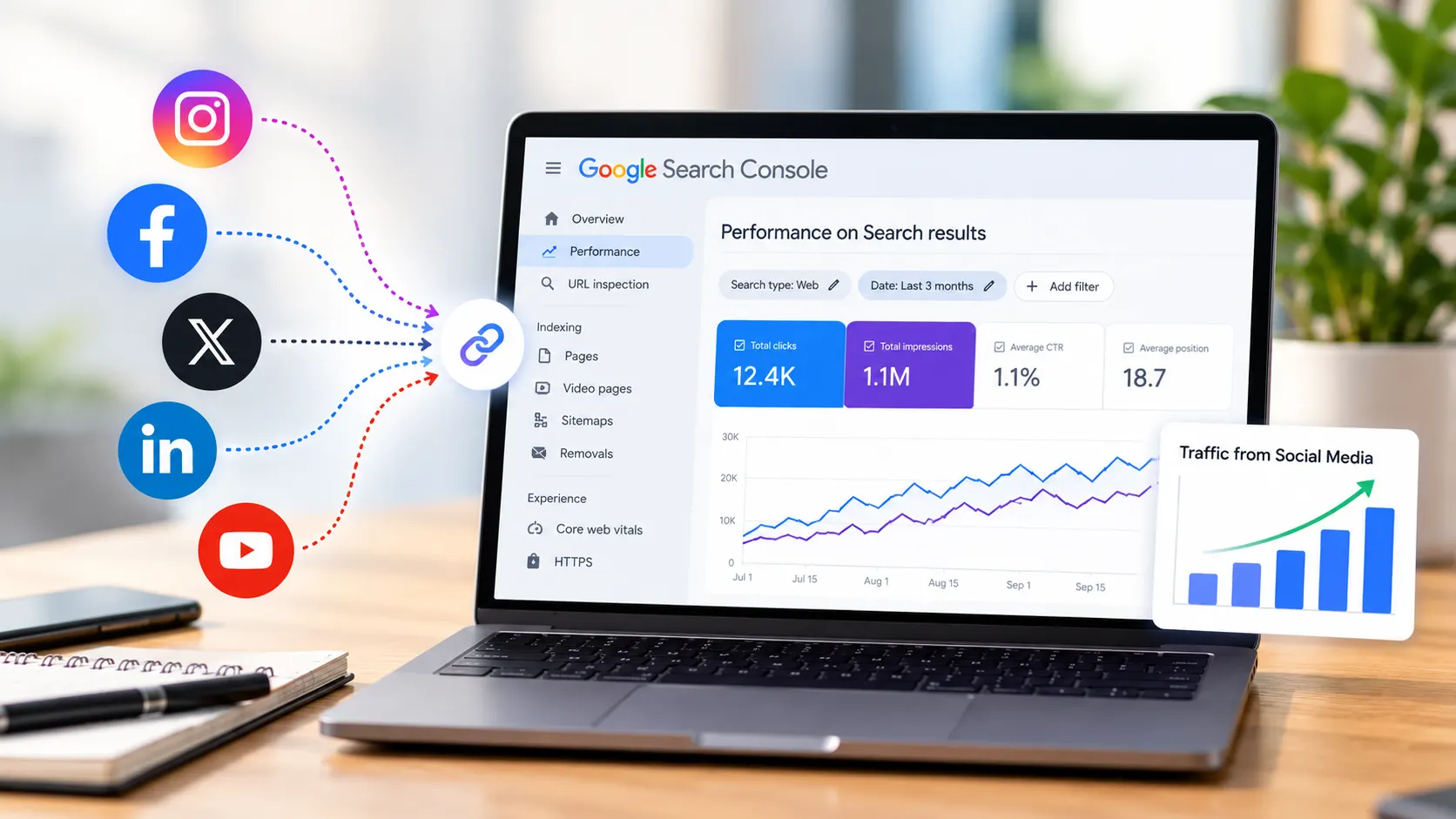
How to Add Social Media to Google Search Console and Track Their Performance
Learn how Google Search Console handles social media, what platform properties can track, and how to measure social performance alongside your website's organic search data.

Shraddha Thuwal
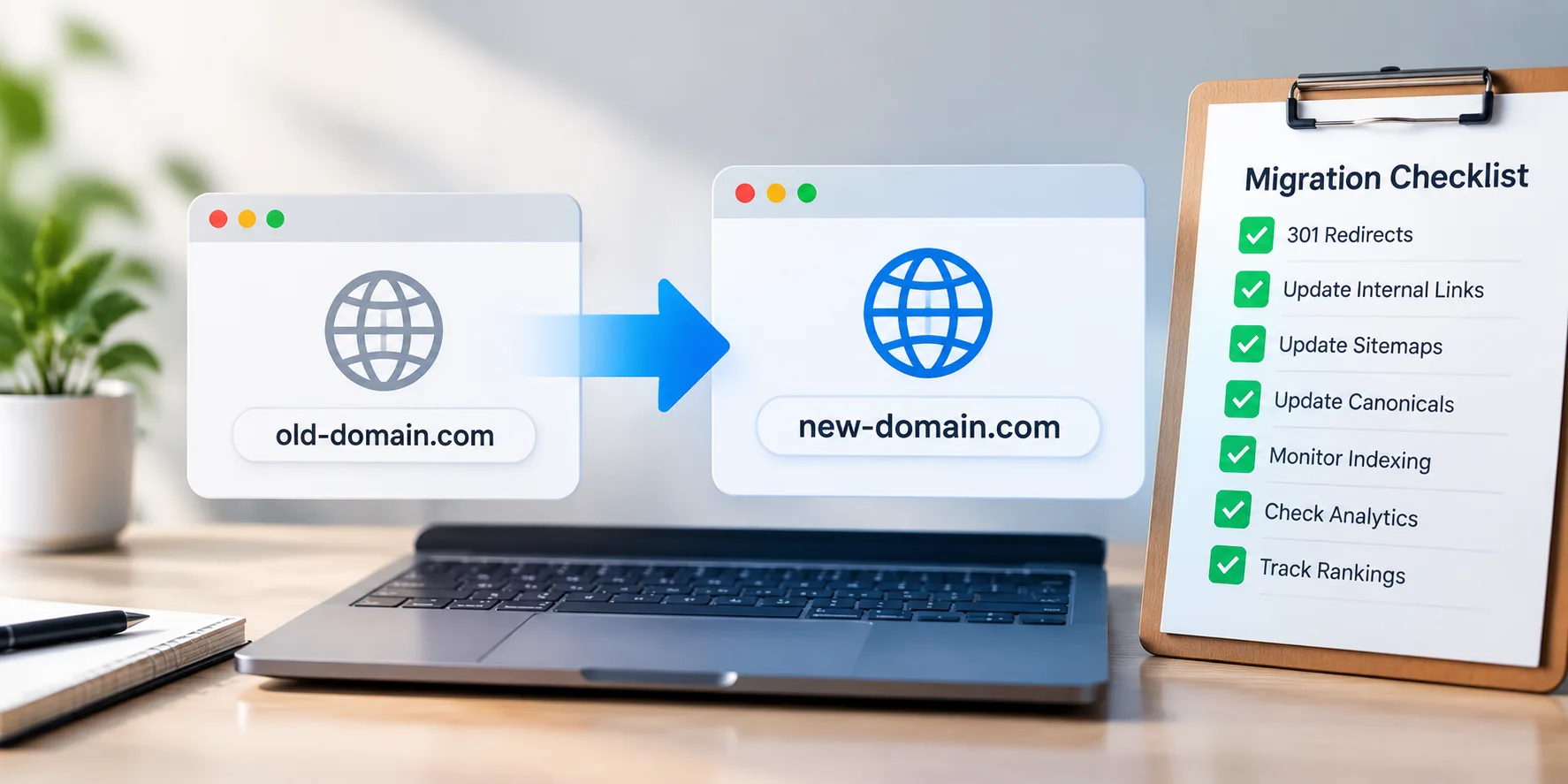
Domain Migration Checklist: A Step-by-Step Guide to Protect Rankings and Traffic
A successful domain migration requires careful SEO planning. Follow this checklist to manage redirects, preserve rankings, protect traffic, and avoid common migration issues.
Shraddha Thuwal
Content Decay: How to Find and Refresh Declining Pages
Content decay can reduce rankings, traffic, and AI visibility over time. Learn how to find declining pages, identify causes, and refresh content with proven SEO strategies.
Shraddha Thuwal
How to Add Social Media to Google Search Console and Track Their Performance
Learn how Google Search Console handles social media, what platform properties can track, and how to measure social performance alongside your website's organic search data.
Shraddha Thuwal
Domain Migration Checklist: A Step-by-Step Guide to Protect Rankings and Traffic
A successful domain migration requires careful SEO planning. Follow this checklist to manage redirects, preserve rankings, protect traffic, and avoid common migration issues.
Shraddha Thuwal
Get Visibility, Everywhere



























Just drop us your email and we’ll reach out
Get Visibility, Everywhere
Just drop us your email and we’ll reach out
Get Visibility, Everywhere
Just drop us your email and we’ll reach out
Our weekly newsletter contains insights from strategies we use for our clients. We don’t spam.
Copyright © 2026 Vryse
Our weekly newsletter contains insights from strategies we use for our clients. We don’t spam.
Copyright © 2026 Vryse