AI & LLM SEO
AI & LLM SEO
What Is llms.txt, and Should You Care About It?
What Is llms.txt, and Should You Care About It?
Understand what llms.txt is, how llms.txt implementation works, its impact on AI search and SEO, and whether it helps with LLM indexing control or future AI crawler optimization.

Ashish Kamathi, SEO Expert
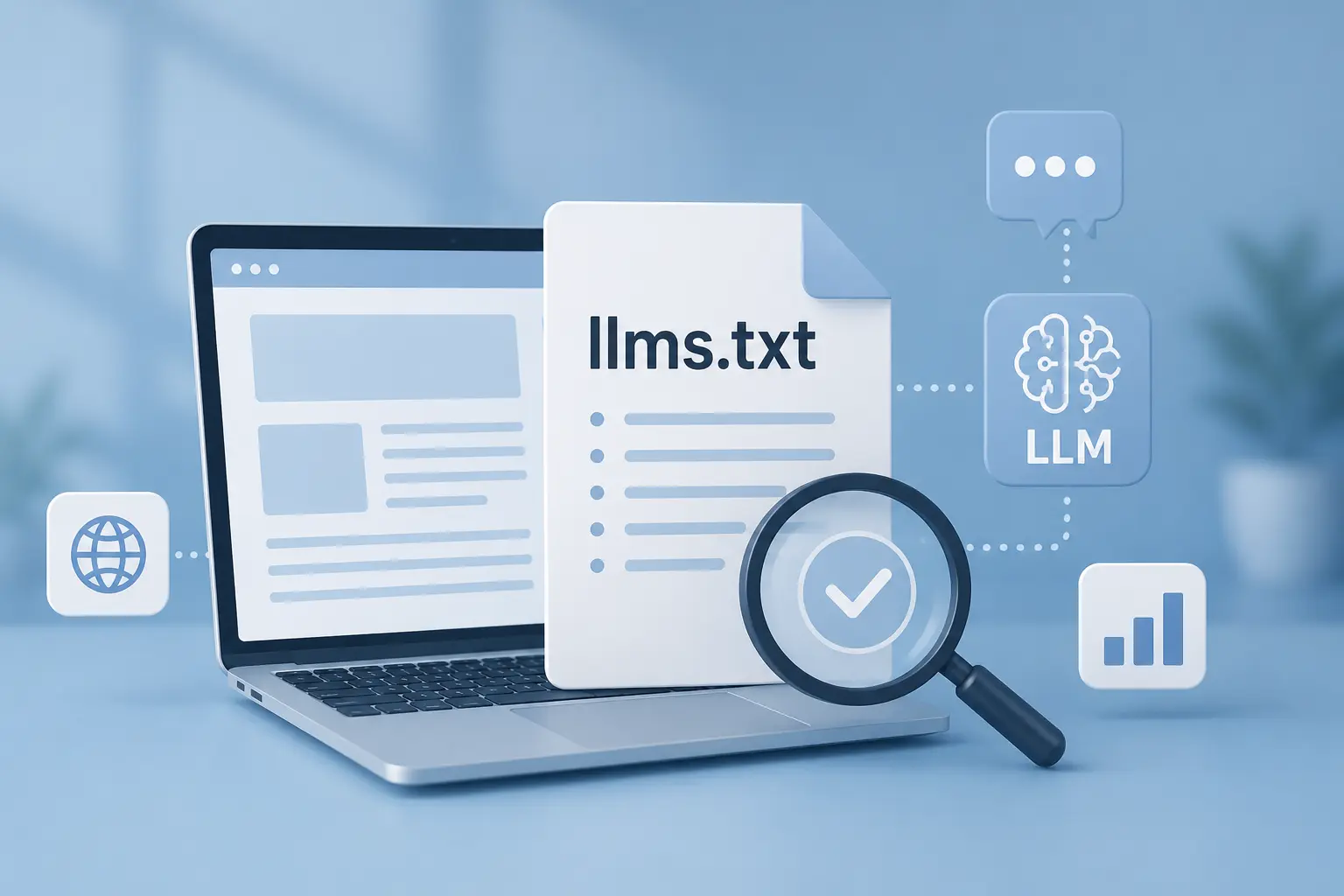
Every time a new file format or technical convention appears in the SEO world, the pattern is predictable. Early adopters declare it transformative. Vendors build tools to automate it. Blogs recommend implementing it immediately. Then the data comes in, and reality turns out to be more nuanced than the hype suggested.
llms.txt is going through exactly that cycle right now. Developers and marketers have been told to add this special file to their websites to help large language models understand their content. Plugins for WordPress, including Yoast SEO and Rank Math, now generate it automatically. Conference talks have been given about its strategic importance. And yet, as of mid-2026, no major LLM provider has publicly confirmed they consume it in their production systems.
This guide explains what llms.txt actually is, what it can and cannot do, what the data shows, and whether implementing it is worth your time right now.
What Is llms.txt?
llms.txt is an informal proposal for a lightweight markdown file that websites can place at their root directory, typically at yourdomain.com/llms.txt. The file is intended to serve as a guide for large language models visiting a website, pointing them to the most important and relevant pages rather than leaving the model to figure out the site's structure on its own.
The concept builds on familiar web conventions. robots.txt tells crawlers which pages to index or avoid. XML sitemaps list all indexable URLs. llms.txt attempts to do something similar for AI systems: provide a curated, human-readable map of the content that matters most.
A typical llms.txt file contains the website's name, a brief description, and a structured list of key URLs, each with a short explanatory note. The format is intentionally simple so that AI systems can parse it quickly without significant token overhead.
It also has a companion format called llms-full.txt, which contains the entire site's content in a single markdown document for deep AI ingestion. Most websites would only ever need llms.txt. Documentation-heavy SaaS products may benefit from maintaining both.
Where the Idea Came From
The proposal gained significant traction in mid-2024, when several high-profile developers, SEO practitioners, and AI researchers began discussing it as a potential "missing link" between websites and generative AI systems. Because it builds on the familiar logic of robots.txt and XML sitemaps, many in the industry hoped it might evolve into a recognised standard for AI indexing and citation.
The excitement was understandable. As AI search became more significant, the absence of any formal mechanism for websites to communicate their content priorities to LLMs felt like a gap worth filling. llms.txt arrived at the right moment to absorb that anxiety.
What the Data Actually Shows
Here is where the picture becomes more complicated, and more honest.
As of mid-2026, the research is consistent and clear: no major AI provider has confirmed they consume llms.txt as part of their production systems. Not OpenAI. Not Anthropic. Not Google. Not Meta. Not Mistral.
SE Ranking analysed 300,000 domains and found no clear evidence that major AI platforms actively use llms.txt in their data pipelines. Google AI Overviews and AI Mode continue to rely on traditional SEO signals. OpenAI recommends allowing its web crawler, OAI-SearchBot, in your robots.txt, but has not confirmed whether llms.txt affects how ChatGPT ranks or cites content. Server log analyses across hundreds of thousands of domains show that major AI crawlers do not routinely request llms.txt.
Google's John Mueller publicly confirmed in 2025 that the Google Search system does not read or act on llms.txt. Gary Illyes confirmed at Search Central Live in July 2025 that Google does not support llms.txt and is not planning to. Mueller's comparison to the deprecated meta keywords tag was pointed: a file that no engine reads provides no SEO benefit.
Some server logs do show GPTBot occasionally fetching llms.txt files. That is not the same as confirmation that the file influences how ChatGPT sources, ranks, or cites content. A crawler fetching a file and a system acting on its contents are different things.
Why the Hype Outran the Reality
The correlation-causation problem has affected most published case studies on llms.txt. A digital banking platform that saw AI traffic increase 25% after implementing LLMs had simultaneously run a PR campaign that produced major national press coverage, restructured product pages with extractable comparison tables, added 12 new FAQ pages, rebuilt its resource centre, and fixed technical SEO issues. When a site makes that many changes at once, attributing a traffic increase to the llms.txt file specifically is not possible.
This pattern repeats throughout most of the "success stories" in llms.txt. The file was implemented alongside significant other changes, and the attribution was assumed rather than proven.
Where llms.txt Genuinely Helps
The file is not useless. It has a specific and valuable use case that is worth understanding clearly.
The strongest real-world application is developer tooling. AI coding assistants like Cursor, GitHub Copilot, and Claude retrieve documentation in real time as developers work in their code editors. llms.txt helps these tools fetch the right pages with less token waste. For software products with extensive technical documentation, the file meaningfully improves how AI coding assistants navigate and reference your docs.
For documentation-heavy SaaS products, this is a genuine productivity improvement for users who rely on AI coding tools. For a general content website, retail brand, or local business, the value is significantly less clear.
There is also a forward-looking dimension. The theoretical scenario where Google officially adopts llms.txt for AI Overviews would cause adoption to expand overnight. Some observers predict that more AI systems will quietly adopt the file as the standard matures, without announcements. Implementing it now carries low risk and positions websites to benefit if adoption grows.
The Implementation Risk You Should Know About
One popular but misguided implementation approach involves creating individual markdown copies of every page on a site and making those pages publicly indexable. If the markdown versions of existing pages are crawlable, they introduce duplicate content at scale. Duplicate content dilutes crawl budget and can suppress rankings for the original canonical pages.
Since traditional SEO authority remains the primary signal that AI systems use to assess source credibility, harming your organic SEO performance indirectly harms your AI visibility. The irony is that this particular implementation of llms.txt can actively make the problem it is trying to solve worse.
The correct implementation is to create a curated llms.txt file listing 20 to 50 key URLs with brief contextual notes, not a comprehensive duplicate of your sitemap. Keep descriptions functional and specific rather than verbose. Update it quarterly to remove dead links. Group URLs logically by topic or function.
Should You Implement llms.txt?
Implementation takes under 30 minutes and, done correctly, carries essentially no downside. The risk of implementing it properly is low. The risk of implementing it incorrectly, specifically by creating indexable duplicate content, is moderate.
If you run a SaaS product with substantial technical documentation, implement it now. The benefit for AI coding assistants is concrete and immediate. If you run a content website, e-commerce store, or service business, implement it as a low-priority hygiene item, but do not expect it to move the needle on AI visibility in the short term.
Do not let llms.txt become a distraction from the optimisation signals that AI systems are already confirmed to use. Optimizing for AI search requires focusing on content quality, structured data, entity authority, and brand presence across trusted third-party sources. These are the signals that platforms like ChatGPT, Perplexity, and Google AI Overviews demonstrably use today.
Running a thorough GEO audit will identify the changes that actually improve your AI visibility. llms.txt may be one small part of that checklist, but it should not be the centrepiece of your AI optimisation strategy.
The Honest Summary
llms.txt is a well-intentioned proposal that arrived before the infrastructure needed to make it work was in place. It is not harmful if implemented correctly. It is not meaningfully beneficial for most websites right now. The developers and technical writers who created it were solving a real problem. The AI platforms that would need to adopt it have simply not done so yet at any confirmed scale.
Implement it as a low-effort technical signal. Then spend your energy on the optimisation levers that demonstrably work: structured data, content depth, crawler access, and third-party authority.
Final Thoughts
llms.txt is a proposal born of a real problem: AI models lack a standardised way to determine which pages on a website matter most. The solution it proposes is elegant and familiar. The problem is that elegant ideas only become useful standards when the platforms that need to adopt them actually do.
As of mid-2026, they have not done so in any confirmed, production-level way. Implement llms.txt correctly because it is low-effort, carries no meaningful risk when done properly, and may become relevant if adoption grows. But spend your real optimisation energy on the foundations that demonstrably work: complete schema markup, crawlable and accurate content, genuine authority signals from third-party sources, and ongoing AI visibility monitoring. Those are the inputs that AI systems use today to decide which brands get recommended and which do not.
Every time a new file format or technical convention appears in the SEO world, the pattern is predictable. Early adopters declare it transformative. Vendors build tools to automate it. Blogs recommend implementing it immediately. Then the data comes in, and reality turns out to be more nuanced than the hype suggested.
llms.txt is going through exactly that cycle right now. Developers and marketers have been told to add this special file to their websites to help large language models understand their content. Plugins for WordPress, including Yoast SEO and Rank Math, now generate it automatically. Conference talks have been given about its strategic importance. And yet, as of mid-2026, no major LLM provider has publicly confirmed they consume it in their production systems.
This guide explains what llms.txt actually is, what it can and cannot do, what the data shows, and whether implementing it is worth your time right now.
What Is llms.txt?
llms.txt is an informal proposal for a lightweight markdown file that websites can place at their root directory, typically at yourdomain.com/llms.txt. The file is intended to serve as a guide for large language models visiting a website, pointing them to the most important and relevant pages rather than leaving the model to figure out the site's structure on its own.
The concept builds on familiar web conventions. robots.txt tells crawlers which pages to index or avoid. XML sitemaps list all indexable URLs. llms.txt attempts to do something similar for AI systems: provide a curated, human-readable map of the content that matters most.
A typical llms.txt file contains the website's name, a brief description, and a structured list of key URLs, each with a short explanatory note. The format is intentionally simple so that AI systems can parse it quickly without significant token overhead.
It also has a companion format called llms-full.txt, which contains the entire site's content in a single markdown document for deep AI ingestion. Most websites would only ever need llms.txt. Documentation-heavy SaaS products may benefit from maintaining both.
Where the Idea Came From
The proposal gained significant traction in mid-2024, when several high-profile developers, SEO practitioners, and AI researchers began discussing it as a potential "missing link" between websites and generative AI systems. Because it builds on the familiar logic of robots.txt and XML sitemaps, many in the industry hoped it might evolve into a recognised standard for AI indexing and citation.
The excitement was understandable. As AI search became more significant, the absence of any formal mechanism for websites to communicate their content priorities to LLMs felt like a gap worth filling. llms.txt arrived at the right moment to absorb that anxiety.
What the Data Actually Shows
Here is where the picture becomes more complicated, and more honest.
As of mid-2026, the research is consistent and clear: no major AI provider has confirmed they consume llms.txt as part of their production systems. Not OpenAI. Not Anthropic. Not Google. Not Meta. Not Mistral.
SE Ranking analysed 300,000 domains and found no clear evidence that major AI platforms actively use llms.txt in their data pipelines. Google AI Overviews and AI Mode continue to rely on traditional SEO signals. OpenAI recommends allowing its web crawler, OAI-SearchBot, in your robots.txt, but has not confirmed whether llms.txt affects how ChatGPT ranks or cites content. Server log analyses across hundreds of thousands of domains show that major AI crawlers do not routinely request llms.txt.
Google's John Mueller publicly confirmed in 2025 that the Google Search system does not read or act on llms.txt. Gary Illyes confirmed at Search Central Live in July 2025 that Google does not support llms.txt and is not planning to. Mueller's comparison to the deprecated meta keywords tag was pointed: a file that no engine reads provides no SEO benefit.
Some server logs do show GPTBot occasionally fetching llms.txt files. That is not the same as confirmation that the file influences how ChatGPT sources, ranks, or cites content. A crawler fetching a file and a system acting on its contents are different things.
Why the Hype Outran the Reality
The correlation-causation problem has affected most published case studies on llms.txt. A digital banking platform that saw AI traffic increase 25% after implementing LLMs had simultaneously run a PR campaign that produced major national press coverage, restructured product pages with extractable comparison tables, added 12 new FAQ pages, rebuilt its resource centre, and fixed technical SEO issues. When a site makes that many changes at once, attributing a traffic increase to the llms.txt file specifically is not possible.
This pattern repeats throughout most of the "success stories" in llms.txt. The file was implemented alongside significant other changes, and the attribution was assumed rather than proven.
Where llms.txt Genuinely Helps
The file is not useless. It has a specific and valuable use case that is worth understanding clearly.
The strongest real-world application is developer tooling. AI coding assistants like Cursor, GitHub Copilot, and Claude retrieve documentation in real time as developers work in their code editors. llms.txt helps these tools fetch the right pages with less token waste. For software products with extensive technical documentation, the file meaningfully improves how AI coding assistants navigate and reference your docs.
For documentation-heavy SaaS products, this is a genuine productivity improvement for users who rely on AI coding tools. For a general content website, retail brand, or local business, the value is significantly less clear.
There is also a forward-looking dimension. The theoretical scenario where Google officially adopts llms.txt for AI Overviews would cause adoption to expand overnight. Some observers predict that more AI systems will quietly adopt the file as the standard matures, without announcements. Implementing it now carries low risk and positions websites to benefit if adoption grows.
The Implementation Risk You Should Know About
One popular but misguided implementation approach involves creating individual markdown copies of every page on a site and making those pages publicly indexable. If the markdown versions of existing pages are crawlable, they introduce duplicate content at scale. Duplicate content dilutes crawl budget and can suppress rankings for the original canonical pages.
Since traditional SEO authority remains the primary signal that AI systems use to assess source credibility, harming your organic SEO performance indirectly harms your AI visibility. The irony is that this particular implementation of llms.txt can actively make the problem it is trying to solve worse.
The correct implementation is to create a curated llms.txt file listing 20 to 50 key URLs with brief contextual notes, not a comprehensive duplicate of your sitemap. Keep descriptions functional and specific rather than verbose. Update it quarterly to remove dead links. Group URLs logically by topic or function.
Should You Implement llms.txt?
Implementation takes under 30 minutes and, done correctly, carries essentially no downside. The risk of implementing it properly is low. The risk of implementing it incorrectly, specifically by creating indexable duplicate content, is moderate.
If you run a SaaS product with substantial technical documentation, implement it now. The benefit for AI coding assistants is concrete and immediate. If you run a content website, e-commerce store, or service business, implement it as a low-priority hygiene item, but do not expect it to move the needle on AI visibility in the short term.
Do not let llms.txt become a distraction from the optimisation signals that AI systems are already confirmed to use. Optimizing for AI search requires focusing on content quality, structured data, entity authority, and brand presence across trusted third-party sources. These are the signals that platforms like ChatGPT, Perplexity, and Google AI Overviews demonstrably use today.
Running a thorough GEO audit will identify the changes that actually improve your AI visibility. llms.txt may be one small part of that checklist, but it should not be the centrepiece of your AI optimisation strategy.
The Honest Summary
llms.txt is a well-intentioned proposal that arrived before the infrastructure needed to make it work was in place. It is not harmful if implemented correctly. It is not meaningfully beneficial for most websites right now. The developers and technical writers who created it were solving a real problem. The AI platforms that would need to adopt it have simply not done so yet at any confirmed scale.
Implement it as a low-effort technical signal. Then spend your energy on the optimisation levers that demonstrably work: structured data, content depth, crawler access, and third-party authority.
Final Thoughts
llms.txt is a proposal born of a real problem: AI models lack a standardised way to determine which pages on a website matter most. The solution it proposes is elegant and familiar. The problem is that elegant ideas only become useful standards when the platforms that need to adopt them actually do.
As of mid-2026, they have not done so in any confirmed, production-level way. Implement llms.txt correctly because it is low-effort, carries no meaningful risk when done properly, and may become relevant if adoption grows. But spend your real optimisation energy on the foundations that demonstrably work: complete schema markup, crawlable and accurate content, genuine authority signals from third-party sources, and ongoing AI visibility monitoring. Those are the inputs that AI systems use today to decide which brands get recommended and which do not.
Frequently Asked Questions
Frequently Asked Questions
What is llms.txt and where does it go?
llms.txt is a markdown file placed in a website's root directory that helps AI systems discover and understand important site content. It is currently an unofficial proposal rather than a recognized web standard.
Does Google use llms.txt for ranking or AI Overviews?
No. Google has stated that its Search systems and AI Overviews do not use or support llms.txt.
What is the risk of implementing llms.txt incorrectly?
Poor implementation can create duplicate content issues, waste crawl budget, and negatively impact SEO performance. A simple, curated file is generally safer than duplicating an entire website.
If llms.txt does not currently work, why are so many SEO tools automating its creation?
Many SEO tools added llms.txt because of growing user interest and low implementation costs, not because its effectiveness has been proven. Adoption by tools does not necessarily indicate support from major AI platforms.
Related Articles
Related Articles

How to Track Salesforce AppExchange Rankings and Improve Your App’s Visibility
Track your AppExchange rankings, identify keyword opportunities, and optimize your Salesforce listing to improve marketplace visibility, attract qualified buyers, and drive more installs.
Ashish Kamathi, SEO Expert
How to Add Social Media to Google Search Console and Track Their Performance
Learn how Google Search Console handles social media, what platform properties can track, and how to measure social performance alongside your website's organic search data.

Shraddha Thuwal

Domain Migration Checklist: A Step-by-Step Guide to Protect Rankings and Traffic
A successful domain migration requires careful SEO planning. Follow this checklist to manage redirects, preserve rankings, protect traffic, and avoid common migration issues.
Shraddha Thuwal
How to Track Salesforce AppExchange Rankings and Improve Your App’s Visibility
Track your AppExchange rankings, identify keyword opportunities, and optimize your Salesforce listing to improve marketplace visibility, attract qualified buyers, and drive more installs.
Ashish Kamathi, SEO Expert
How to Add Social Media to Google Search Console and Track Their Performance
Learn how Google Search Console handles social media, what platform properties can track, and how to measure social performance alongside your website's organic search data.
Shraddha Thuwal
Get Visibility, Everywhere



























Just drop us your email and we’ll reach out
Get Visibility, Everywhere
Just drop us your email and we’ll reach out
Get Visibility, Everywhere
Just drop us your email and we’ll reach out
Our weekly newsletter contains insights from strategies we use for our clients. We don’t spam.
Copyright © 2026 Vryse
Our weekly newsletter contains insights from strategies we use for our clients. We don’t spam.
Copyright © 2026 Vryse