AI & LLM SEO
AI & LLM SEO
How to Choose Prompts to Track for AI Visibility
How to Choose Prompts to Track for AI Visibility
Learn how to choose AI visibility tracking prompts, build effective LLM prompt tracking strategies, and monitor AI search performance across leading AI platforms.

Shraddha Thuwal

Choosing the right prompts to track for AI visibility starts with mapping the specific questions your buyers ask AI assistants at each stage of their journey, rather than converting your existing keyword list into conversational phrases. The best prompts for AI visibility mirror real purchase intent, cover awareness through decision stages, and are tracked separately for branded and unbranded queries across ChatGPT, Perplexity, Gemini, and Google AI Overviews.
Key Takeaways
Start with 20 to 40 prompts distributed across buyer journey stages. SE Ranking's prompt tracking guide recommends approximately 15 prompts per persona as a practical starting range.
Keep a 75% unbranded / 25% branded split. When your brand name is in the prompt, AI visibility is nearly guaranteed, inflating your numbers when mixed with category-level tracking.
The same prompt returns different brand recommendations in different markets. If you operate across multiple regions, replicate your core prompts across geographies.
According to GEO Metrics research, tracking literal prompts gives you data about that prompt, not about your actual visibility. The unit of measurement should be the thematic context, not the phrasing of individual prompts.
Reddit accounts for up to 46.7% of Perplexity's top citations, 21% of Google AI Overview sources, and 11.3% of ChatGPT references. Mining Reddit threads for buyer questions yields higher-quality AI search-monitoring prompts than keyword tools.
Generative engines decompose a single user prompt into 5 to 15 parallel sub-queries behind the scenes, per Google's query fan-out patent (US20240289407A1). Your content needs to answer these hidden sub-queries, not just the surface-level prompt.
Why Keyword Lists Do Not Work as AI Tracking Prompts
A keyword like "CRM software" triggers a Google results page with 10 links. The same intent, expressed as a conversational prompt, "What is the most secure CRM for healthcare startups with under 50 employees?", triggers a generative engine to decompose the query into multiple parallel sub-queries, retrieve passages from across the web, and synthesize a single answer that cites specific brands.
According to a BrightEdge analysis, around 80% of URLs cited in AI answers do not rank in Google's top 10. Strong keyword rankings and AI prompt visibility are two separate outcomes. Understanding how generative engine optimisation works clarifies why prompt tracking is the measurement layer keyword tracking cannot replace.
How to Source the Right AI Visibility Tracking Prompts
Sourcing prompts from keyword databases alone produces skewed data. A strong prompt library draws from three layers.
Layer 1: First-party buyer data
Extract pre-purchase questions from sales call transcripts, CRM notes, support tickets, and live chat logs. These capture the exact language and constraints your buyers use. A prospect who wrote "worried about migration times from Salesforce" maps directly to: "How long does it take to migrate from Salesforce to HubSpot for 50 users?"
Layer 2: Community and third-party mining
Reddit, G2 reviews, and industry forums surface questions buyers ask publicly. Search relevant subreddits for threads where buyers compare options or describe problems. Each high-intent thread maps to a tracking prompt.
Vryse's ChatGPT Search Insights Chrome extension captures the hidden search queries ChatGPT runs behind the scenes when generating answers. These grounding queries reveal which terms AI platforms actually use to find and cite content.
Layer 3: Search engine validation
Use Google Search Console, People Also Ask boxes, and autocomplete data to triangulate and prioritise. Filter for informational and commercial-investigation intent.
Sourcing layer | Source example | Constructed tracking prompt | Funnel stage |
First-party buyer data | CRM note: "prospect worried about migration times" | "How long does it take to migrate from Salesforce to HubSpot for 50 users?" | Decision |
Community mining | Reddit thread: "looking for cheap alternatives to Zendesk" | "What are the best affordable alternatives to Zendesk for small startups?" | Consideration |
Search validation | Google PAA: "Is HubSpot CRM actually free?" | "What features are included in HubSpot's free CRM tier?" | Awareness |
How to Organize Prompts Into a Tracking Matrix
A flat list creates blind spots. Organise across three dimensions.
Funnel stage:
Awareness: "What is answer engine optimisation?"
Consideration: "Top GEO agencies for B2B SaaS"
Decision: "Hotjar vs Microsoft Clarity pricing"
Decision prompts follow three patterns: comparison queries (X vs Y), best-for queries (best X for specific constraint), and problem-solution queries (struggling with X, how to fix it). Cover all three.
Category entry point: Segment by product line or service offering. An agency separates SEO, content marketing, and digital PR prompts. A SaaS company segments by features or use cases. This reveals exactly which parts of your business have AI visibility and which do not.
Target persona: A CTO and a VP of Marketing ask different questions about the same product. Tag each prompt with a persona identifier. SE Ranking recommends approximately 15 prompts per persona, producing a total of 20 to 40 for initial tracking.
How Many Prompts, and How to Split Branded vs Unbranded
Start with 20 to 40. As your program matures, expand to 100-200. Vryse's AI visibility dashboard tracks up to 200 prompts across ChatGPT, Perplexity, Google AI Overviews, and Gemini, surfacing citation shares, competitor gaps, and content-fix priorities from a single interface.
Maintain a 75/25 unbranded to branded split. Branded prompts ("Is Vryse good for AI SEO?") nearly guarantee a mention, inflating visibility scores if mixed with category-level tracking. Track branded prompts separately to monitor description accuracy, sentiment, and which sources the AI cites about you specifically.
Why the Same Prompt Returns Different Answers Across Locations
AI responses vary by geography. The same prompt returns different brand recommendations in Mumbai, London, and San Francisco.
Vryse saw this directly with an edtech client focused on study abroad. The brand went from zero to 4,500 organic visits in 3 months, with rankings established across 5+ countries. Each market had different competitive dynamics and different trusted local sources. A prompt set built only for one market would have missed visibility gaps in the others entirely. The full case study is on Vryse's site.
For local businesses, add city or neighborhood modifiers to your base prompts. "Best dentist in Koramangala" and "best dentist in Bangalore" will return different AI recommendations despite targeting the same service.
What to Do With Prompt Tracking Data
As Ashish Kamathi, founder of Vryse, explains: "The first step is to shortlist prompts your buyers may use when looking for a service like yours. Then, search those prompts on ChatGPT in an incognito window and study which businesses, web pages, Google Business Profiles, Reddit threads, and landing pages are being referenced. If you want your brand to show up in AI answers, you need to understand where those answers are coming from."

If you appear: Check whether the description is accurate and the sentiment is positive. If the AI misrepresents your pricing or features, the fix is updating the source content it pulls from.
If a competitor appears and you do not: Study the sources the AI cites. Are they blog posts, Reddit threads, directory listings, or review sites? Either get mentioned on those third-party pages or create better-structured content on your own site that answers the same question more directly.
If nobody appears consistently: The topic lacks sufficient high-quality content for AI platforms to cite with confidence. The first brand to fill that gap with structured, fact-dense content will likely own that prompt for months. Understanding how semantic SEO builds the content depth AI platforms need is the next step.
Common Prompt Selection Mistakes
Tracking too-broad prompts. "Best CRM" is too competitive and vague. Narrow by adding geographic qualifiers, industry verticals, team size, or budget constraints. The narrower the prompt, the more it mirrors how AI personalises responses.
Tracking only informational prompts. Awareness-stage prompts are easiest to find. They are also least likely to drive revenue. Ensure at least 30% of your tracked prompts are decision-stage queries.
Sampling once and assuming the data holds. Google's AI Mode returns overlapping results with itself just 9.2% of the time across three tests of the same query. Monthly is the minimum tracking cadence. Weekly is better for competitive categories.
Ignoring the sources behind AI answers. The prompt data tells you whether you appear. The source data tells you why. Bing Webmaster Tools' AI Performance dashboard reveals the grounding queries that Copilot generates internally when retrieving content. These are not the user's original prompt; they are the reformulated queries the AI creates to find the most relevant sources.
Choosing the right prompts to track for AI visibility starts with mapping the specific questions your buyers ask AI assistants at each stage of their journey, rather than converting your existing keyword list into conversational phrases. The best prompts for AI visibility mirror real purchase intent, cover awareness through decision stages, and are tracked separately for branded and unbranded queries across ChatGPT, Perplexity, Gemini, and Google AI Overviews.
Key Takeaways
Start with 20 to 40 prompts distributed across buyer journey stages. SE Ranking's prompt tracking guide recommends approximately 15 prompts per persona as a practical starting range.
Keep a 75% unbranded / 25% branded split. When your brand name is in the prompt, AI visibility is nearly guaranteed, inflating your numbers when mixed with category-level tracking.
The same prompt returns different brand recommendations in different markets. If you operate across multiple regions, replicate your core prompts across geographies.
According to GEO Metrics research, tracking literal prompts gives you data about that prompt, not about your actual visibility. The unit of measurement should be the thematic context, not the phrasing of individual prompts.
Reddit accounts for up to 46.7% of Perplexity's top citations, 21% of Google AI Overview sources, and 11.3% of ChatGPT references. Mining Reddit threads for buyer questions yields higher-quality AI search-monitoring prompts than keyword tools.
Generative engines decompose a single user prompt into 5 to 15 parallel sub-queries behind the scenes, per Google's query fan-out patent (US20240289407A1). Your content needs to answer these hidden sub-queries, not just the surface-level prompt.
Why Keyword Lists Do Not Work as AI Tracking Prompts
A keyword like "CRM software" triggers a Google results page with 10 links. The same intent, expressed as a conversational prompt, "What is the most secure CRM for healthcare startups with under 50 employees?", triggers a generative engine to decompose the query into multiple parallel sub-queries, retrieve passages from across the web, and synthesize a single answer that cites specific brands.
According to a BrightEdge analysis, around 80% of URLs cited in AI answers do not rank in Google's top 10. Strong keyword rankings and AI prompt visibility are two separate outcomes. Understanding how generative engine optimisation works clarifies why prompt tracking is the measurement layer keyword tracking cannot replace.
How to Source the Right AI Visibility Tracking Prompts
Sourcing prompts from keyword databases alone produces skewed data. A strong prompt library draws from three layers.
Layer 1: First-party buyer data
Extract pre-purchase questions from sales call transcripts, CRM notes, support tickets, and live chat logs. These capture the exact language and constraints your buyers use. A prospect who wrote "worried about migration times from Salesforce" maps directly to: "How long does it take to migrate from Salesforce to HubSpot for 50 users?"
Layer 2: Community and third-party mining
Reddit, G2 reviews, and industry forums surface questions buyers ask publicly. Search relevant subreddits for threads where buyers compare options or describe problems. Each high-intent thread maps to a tracking prompt.
Vryse's ChatGPT Search Insights Chrome extension captures the hidden search queries ChatGPT runs behind the scenes when generating answers. These grounding queries reveal which terms AI platforms actually use to find and cite content.
Layer 3: Search engine validation
Use Google Search Console, People Also Ask boxes, and autocomplete data to triangulate and prioritise. Filter for informational and commercial-investigation intent.
Sourcing layer | Source example | Constructed tracking prompt | Funnel stage |
First-party buyer data | CRM note: "prospect worried about migration times" | "How long does it take to migrate from Salesforce to HubSpot for 50 users?" | Decision |
Community mining | Reddit thread: "looking for cheap alternatives to Zendesk" | "What are the best affordable alternatives to Zendesk for small startups?" | Consideration |
Search validation | Google PAA: "Is HubSpot CRM actually free?" | "What features are included in HubSpot's free CRM tier?" | Awareness |
How to Organize Prompts Into a Tracking Matrix
A flat list creates blind spots. Organise across three dimensions.
Funnel stage:
Awareness: "What is answer engine optimisation?"
Consideration: "Top GEO agencies for B2B SaaS"
Decision: "Hotjar vs Microsoft Clarity pricing"
Decision prompts follow three patterns: comparison queries (X vs Y), best-for queries (best X for specific constraint), and problem-solution queries (struggling with X, how to fix it). Cover all three.
Category entry point: Segment by product line or service offering. An agency separates SEO, content marketing, and digital PR prompts. A SaaS company segments by features or use cases. This reveals exactly which parts of your business have AI visibility and which do not.
Target persona: A CTO and a VP of Marketing ask different questions about the same product. Tag each prompt with a persona identifier. SE Ranking recommends approximately 15 prompts per persona, producing a total of 20 to 40 for initial tracking.
How Many Prompts, and How to Split Branded vs Unbranded
Start with 20 to 40. As your program matures, expand to 100-200. Vryse's AI visibility dashboard tracks up to 200 prompts across ChatGPT, Perplexity, Google AI Overviews, and Gemini, surfacing citation shares, competitor gaps, and content-fix priorities from a single interface.
Maintain a 75/25 unbranded to branded split. Branded prompts ("Is Vryse good for AI SEO?") nearly guarantee a mention, inflating visibility scores if mixed with category-level tracking. Track branded prompts separately to monitor description accuracy, sentiment, and which sources the AI cites about you specifically.
Why the Same Prompt Returns Different Answers Across Locations
AI responses vary by geography. The same prompt returns different brand recommendations in Mumbai, London, and San Francisco.
Vryse saw this directly with an edtech client focused on study abroad. The brand went from zero to 4,500 organic visits in 3 months, with rankings established across 5+ countries. Each market had different competitive dynamics and different trusted local sources. A prompt set built only for one market would have missed visibility gaps in the others entirely. The full case study is on Vryse's site.
For local businesses, add city or neighborhood modifiers to your base prompts. "Best dentist in Koramangala" and "best dentist in Bangalore" will return different AI recommendations despite targeting the same service.
What to Do With Prompt Tracking Data
As Ashish Kamathi, founder of Vryse, explains: "The first step is to shortlist prompts your buyers may use when looking for a service like yours. Then, search those prompts on ChatGPT in an incognito window and study which businesses, web pages, Google Business Profiles, Reddit threads, and landing pages are being referenced. If you want your brand to show up in AI answers, you need to understand where those answers are coming from."
If you appear: Check whether the description is accurate and the sentiment is positive. If the AI misrepresents your pricing or features, the fix is updating the source content it pulls from.
If a competitor appears and you do not: Study the sources the AI cites. Are they blog posts, Reddit threads, directory listings, or review sites? Either get mentioned on those third-party pages or create better-structured content on your own site that answers the same question more directly.
If nobody appears consistently: The topic lacks sufficient high-quality content for AI platforms to cite with confidence. The first brand to fill that gap with structured, fact-dense content will likely own that prompt for months. Understanding how semantic SEO builds the content depth AI platforms need is the next step.
Common Prompt Selection Mistakes
Tracking too-broad prompts. "Best CRM" is too competitive and vague. Narrow by adding geographic qualifiers, industry verticals, team size, or budget constraints. The narrower the prompt, the more it mirrors how AI personalises responses.
Tracking only informational prompts. Awareness-stage prompts are easiest to find. They are also least likely to drive revenue. Ensure at least 30% of your tracked prompts are decision-stage queries.
Sampling once and assuming the data holds. Google's AI Mode returns overlapping results with itself just 9.2% of the time across three tests of the same query. Monthly is the minimum tracking cadence. Weekly is better for competitive categories.
Ignoring the sources behind AI answers. The prompt data tells you whether you appear. The source data tells you why. Bing Webmaster Tools' AI Performance dashboard reveals the grounding queries that Copilot generates internally when retrieving content. These are not the user's original prompt; they are the reformulated queries the AI creates to find the most relevant sources.
Frequently Asked Questions
Frequently Asked Questions
Should I convert my existing SEO keywords into AI tracking prompts?
Use them as a starting point. Export your top 50-100 non-branded keywords from Google Search Console and convert them into natural-language questions. Then supplement with first-party buyer data and Reddit mining. Keywords alone miss the conversational context real buyers include when asking AI assistants.
How often should I refresh my prompt tracking list?
Review quarterly. Add prompts when you launch new products, enter new markets, or notice new buyer questions in sales conversations and community forums. Remove prompts that consistently return no relevant AI answers across any platform.
Do I need separate prompt sets for each AI platform?
No. Use the same core prompt set across all platforms. The value comes from comparing how different platforms answer the same question. Your share of voice can be 30% on Perplexity and 8% on ChatGPT, both within the same thematic context.
Can Vryse help with LLM prompt tracking and AI visibility measurement?
Vryse's AI visibility dashboard tracks up to 200 prompts across ChatGPT, Perplexity, Google AI Overviews, and Gemini, surfacing citation share, competitor gaps, and content priorities. Book a consult to get a baseline audit of where your brand currently appears across AI platforms.
Related Articles
Related Articles
How to Add Social Media to Google Search Console and Track Their Performance
Learn how Google Search Console handles social media, what platform properties can track, and how to measure social performance alongside your website's organic search data.

Shraddha Thuwal
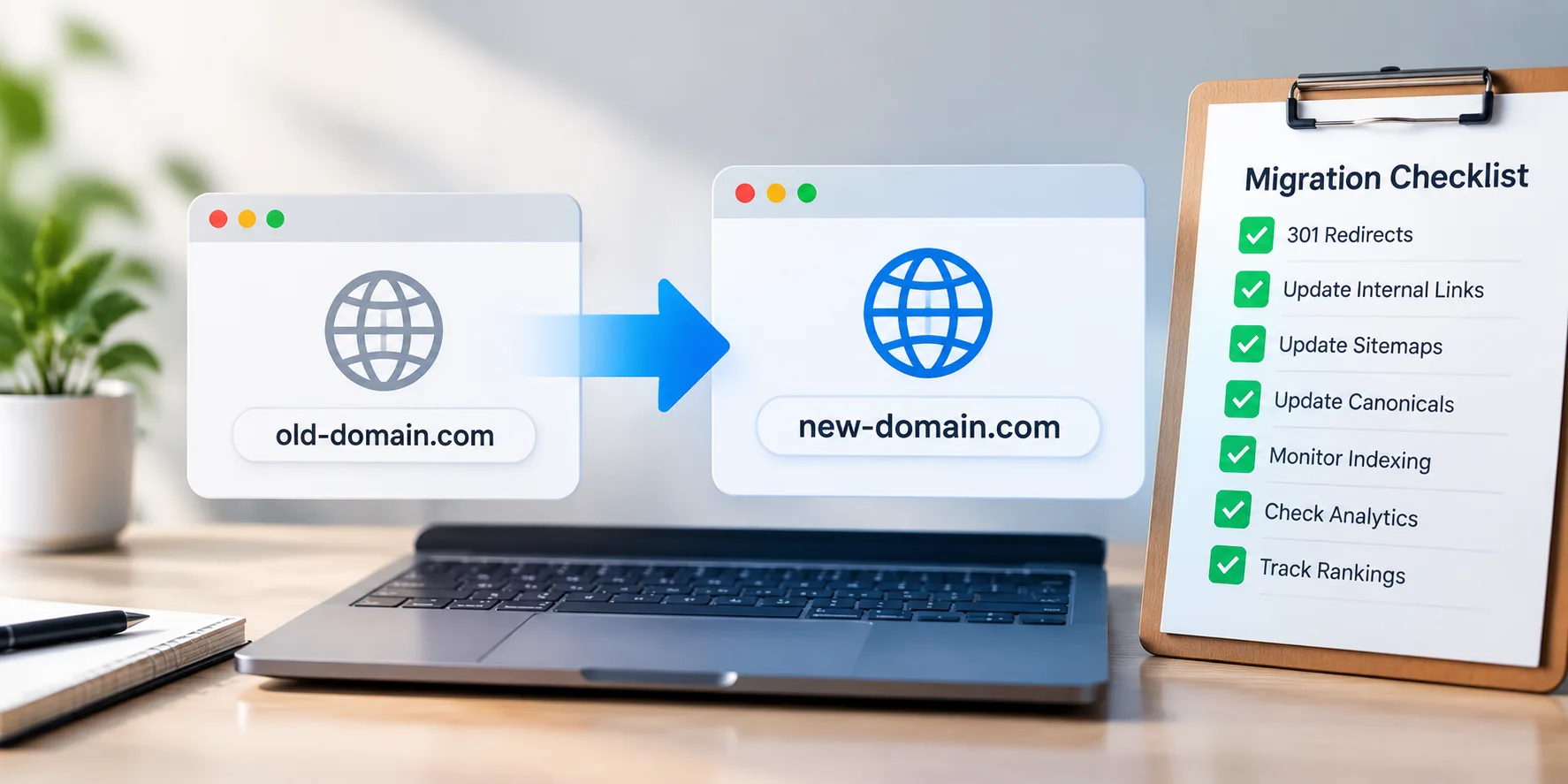
Domain Migration Checklist: A Step-by-Step Guide to Protect Rankings and Traffic
A successful domain migration requires careful SEO planning. Follow this checklist to manage redirects, preserve rankings, protect traffic, and avoid common migration issues.
Shraddha Thuwal
Content Decay: How to Find and Refresh Declining Pages
Content decay can reduce rankings, traffic, and AI visibility over time. Learn how to find declining pages, identify causes, and refresh content with proven SEO strategies.
Shraddha Thuwal
How to Add Social Media to Google Search Console and Track Their Performance
Learn how Google Search Console handles social media, what platform properties can track, and how to measure social performance alongside your website's organic search data.
Shraddha Thuwal
Domain Migration Checklist: A Step-by-Step Guide to Protect Rankings and Traffic
A successful domain migration requires careful SEO planning. Follow this checklist to manage redirects, preserve rankings, protect traffic, and avoid common migration issues.
Shraddha Thuwal
Get Visibility, Everywhere



























Just drop us your email and we’ll reach out
Get Visibility, Everywhere
Just drop us your email and we’ll reach out
Get Visibility, Everywhere
Just drop us your email and we’ll reach out
Our weekly newsletter contains insights from strategies we use for our clients. We don’t spam.
Copyright © 2026 Vryse
Our weekly newsletter contains insights from strategies we use for our clients. We don’t spam.
Copyright © 2026 Vryse