General SEO
General SEO
What Is Entity SEO and What Makes It Worth the Hype?
What Is Entity SEO and What Makes It Worth the Hype?
Discover how entity SEO, structured data for entities, and entity relationships help search engines understand your content, strengthen authority, and improve long-term visibility.

Shraddha Thuwal

Deep semantic understanding has replaced keyword density as the focus of search engine optimisation (SEO). The relationships between different entities, including people, places, brands, and concepts, are used by modern search engines to interpret queries, giving meaning precedence over simple word collections.
This approach, known as entity SEO, reorganises content around important ideas to produce more user-friendly search results. AI systems and large language models can provide fast and pertinent information by grouping queries around central entities, improving user experiences beyond basic search results.
ChatGPT often references webpages ranked 21 and above in organic search results for related queries, doing so nearly 90% of the time.
This article explores what entity SEO is, how it works, and the use of entities in influencing SEO's future.
What Is Entity SEO?
Entity SEO is a strategy to optimise content, websites, and brands to better their identification and categorisation by search engines within a larger knowledge network. It is completely different from traditional SEO, which often emphasises targeting specific keywords; entity-based SEO mostly focuses on articulating the main essence of a subject. It includes its functions and its relationships with other recognised entities. This shift is particularly important as search engine algorithms, such as those used by Google. It evolves to prioritise an overall understanding of content over fundamental indicators like keyword frequency and backlink counts.
Websites can increase their capacity to communicate their identity, the subjects they are knowledgeable about, and the legitimacy of their content to search engines by employing Entity SEO techniques. This clarity shows the vital role that accurate communication plays in dealing with the complexities of the digital market and helps to secure better and more sustainable rankings over time.
How Did It Shift From Keywords to Entities?
Google's Hummingbird update in 2013 marked the beginning of the transition from keywords to entities.
Prior to this change, keyword frequency was used by search engines to rank pages.
This approach resulted in problems like keyword stuffing, which made it possible for poor-quality pages to rank highly.
Complex queries, ambiguity, and synonyms were problems for search engines.
Hummingbird started emphasising comprehension of user intent rather than merely matching text.
Later developments, such as RankBrain, BERT, and MUM, enhanced Google's ability to understand content similarly to a human.
Google's query processing now revolves around the entity search system.
How Do SEO Entities and Keywords Function Together?
Keywords and entities work together in an efficient SEO strategy, with keywords serving as signals to search engines and entities as search intent endpoints. Associating authoritative knowledge graphs like Wikipedia and LinkedIn, which are known for (E-E-A-T), keywords optimise internal linking between pages on a website, which can be thought of as a mini knowledge graph.
Although they may not directly affect page rankings, these external links can grow a page's overall authority in Google search results. You need to make sure that keywords match specific details about entities, such as features, use cases, comparisons, FAQs, and structured data.
This makes it easier for search engines to match a webpage to pertinent queries, especially for long-tail keywords that, despite their varied phrasing, have clear user intent.
How Is Entity SEO Different From Semantic SEO?
Entity SEO and Semantic SEO represent different concepts for content optimisation. Semantic SEO focuses on content that reflects intent, meaning, and overall context. It does not rely on keywords solely. It depends on semantic search, which helps the search engine interpret what the user is seeking on the basis of their queries.
Entity SEO, on the other hand, is concerned with locating, structurally identifying, and clarifying the relationships between entities.
While both approaches have significant overlap, particularly in their pursuit of increasing search relevance, Entity SEO emphasises clarity and explicitness in defining these entities in a way that Google can understand and map.
Also Read: How to Track Your Brand Visibility in ChatGPT
How to Create Entity SEO?
To create an entity-based SEO strategy, firstly, you will need to find out and define the main entities that are related to your business. These entities cover brands, target audiences, and their offerings. Structured data for entities is required for credibility purposes.
Once the entities are decided, the next step will be to make topic clusters that are related to them. Entities must have a primary page and a supporting page. To address the questions that people might have in their minds related to the topic.
This type of model makes the entity's visibility and relevance appear strong. Internal linking plays a huge part in connecting related pages and reinforcing entities, which results in consistent descriptive anchor text.
Brands must be consistent across the website and all the external platforms. One thing they can do is list a business in reputable directories, which can grow credibility and search engine rankings. They must avoid using multiple names for the same entity, as this can cause confusion and reduce trust signals.
Prioritising brand development should be the final step. highlighting the necessity of consistent online signals that complement offline brand components. In order for search engines and AI systems to correctly associate these signals with the brand, descriptions, services, and staff should be consistent across all platforms. Setting this strategy as a top priority is essential for successful brand identification and recognition.
How to Avoid Basic Entity SEO Mistakes?
When entity SEO is viewed as a checklist rather than an essential system, it is frequently misused, which can result in a number of significant errors that reduce its efficacy.
Schema markup helps Google comprehend the content better; it can also worsen the issue with thin or unclear pages.
Underdeveloped entity pages can hinder ranking and backlink acquisition, essential for authority and relevance in topic clusters.
Search engines and consumers may become confused about a brand's identity and offerings if irrelevant or unrelated entities are used.
Inadequate internal linking can also reduce an entity's visibility by interfering with Google's ability to identify connections between pages.
Inconsistent terminology and conflicting service descriptions complicate entity recognition, obscuring identity and value for both users and search engines.
Final Thoughts
Entity SEO is just as important as keywords in the new age of search because search engines now understand connections and concepts based on them. To achieve long-term visibility, ensure that the content is topical, focused, and clear. Entity-based SEO creates a retrainable online presence that is consistent with user behaviour and search engine results.
Vryse's AI visibility dashboard simplifies the monitoring of up to 200 prompts across many AI platforms, including ChatGPT and Google AI. It delivers real-time information about citation share, detects competitor gaps, and recommends content improvements that are required.
Ready to automate tracking and leave the manual work behind? Book a call with Vryse to understand how it can help you track every insight in real time.
Deep semantic understanding has replaced keyword density as the focus of search engine optimisation (SEO). The relationships between different entities, including people, places, brands, and concepts, are used by modern search engines to interpret queries, giving meaning precedence over simple word collections.
This approach, known as entity SEO, reorganises content around important ideas to produce more user-friendly search results. AI systems and large language models can provide fast and pertinent information by grouping queries around central entities, improving user experiences beyond basic search results.
ChatGPT often references webpages ranked 21 and above in organic search results for related queries, doing so nearly 90% of the time.
This article explores what entity SEO is, how it works, and the use of entities in influencing SEO's future.
What Is Entity SEO?
Entity SEO is a strategy to optimise content, websites, and brands to better their identification and categorisation by search engines within a larger knowledge network. It is completely different from traditional SEO, which often emphasises targeting specific keywords; entity-based SEO mostly focuses on articulating the main essence of a subject. It includes its functions and its relationships with other recognised entities. This shift is particularly important as search engine algorithms, such as those used by Google. It evolves to prioritise an overall understanding of content over fundamental indicators like keyword frequency and backlink counts.
Websites can increase their capacity to communicate their identity, the subjects they are knowledgeable about, and the legitimacy of their content to search engines by employing Entity SEO techniques. This clarity shows the vital role that accurate communication plays in dealing with the complexities of the digital market and helps to secure better and more sustainable rankings over time.
How Did It Shift From Keywords to Entities?
Google's Hummingbird update in 2013 marked the beginning of the transition from keywords to entities.
Prior to this change, keyword frequency was used by search engines to rank pages.
This approach resulted in problems like keyword stuffing, which made it possible for poor-quality pages to rank highly.
Complex queries, ambiguity, and synonyms were problems for search engines.
Hummingbird started emphasising comprehension of user intent rather than merely matching text.
Later developments, such as RankBrain, BERT, and MUM, enhanced Google's ability to understand content similarly to a human.
Google's query processing now revolves around the entity search system.
How Do SEO Entities and Keywords Function Together?
Keywords and entities work together in an efficient SEO strategy, with keywords serving as signals to search engines and entities as search intent endpoints. Associating authoritative knowledge graphs like Wikipedia and LinkedIn, which are known for (E-E-A-T), keywords optimise internal linking between pages on a website, which can be thought of as a mini knowledge graph.
Although they may not directly affect page rankings, these external links can grow a page's overall authority in Google search results. You need to make sure that keywords match specific details about entities, such as features, use cases, comparisons, FAQs, and structured data.
This makes it easier for search engines to match a webpage to pertinent queries, especially for long-tail keywords that, despite their varied phrasing, have clear user intent.
How Is Entity SEO Different From Semantic SEO?
Entity SEO and Semantic SEO represent different concepts for content optimisation. Semantic SEO focuses on content that reflects intent, meaning, and overall context. It does not rely on keywords solely. It depends on semantic search, which helps the search engine interpret what the user is seeking on the basis of their queries.
Entity SEO, on the other hand, is concerned with locating, structurally identifying, and clarifying the relationships between entities.
While both approaches have significant overlap, particularly in their pursuit of increasing search relevance, Entity SEO emphasises clarity and explicitness in defining these entities in a way that Google can understand and map.
Also Read: How to Track Your Brand Visibility in ChatGPT
How to Create Entity SEO?
To create an entity-based SEO strategy, firstly, you will need to find out and define the main entities that are related to your business. These entities cover brands, target audiences, and their offerings. Structured data for entities is required for credibility purposes.
Once the entities are decided, the next step will be to make topic clusters that are related to them. Entities must have a primary page and a supporting page. To address the questions that people might have in their minds related to the topic.
This type of model makes the entity's visibility and relevance appear strong. Internal linking plays a huge part in connecting related pages and reinforcing entities, which results in consistent descriptive anchor text.
Brands must be consistent across the website and all the external platforms. One thing they can do is list a business in reputable directories, which can grow credibility and search engine rankings. They must avoid using multiple names for the same entity, as this can cause confusion and reduce trust signals.
Prioritising brand development should be the final step. highlighting the necessity of consistent online signals that complement offline brand components. In order for search engines and AI systems to correctly associate these signals with the brand, descriptions, services, and staff should be consistent across all platforms. Setting this strategy as a top priority is essential for successful brand identification and recognition.
How to Avoid Basic Entity SEO Mistakes?
When entity SEO is viewed as a checklist rather than an essential system, it is frequently misused, which can result in a number of significant errors that reduce its efficacy.
Schema markup helps Google comprehend the content better; it can also worsen the issue with thin or unclear pages.
Underdeveloped entity pages can hinder ranking and backlink acquisition, essential for authority and relevance in topic clusters.
Search engines and consumers may become confused about a brand's identity and offerings if irrelevant or unrelated entities are used.
Inadequate internal linking can also reduce an entity's visibility by interfering with Google's ability to identify connections between pages.
Inconsistent terminology and conflicting service descriptions complicate entity recognition, obscuring identity and value for both users and search engines.
Final Thoughts
Entity SEO is just as important as keywords in the new age of search because search engines now understand connections and concepts based on them. To achieve long-term visibility, ensure that the content is topical, focused, and clear. Entity-based SEO creates a retrainable online presence that is consistent with user behaviour and search engine results.
Vryse's AI visibility dashboard simplifies the monitoring of up to 200 prompts across many AI platforms, including ChatGPT and Google AI. It delivers real-time information about citation share, detects competitor gaps, and recommends content improvements that are required.
Ready to automate tracking and leave the manual work behind? Book a call with Vryse to understand how it can help you track every insight in real time.
Frequently Asked Questions
Frequently Asked Questions
What is an entity?
An "entity" is defined as a distinct and independent unit that might consist of a range of elements, including tangible objects, abstract ideas, or organisations, each of which functions independently of the others. This concept highlights the uniqueness of entities, enabling them to exist as separate subjects in many situations.
What are the types of SEO?
There are three categories of SEO: on-page SEO, off-page SEO, and technical SEO. On-page SEO is for web page content and structure; off-page SEO includes external factors such as backlinks, and technical SEO addresses website construction and performance. These types collaborate with a strong emphasis on entity SEO.
What is entity SEO?
Entity SEO improves content and website optimisation by enhancing search engine visibility through a focus on the characteristics and relationships of subjects, rather than traditional keyword-centric approaches. Google prioritises content comprehension over metrics such as keyword density and backlinks.
How to find SEO entities?
Use tools such as Google’s Knowledge Graph, Wikipedia, and Ubersuggest. Look for related entities like people, brands, terms, and categories. Review competitor content to grasp their connected entities, helping in the development of a structured, semantically rich content plan.
Related Articles
Related Articles
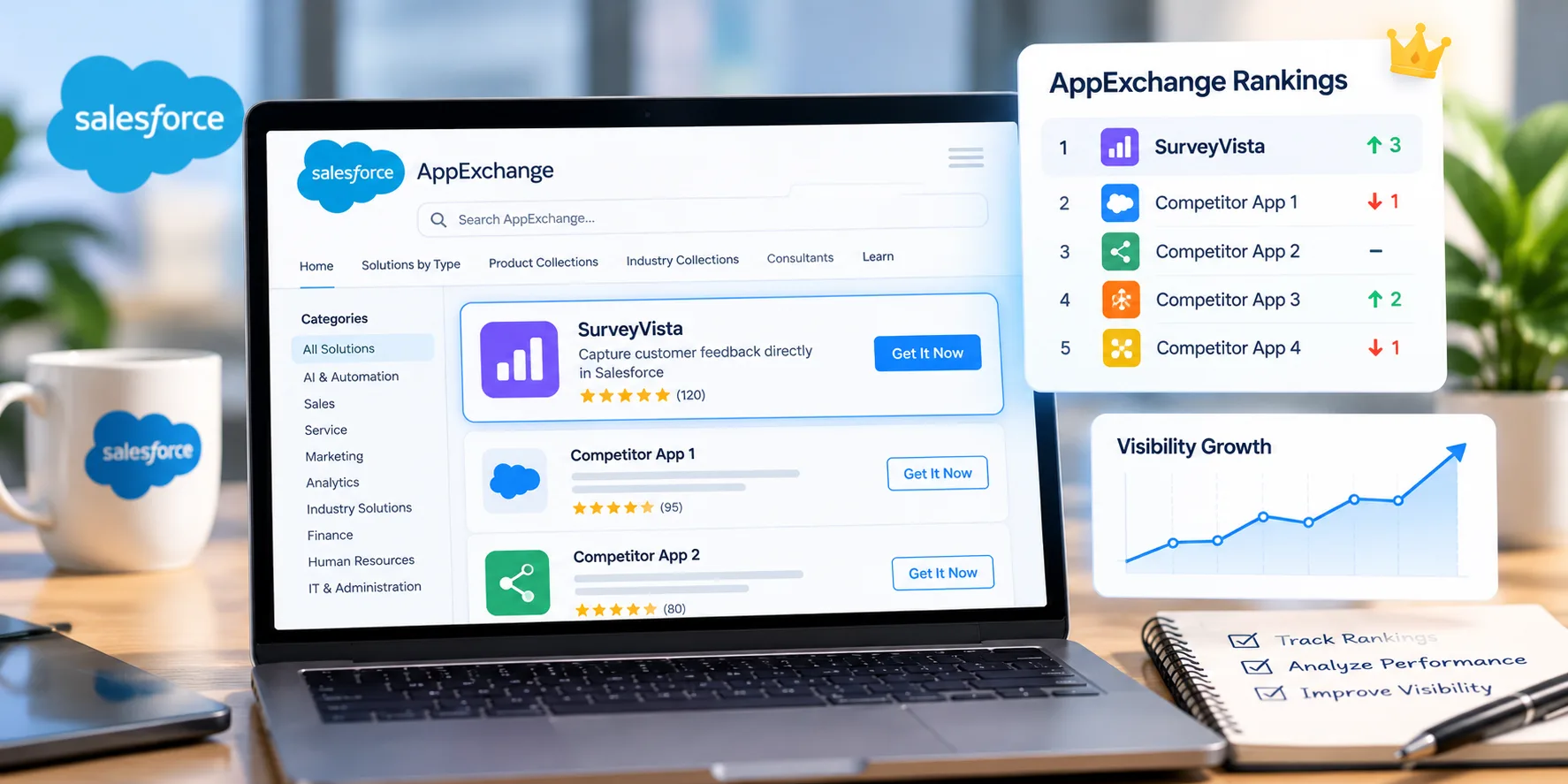
How to Track Salesforce AppExchange Rankings and Improve Your App’s Visibility
Track your AppExchange rankings, identify keyword opportunities, and optimize your Salesforce listing to improve marketplace visibility, attract qualified buyers, and drive more installs.

Ashish Kamathi, SEO Expert
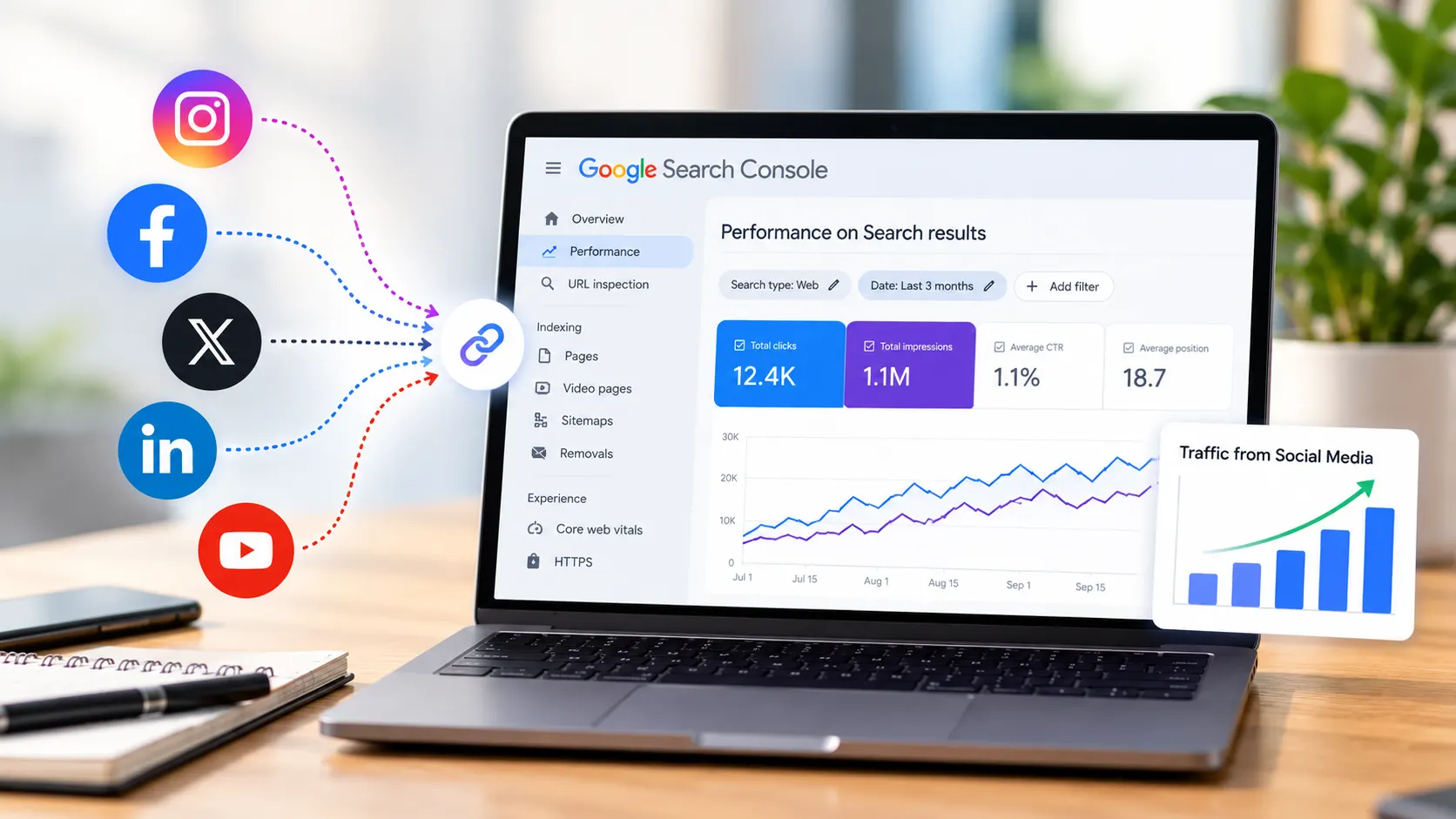
How to Add Social Media to Google Search Console and Track Their Performance
Learn how Google Search Console handles social media, what platform properties can track, and how to measure social performance alongside your website's organic search data.

Shraddha Thuwal
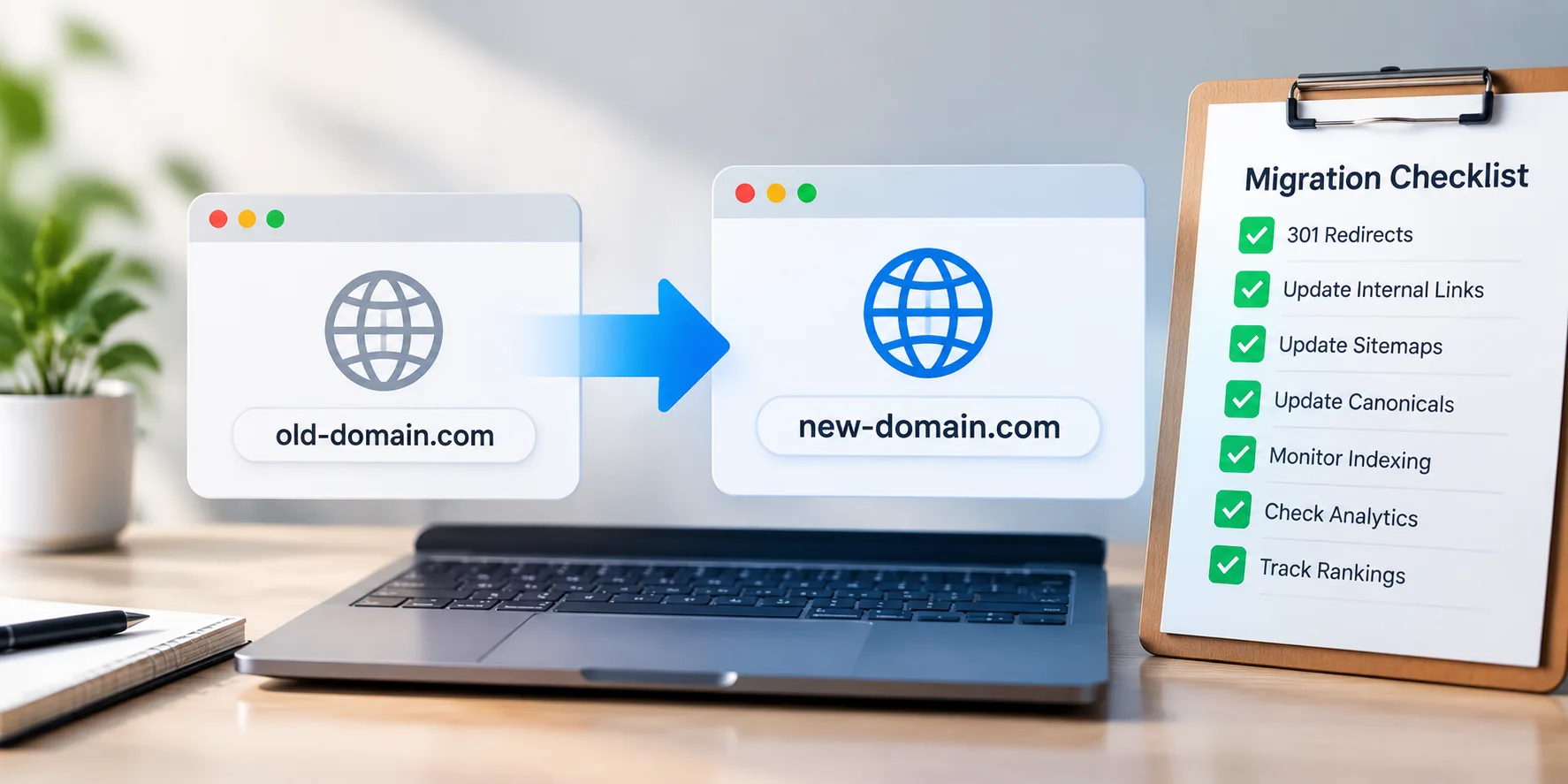
Domain Migration Checklist: A Step-by-Step Guide to Protect Rankings and Traffic
A successful domain migration requires careful SEO planning. Follow this checklist to manage redirects, preserve rankings, protect traffic, and avoid common migration issues.
Shraddha Thuwal
How to Track Salesforce AppExchange Rankings and Improve Your App’s Visibility
Track your AppExchange rankings, identify keyword opportunities, and optimize your Salesforce listing to improve marketplace visibility, attract qualified buyers, and drive more installs.
Ashish Kamathi, SEO Expert
How to Add Social Media to Google Search Console and Track Their Performance
Learn how Google Search Console handles social media, what platform properties can track, and how to measure social performance alongside your website's organic search data.
Shraddha Thuwal
Get Visibility, Everywhere



























Just drop us your email and we’ll reach out
Get Visibility, Everywhere
Just drop us your email and we’ll reach out
Get Visibility, Everywhere
Just drop us your email and we’ll reach out
Our weekly newsletter contains insights from strategies we use for our clients. We don’t spam.
Copyright © 2026 Vryse
Our weekly newsletter contains insights from strategies we use for our clients. We don’t spam.
Copyright © 2026 Vryse